


English Delft Plate
An english delft plate brings tin-glazed earthenware and hand-painted cobalt or polychrome decoration directly from the eighteenth century into modern rooms.

English Delft Plate
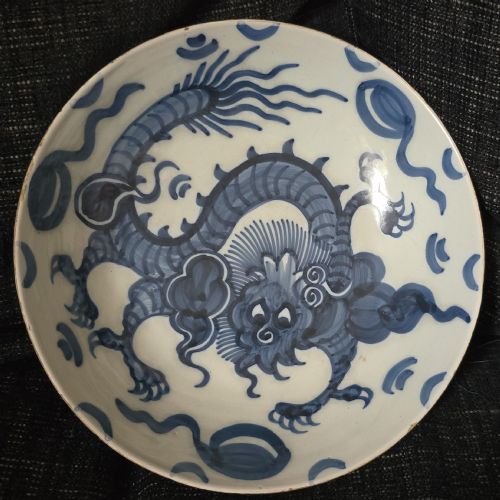
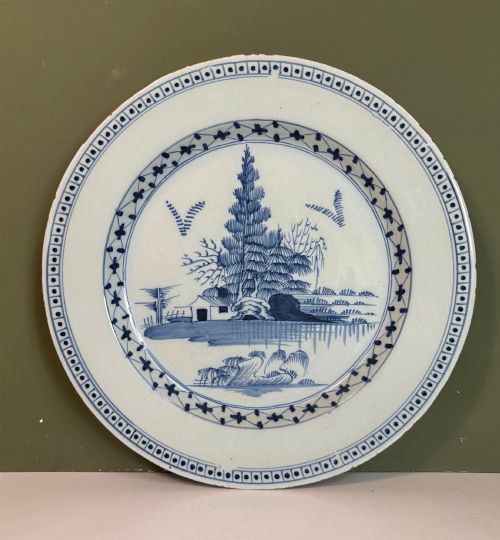
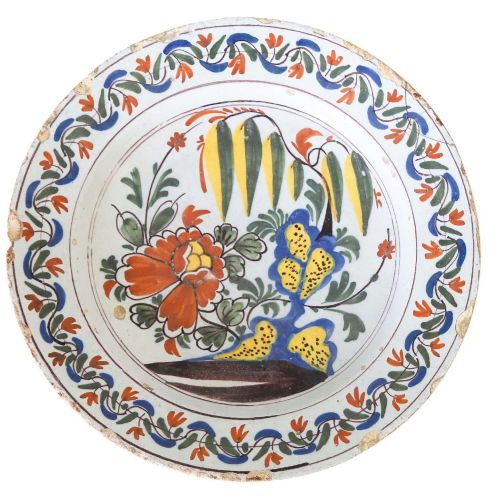
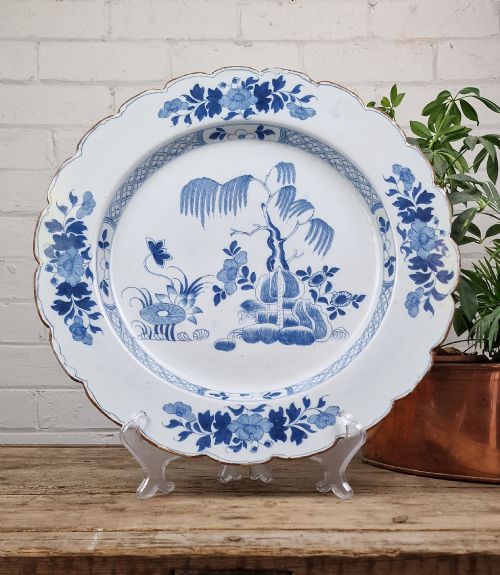
An english delft plate is a piece of tin-glazed earthenware produced primarily during the eighteenth century across English pottery centres such as Bristol, Lambeth, and Liverpool. These vessels range from small shallow dishes and pancake plates to large chargers designed for display on oak plate racks.
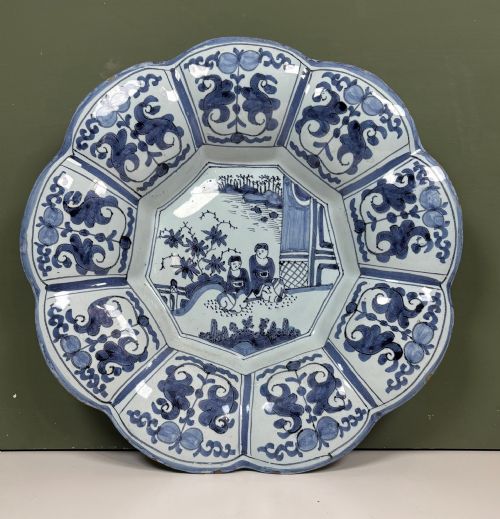
Buyers encounter blue and white examples alongside vibrant polychrome pieces decorated with floral motifs or Chinoiserie scenes. The form also extends to specialised items like marriage plates and shallow bowls created for domestic settings.

How They Were Made
Potters shaped local earthenware clay before coating the body with an opaque tin glaze that provided a smooth, white canvas for painting. Artisans applied cobalt pigment and other metallic oxides directly onto the porous raw glaze.
The pieces underwent a high-temperature kiln firing which fused the pigments into the liquid tin surface. This technique created the characteristic soft edges and slight pooling around the painted brushwork.
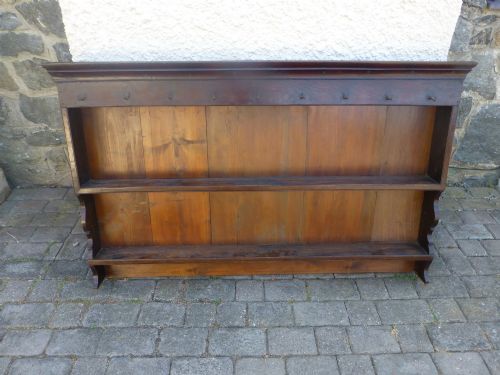
Listings feature eighteenth-century earthenware pieces alongside oak and pine plate racks used to display them.
What Varies in Quality
Quality rests in the crispness of the hand-painted design and the uniformity of the tin glaze across the earthenware body. Superior examples display confident brushwork and well-balanced pictorial compositions, particularly within intricate Chinoiserie or floral motifs.
The stability of the glaze and the preservation of the pigment colours distinguish finer specimens. Pieces with minimal surface degradation and vibrant polychrome palettes show greater artistic ambition during manufacture.
Bristol·Lambeth·Liverpool
The English Delft Plate Glossary
- Tin Glaze
- An earthenware glaze rendered opaque and white by the addition of tin oxide. It provides the smooth background necessary for painting eighteenth-century ceramics.
- Charger
- A large decorative plate intended for display on a wall or dresser rather than dining use. These substantial pieces often feature elaborate hand-painted scenes.
- Polychrome
- Decoration utilising multiple colours rather than a single pigment. On these ceramics, this typically involves a palette of yellows, greens, blues, and reds.
- Chinoiserie
- European interpretations of Chinese artistic motifs and styles. This decorative approach appears frequently on eighteenth-century tableware and wall displays.
- Pancake Plate
- A flat plate form with a very shallow centre and wide rim. These items were common variants within domestic pottery production.
English Delft Plate: Frequently Asked Questions
How were these plates used originally?
Many of the larger chargers and decorated dishes served as ornamental display pieces on oak dresser racks in country homes. Smaller plates saw use during dining, though their delicate tin glaze meant they required careful handling.
Over time, homeowners shifted them entirely to wall display to protect the soft earthenware surfaces from cutlery wear. This dual purpose accounts for the survival of both heavily utilised dining plates and pristine display chargers.
How do I care for an antique delft plate?
Keep these earthenware pieces away from modern dishwashers and prolonged moisture to protect the porous ceramic body. Dust them gently with a dry cloth and avoid harsh chemical cleaners.
When mounting chargers on walls, use specialised plate hangers with protective coatings to prevent chipping the edges. Stable humidity levels in the room will help preserve the tin glaze over decades.
How do I tell blue and white from polychrome?
Blue and white pieces rely exclusively on cobalt pigment applied under or into the tin glaze, producing tones ranging from soft grey-blue to deep cobalt. They often feature traditional floral patterns or landscapes.
Polychrome examples introduce additional mineral colours such as orange, green, and manganese purple. These multi-coloured designs frequently incorporate oriental figures or vibrant garden scenes.
What is a marriage plate?
A marriage plate is a specialised commemorative piece commissioned to celebrate a wedding. These items typically feature the names or initials of the couple alongside dates and symbolic motifs.
Potters created them as lasting tokens for families, making surviving examples uncommon finds in the historic record. Their personalized inscriptions provide clear documentary evidence for dating.