

Antique Delftware Dish
An antique delftware dish brings hand-painted tin-glazed earthenware into a room, offering the bold blues and polychrome palettes of past centuries.

Antique Delftware Dish
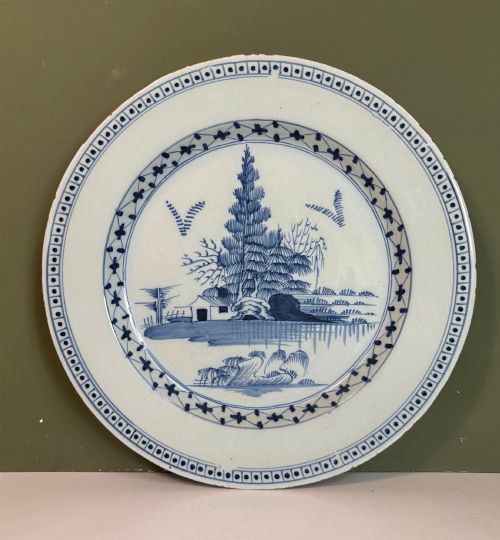
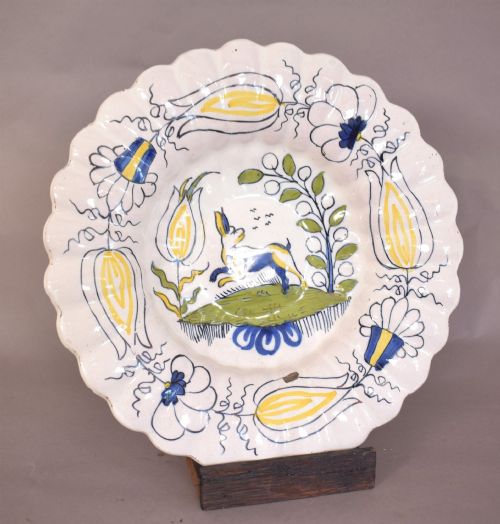
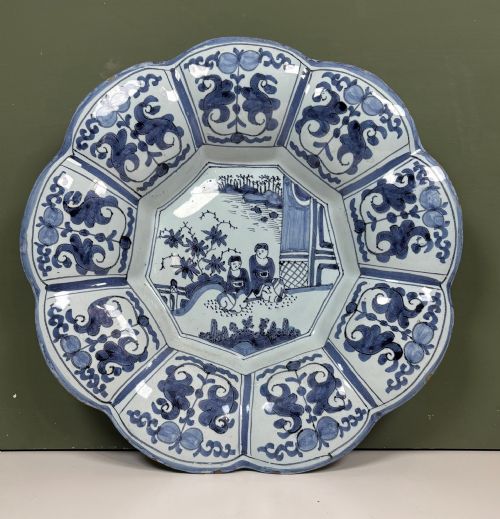
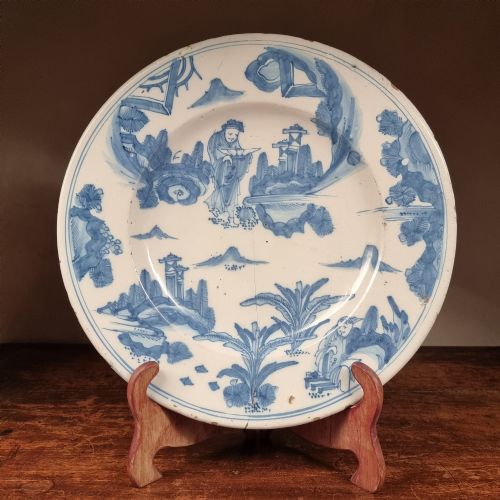
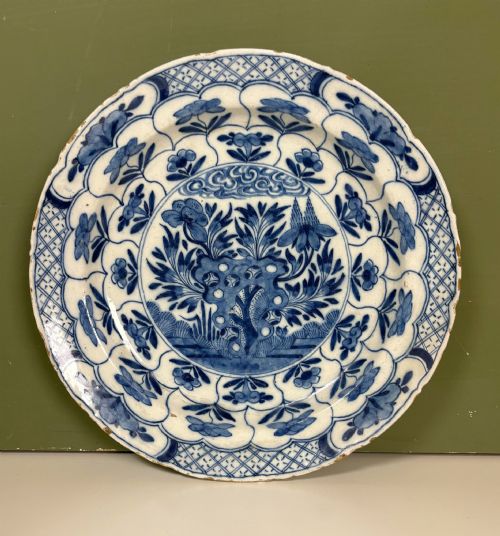
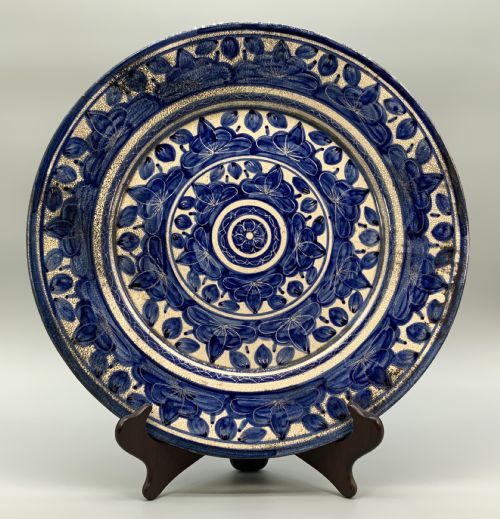
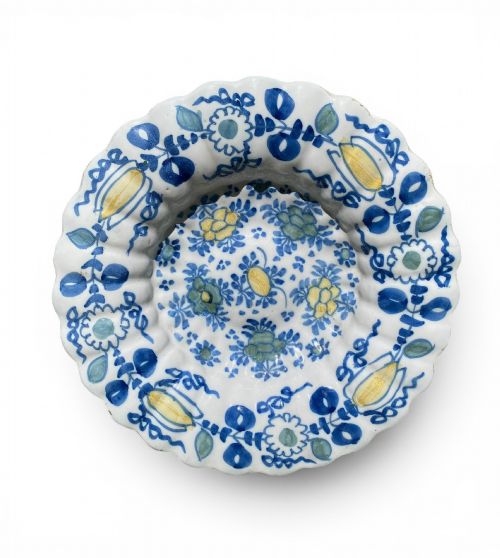
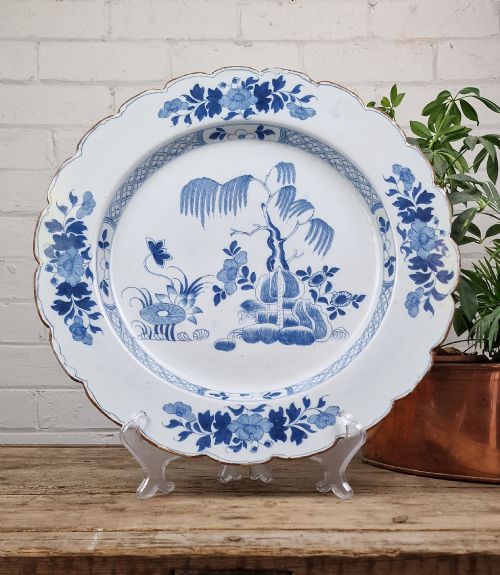
When searching for an antique delftware dish, collectors encounter plates, chargers, and bowls shaped from earthenware and coated in a white tin glaze. The selection spans the seventeenth, eighteenth, and nineteenth centuries, featuring Dutch, English, French, and Spanish origins.
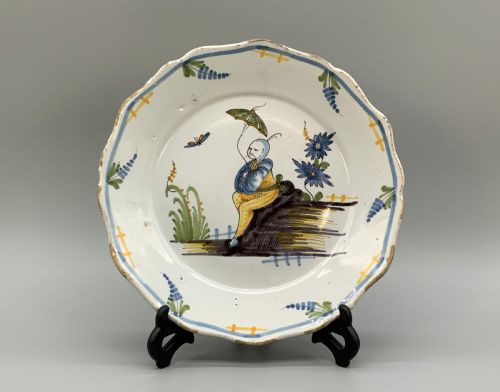
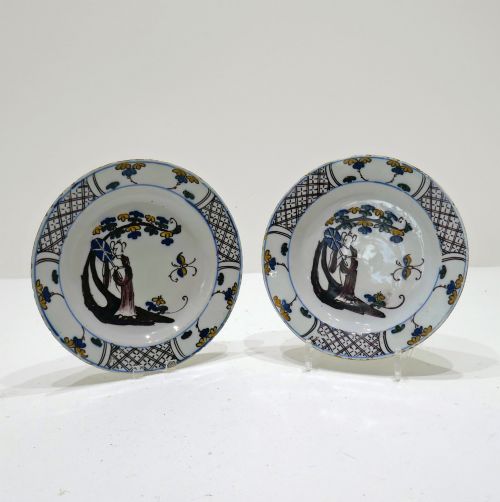
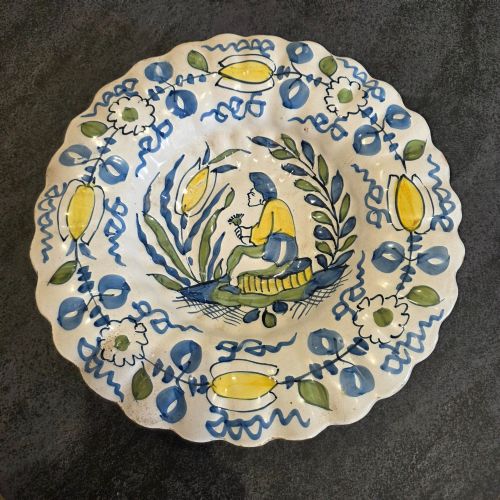
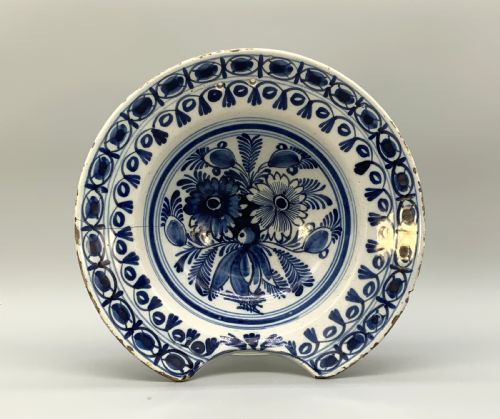
Most pieces on this page take the form of large decorative chargers or domestic plates, often painted in cobalt blue or multi-coloured palettes. Domestic examples include specialised domestic items such as barber's bowls and salt cellars alongside deep serving dishes.
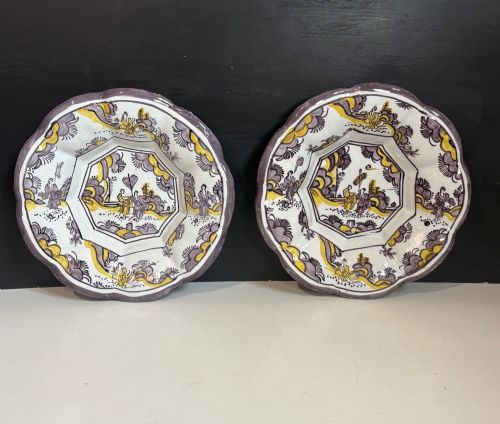
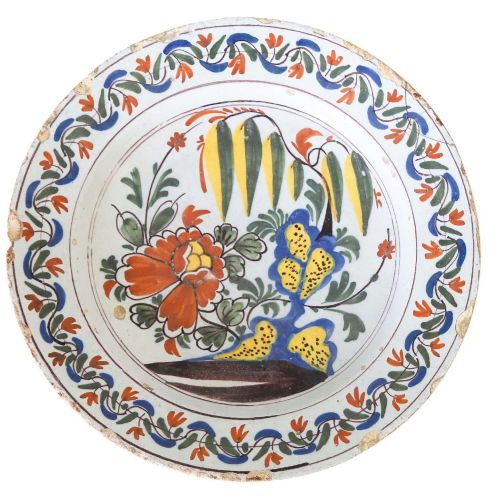
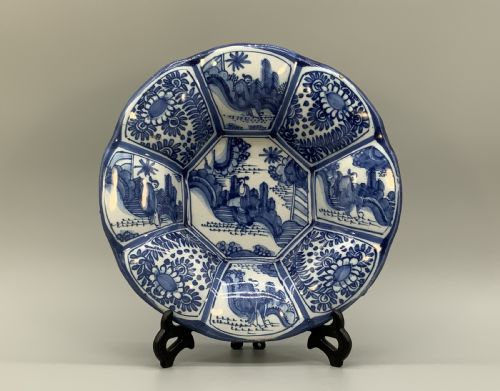
The aesthetic ranges from geometric floral patterns and British polychrome designs to Dutch Baroque compositions and Chinese-inspired Kraak motifs. Pieces date predominantly from the seventeen-hundreds, with earlier seventeenth-century works and later continental revivals appearing alongside them.
How they were made
Potters formed these vessels from local earthenware clay before dipping the fired body into an opaque tin glaze that dried to a white, milky surface. This absorbent glaze provided a ground for hand-painted mineral pigments applied directly before firing.
Makers utilised cobalt oxide for deep blues and added copper, antimony, and iron oxides to achieve polychrome hues like manganese and yellow. The coated ceramic underwent a high-temperature kiln firing that fused the pigments into the liquid tin surface.
Barber's bowls feature a curved crescent cutout designed to tuck snugly against a customer's neck during a morning shave.
What varies in quality
Quality rests upon the confidence of the brushwork and the clarity of the tin glaze over the earthenware body. Skilled potters achieved crisp cobalt or polychrome detailing with well-balanced composition, whereas lesser examples show muddied pigments or uneven glazing.
The ambition of the form dictates distinction, separating simple domestic plates from expansive chargers decorated with intricate Chinoiserie or geometric floral schemes. Early seventeenth-century potting and careful tin-glaze application command particular regard among collectors of European ceramics.
The Antique Delftware Dish Glossary
- Tin glaze
- An opaque white ceramic glaze containing tin oxide that creates a smooth, pale surface for painting. It forms the defining white ground of all delftware pottery.
- Charger
- A large decorative plate or shallow dish intended primarily for display on a wall or dresser rather than daily dining. These pieces measure significantly wider than standard dinner plates.
- Polychrome
- A multi-coloured painted decoration utilising several mineral pigments in a single design. Artisans combined yellows, manganese, greens, and blues across the tin-glazed surface.
- Chinoiserie
- European artistic styles reflecting Chinese motifs and landscapes through Western eyes. Painters rendered imagined Eastern gardens and figures onto tin-glazed earthenware dishes.
- Kraak style
- A Dutch imitation of sixteenth-century Chinese Kraak porcelain characterised by panelled borders and central aquatic or floral motifs. Potters adapted these designs onto seventeenth-century delft dishes.
Antique Delftware Dish: Frequently Asked Questions
How do I hang a heavy charger?
Large chargers require specialised wall brackets with spring-loaded brass clips that distribute weight evenly around the rim. Avoid wire hangers that press tightly against historic tin glaze.
Ensure the mounting hook fixes securely into wall masonry or wooden studs rather than plaster alone. Check the fit periodically to keep the earthenware stable.
Were these dishes used for dining?
Many smaller plates saw service at the dining table for sweetmeats or everyday meals during the seventeenth and eighteenth centuries. Over time, surface wear accumulated from cutlery usage.
Larger chargers served primarily as decorative table centerpieces or wall display items in prosperous homes. Their tin-glazed surfaces remained vulnerable to sharp scraping from metal utensils.
Why do some pieces show pinkish clay?
The exposed earthenware body underneath the tin glaze often appears buff, pink, or reddish depending on local clay sources. English and Dutch potteries used different regional soils for their base pastes.
Chips or footrim wear frequently reveal this underlying ceramic body beneath the white tin glaze. This reveals the raw material used before the final glazing process.