



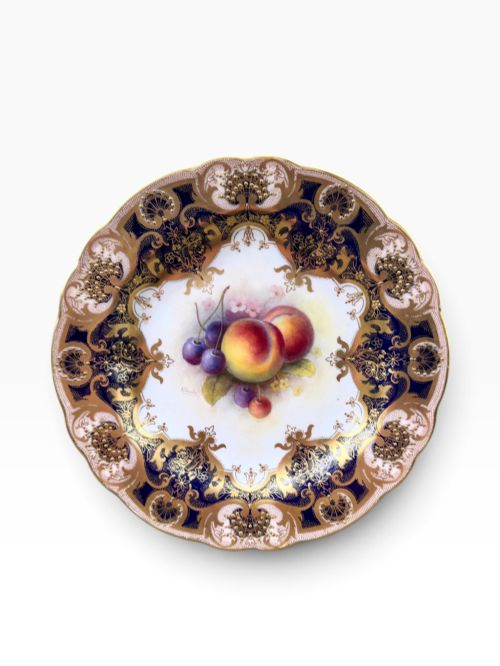
Cobalt Blue Plate
A cobalt blue plate brings a striking depth of colour to a room, offering rich pigment on porcelain, earthenware, and tin-glazed surfaces.

Cobalt blue plate overview
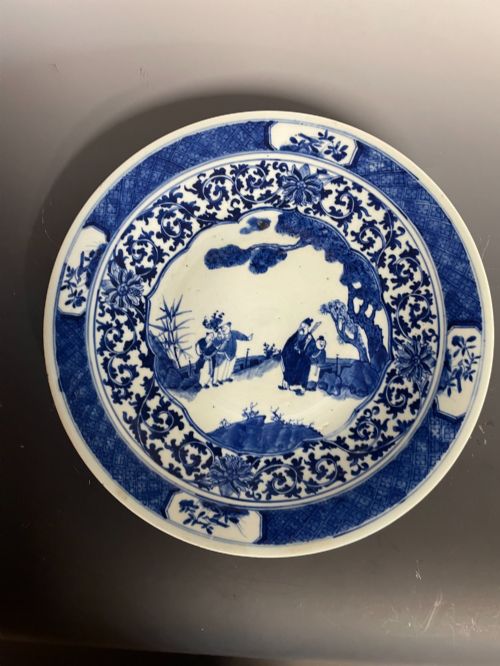
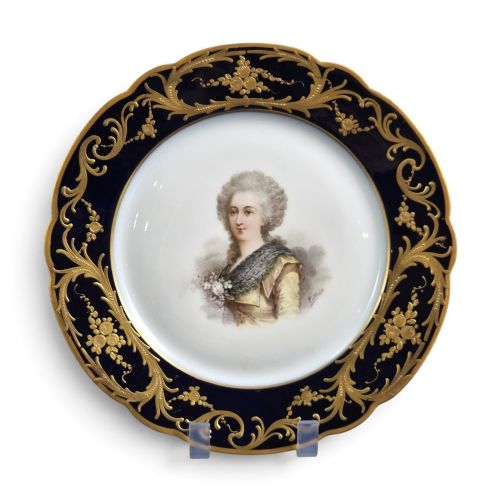
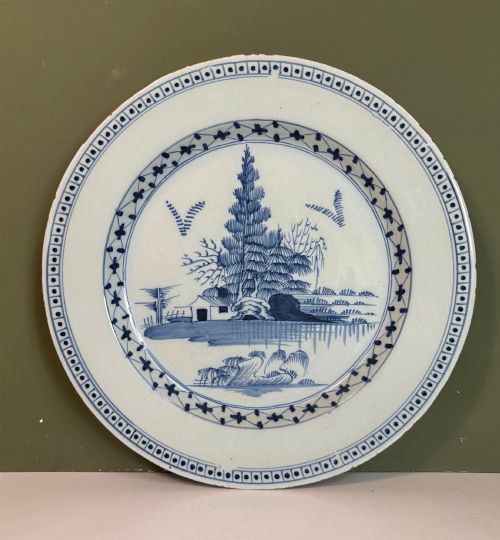
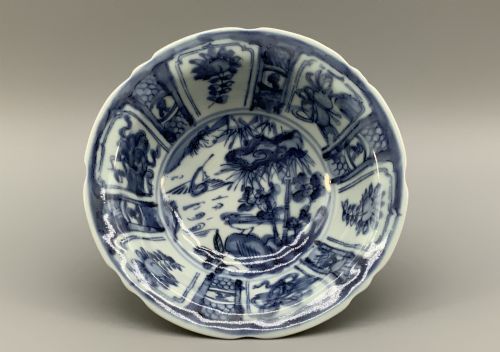
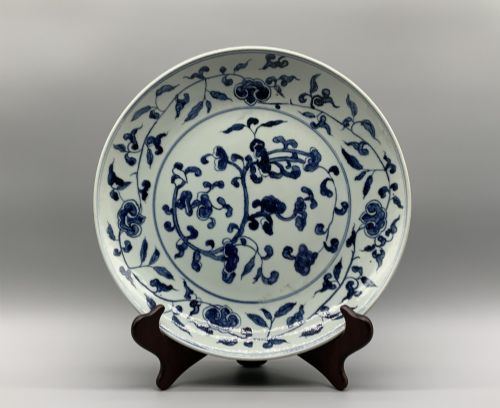
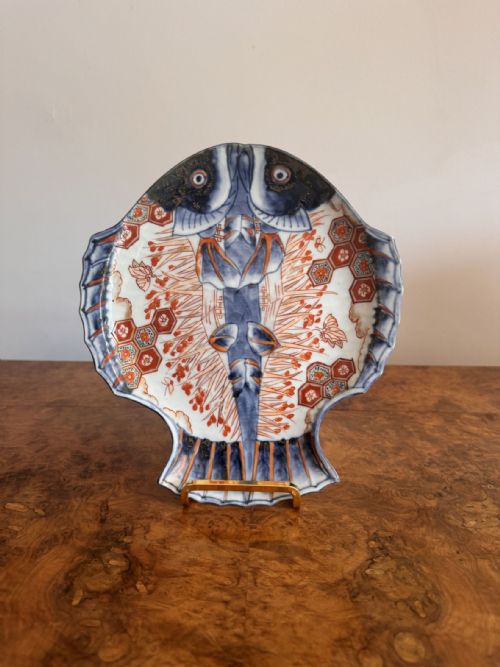
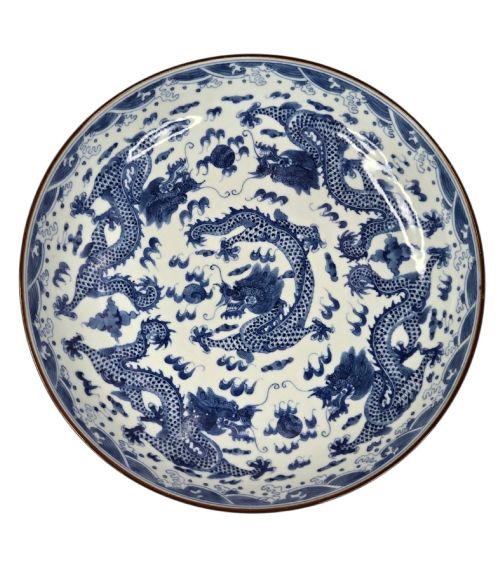
A cobalt blue plate is a ceramic vessel defined by its deep blue pigment, appearing across various centuries and origins on this page. These pieces range from early English delftware to nineteenth-century French cabinet plates and Japanese chargers.
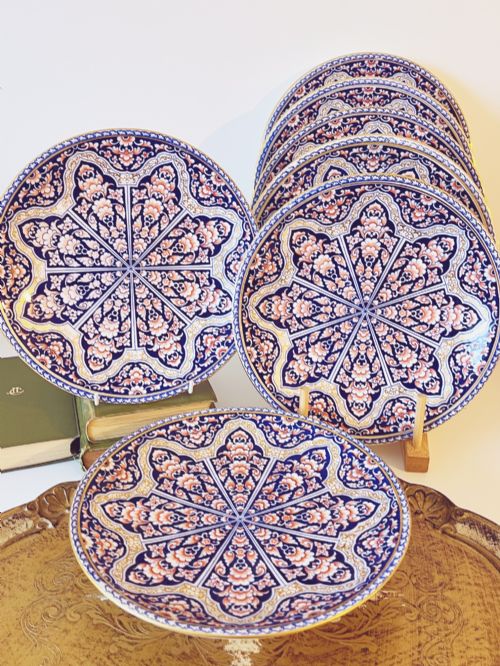
The version most commonly met here is the decorative plate or cabinet plate, often featuring floral motifs, armorial crests, or narrative scenes rendered in intense blue tones. Earthenware and porcelain serve as the primary foundational bodies for these items.
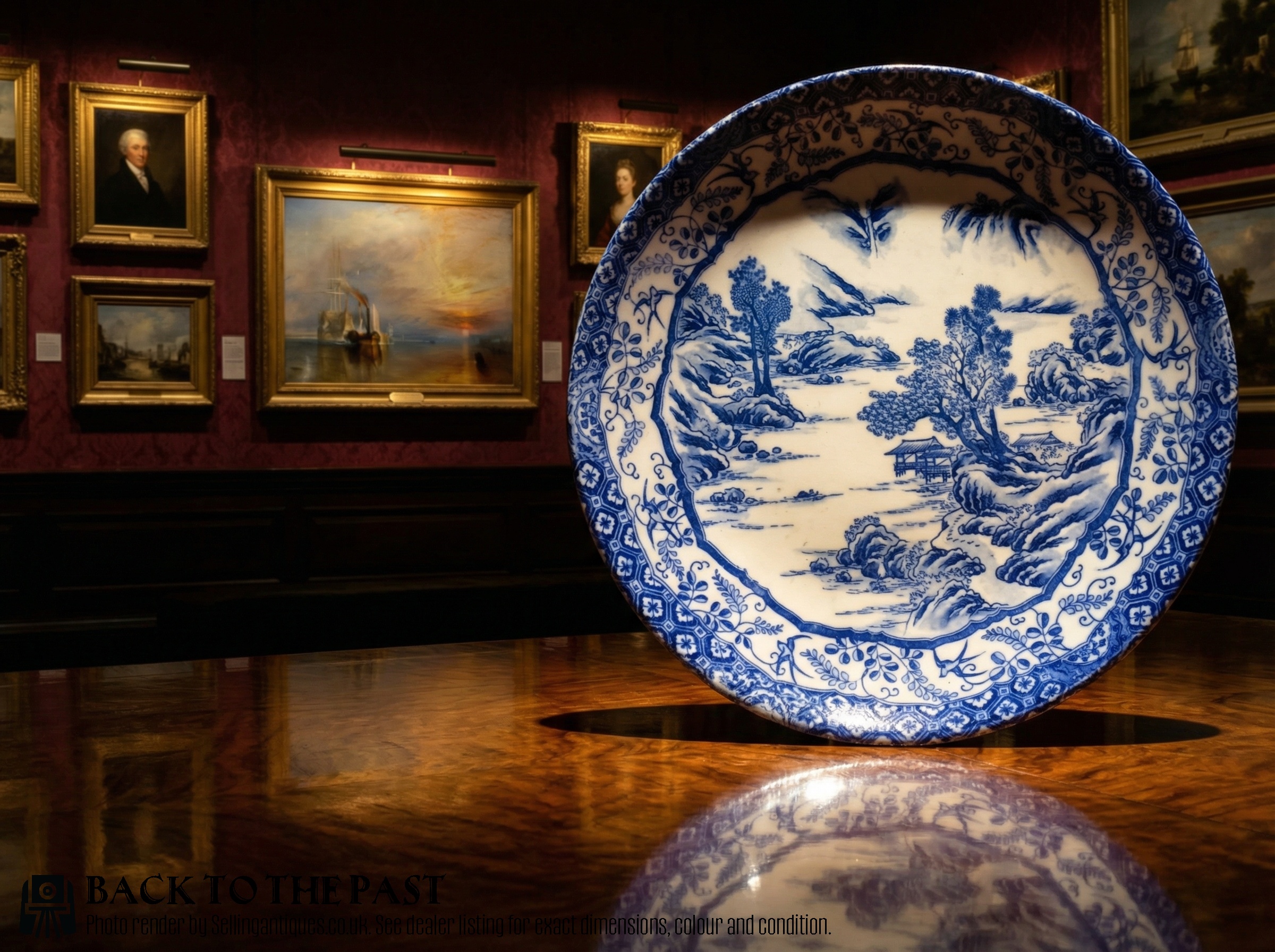
Makers and periods span the eighteenth and nineteenth centuries, taking in Dutch Delftware styles, Victorian productions, and Meiji period Japanese works. Collectors find variety in both the scale of the vessels and the complexity of their painted decoration.
Materials and construction
Makers utilised porcelain, earthenware, and tin-glazed earthenware as the base materials for these plates, applying cobalt oxide to achieve the signature blue coloration. Tin-glazed earthenware provides an opaque white surface that accepts the pigment directly before firing.
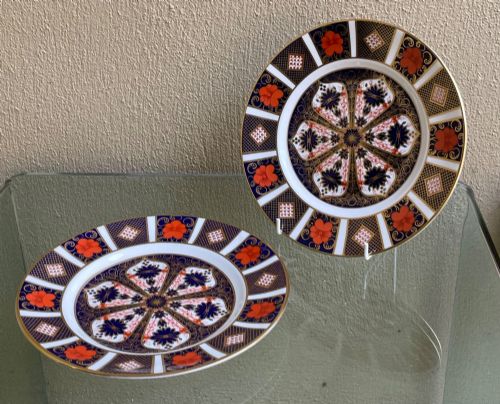
Gold leaf and gilt accents frequently complement the cobalt blue ground, adding contrast to floral patterns and armorial crests. Enamel work also appears on select porcelain bodies, introducing further colour layers above the primary glaze.
Retail Price Guide 2026
Typical UK retail prices for cobalt blue plate, calculated from the Sellingantiques database of over a million retail prices indexed since 2003. This retail price guide relies exclusively on Sellingantiques data; no external sources or auction records are used, so the figures do not describe the wider market.
Medieval battle scenes painted on French cabinet plates prove that dinnerware can double as a historical theatre.
Assessing quality
Quality reveals itself in the precision of the hand-painted decoration, where controlled brushwork and fine detailing separate master productions from simpler factory output. The depth and evenness of the cobalt pigment across the surface also indicate the skill of the kiln firing.
The refinement of the ceramic body itself distinguishes fine porcelain cabinet plates from heavier earthenware dishes. Additionally, the presence of delicate gilding or gold leaf applied to the rim elevates the visual status of the piece.
Copeland Porcelain·Bloor Derby·Ridgway
The Cobalt Blue Plate Glossary
- Tin-Glazed Earthenware
- Earthenware coated with a tin oxide glaze that fires to an opaque white, providing a smooth ground for blue painting.
- Cobalt Oxide
- A metallic oxide used as a pigment that turns a deep, stable blue when fired at high temperatures in ceramic glazes.
- Cabinet Plate
- A decorative plate intended for display in a cabinet or on a wall rather than for everyday dining use.
- Armorial Plate
- A ceramic dish decorated with a family coat of arms, crest, or heraldic insignia, often commissioned for specific lineages.
- Meiji Period
- The era in Japanese history spanning from 1868 to 1912, known in these listings for large decorative chargers.
Frequently Asked Questions
What periods do these plates come from?
The pieces span the eighteenth and nineteenth centuries, including early examples from the seventeen-hundreds alongside Victorian and Meiji period items.
Specific dates range from early eighteenth-century delftware through to nineteenth-century productions from European and Japanese workshops.
How were these plates used originally?
Many served as decorative cabinet plates or chargers meant for visual display rather than table service.
Others functioned as dessert plates or armorial tableware commissioned to display family crests and heraldry.
What materials make up these pieces?
Makers utilised porcelain, earthenware, and tin-glazed earthenware as the primary body materials for these ceramic items.
Cobalt oxide provided the blue pigment, while gold leaf and gilt were frequently added for decorative enhancement.
How do I identify Japanese pieces here?
Japanese items in the listings typically date to the Meiji period and take the form of large decorative chargers.
These pieces reflect distinct Eastern aesthetic traditions compared to the European delftware and porcelain plates on the page.