





Antique Chinoiserie Charger
An antique chinoiserie charger brings the spirited European interpretation of Eastern motifs directly to the wall or table.

Antique Chinoiserie Charger
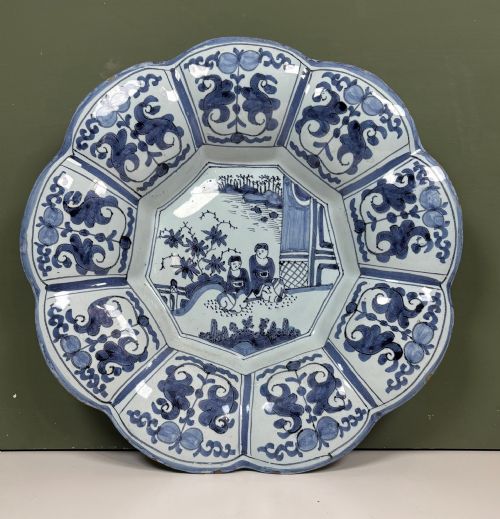
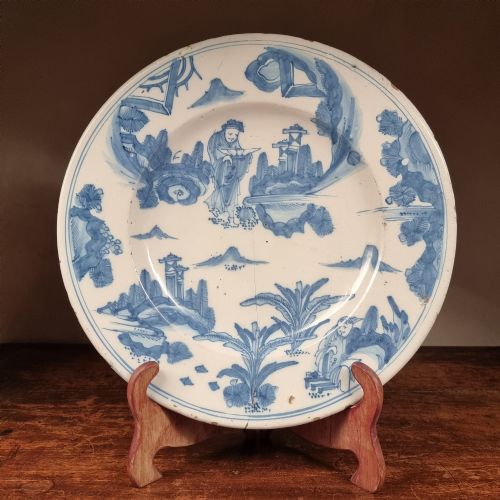
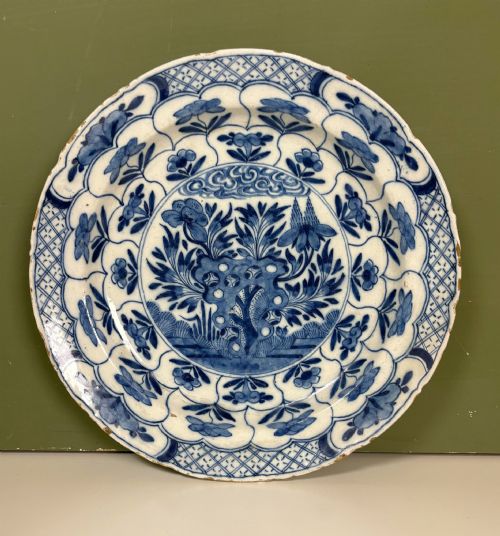
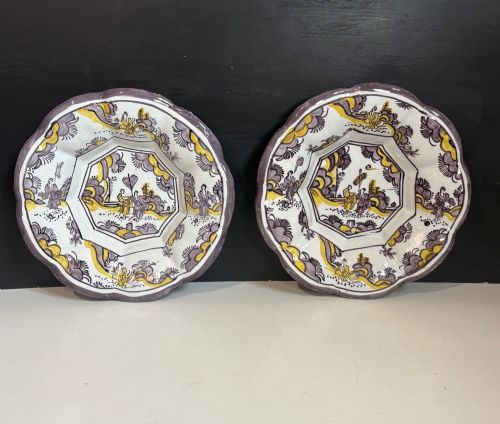
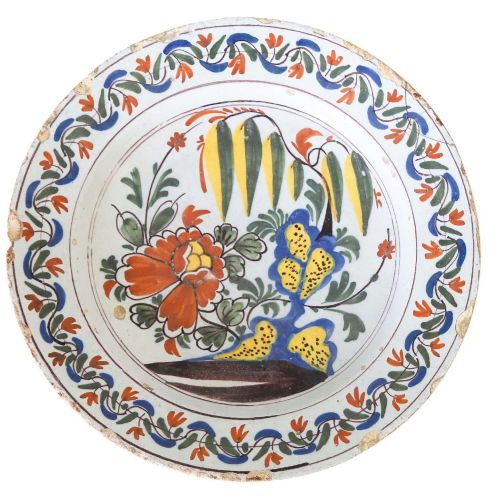
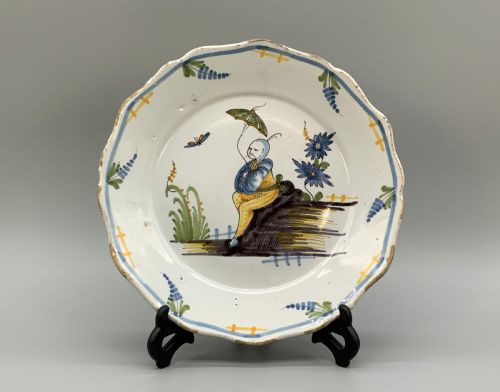
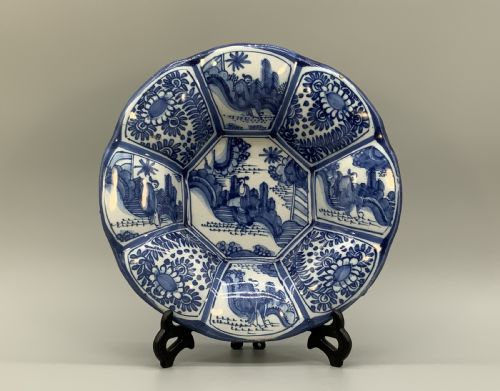
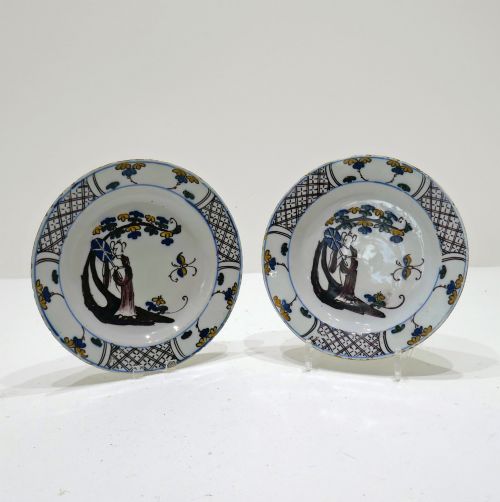
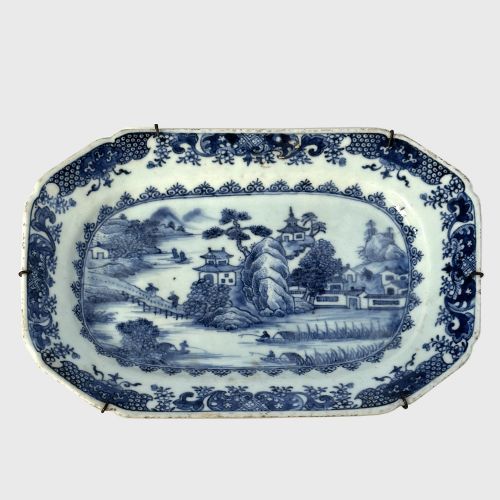
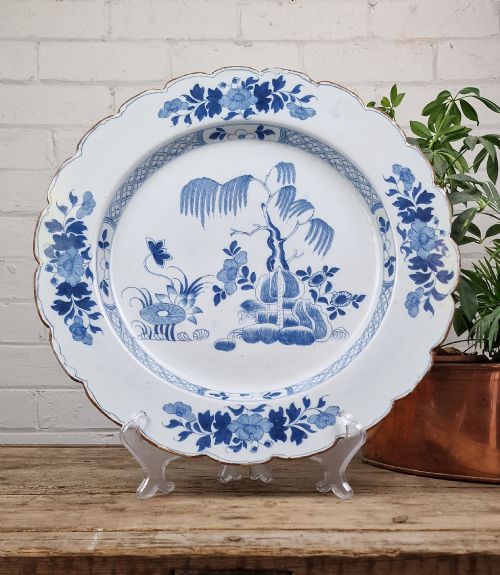
When you search for an antique chinoiserie charger, you encounter large decorative plates and platters carrying fanciful landscapes, pagodas, and exotic figures. These expansive ceramics span eras from the seventeenth century onward, crossing English, Dutch, and French production centres.
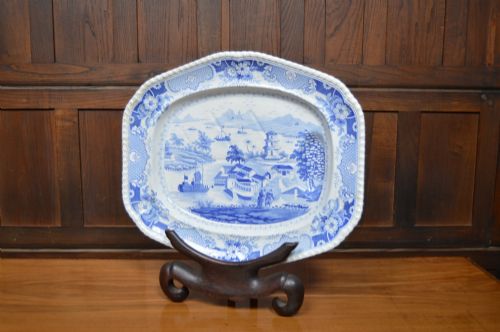
Tin-glazed earthenware and porcelain dominate the selections on this page. You frequently meet pieces created in tin-glazed earthenware, alongside ironstone and transferware variations bearing orientalist scenes.
The forms range from wide dishes and lobed plates to substantial serving platters. Many examples show deliberate borrowing from Chinese export porcelain and Japanese styles, interpreted through domestic pottery traditions.
How they were made
Makers utilised earthenware and porcelain bodies coated in tin glaze, pigment, or enamel. Cobalt pigment and manganese provided the characteristic blue and purple tones painted directly onto the porous raw surfaces before firing.
Potters shaped large circular platters on the wheel or pressed them into moulds to achieve the broad, shallow expanse required for elaborate pictorial scenes. Hand-painting and transfer printing transferred intricate oriental patterns onto the hardened glaze.
Antique Chinoiserie Charger Retail Price Guide 2026
Typical asking prices for chinoiserie charger among the pieces listed under this phrase on Sellingantiques today, from the lower quarter to the upper quarter. They describe what is for sale here now, not the wider market.
Object types span decorative chargers, serving platters, lobed dishes, and meat plates in blue and white or polychrome.
What varies in quality
The distinction between standard domestic production and exceptional work lies in the confidence of the brushwork and the precision of the glaze application. Hand-painted polychrome details show individual artistic control, whereas transfer-printed designs offer uniform repetition.
Body thickness and the stability of the large flat expanses during high-temperature firing separate accomplished potteries from ordinary workshops. A well-balanced rim and a clear, even glaze surface define the upper tier of these ceramics.
C.J. Mason·Mason’s·Minton
The Antique Chinoiserie Charger Glossary
- Chinoiserie
- European decorative style reflecting Chinese artistic influences, frequently featuring imaginary landscapes, pagodas, and exotic figures. This aesthetic dominated eighteenth-century ceramic painting.
- Tin Glaze
- Opaque white glaze containing tin oxide, applied to earthenware to provide a smooth ground for painted decoration. It absorbs pigments deeply during the firing process.
- Charger
- A large decorative plate or serving platter, often displayed upright on a wall or dresser rather than used at the table. These expansive surfaces provide ample room for narrative scenes.
- Delftware
- Tin-glazed earthenware produced in Dutch and English potteries, notable for blue and white or polychrome pictorial designs. Bristol, Lambeth, and Delft served as major production hubs.
- Ironstone
- A heavy, durable type of feldspathic stoneware patented in the nineteenth century to imitate porcelain. It resists chipping and supports richly coloured orientalist transfer prints.
Antique Chinoiserie Charger: Frequently Asked Questions
What is an antique chinoiserie charger?
An antique chinoiserie charger is a large decorative plate or platter created in Europe or Asia featuring European interpretations of Chinese and Japanese decorative motifs. These wide ceramic surfaces functioned as prominent display pieces in domestic interiors.
Peculiar to these objects is the combination of traditional European pottery forms with fantastical Eastern landscapes, pagodas, and floral arrangements. Potters used tin glaze, enamel, and cobalt pigment to render these complex scenes.
How were these large plates used?
These large vessels served both practical dining functions and purely decorative display roles in domestic spaces. Placed on sideboards or hung upon walls, they demonstrated the owner's taste for exotic goods.
Substantial chargers often acted as central serving platters for grand meals before transitioning to wall ornaments. Their broad diameters provided ideal canvases for narrative landscape painting.
How do I distinguish eighteenth-century delft from later ironstone?
Eighteenth-century delft relies on a porous earthenware body covered in an opaque tin glaze that yields a slightly softer, warmer surface. Ironstone, developed later, presents a much denser, heavier vitrified body designed to resist heavy wear.
Decoration also differs between these periods, as early delft pieces typically show hand-painted cobalt or polychrome brushwork. Later ironstone often incorporates transfer printing alongside hand-applied enamel colours.
How do I care for an antique ceramic charger?
Careful handling and stable environmental conditions ensure the preservation of these fragile glazed surfaces. Keep them away from direct heat sources and abrasive cleaning agents to protect the historic glaze.
Display mounts should support the entire weight of the charger evenly across its base and rim. Hand washing with mild soap is essential if cleaning becomes necessary, avoiding immersion in water for extended periods.