

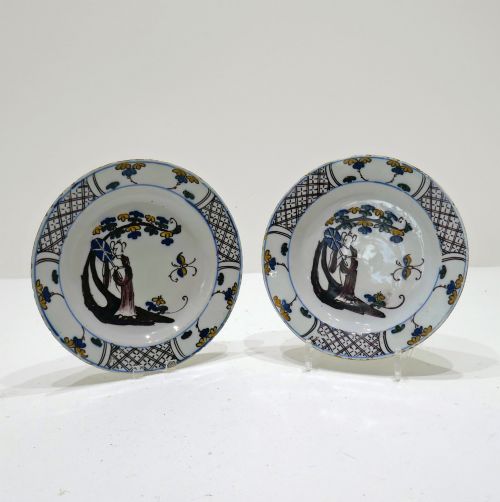
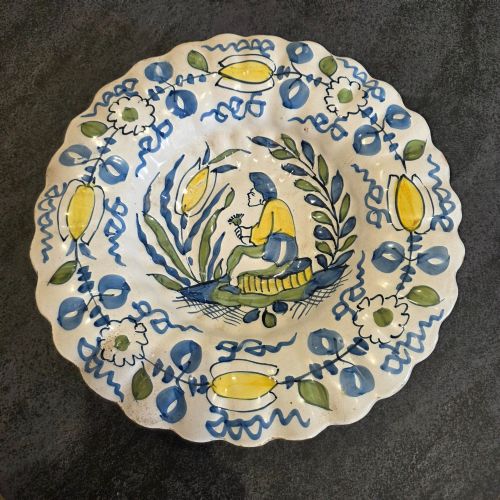
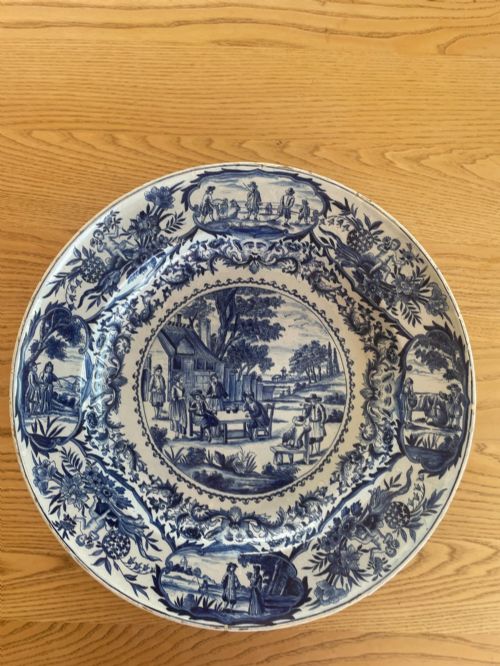
Delftware Charger Plate
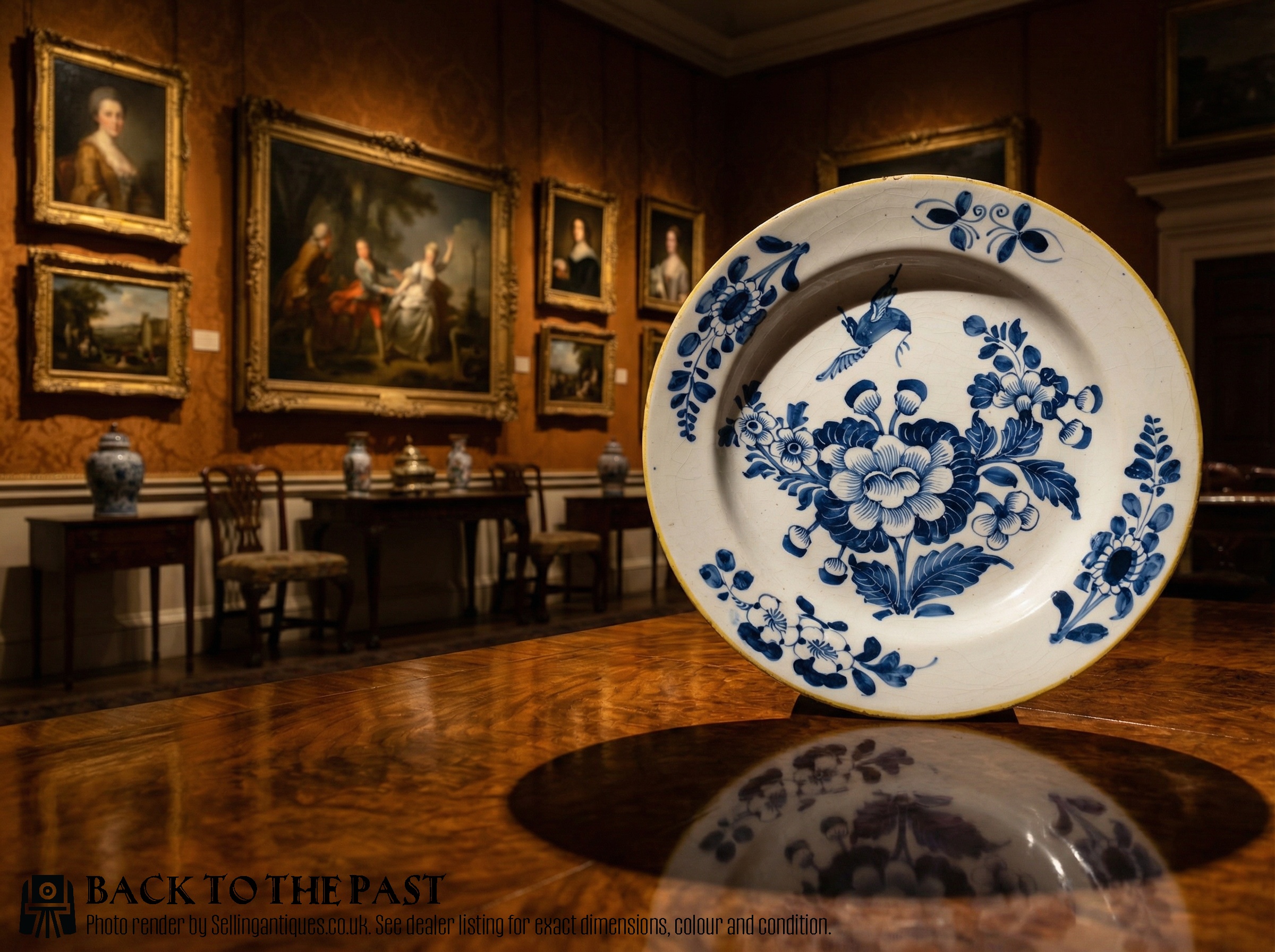
These delftware charger plates are tin-glazed earthenware wall or table vessels that bring centuries of hand-painted blue and white pigment into a room.
What They Are
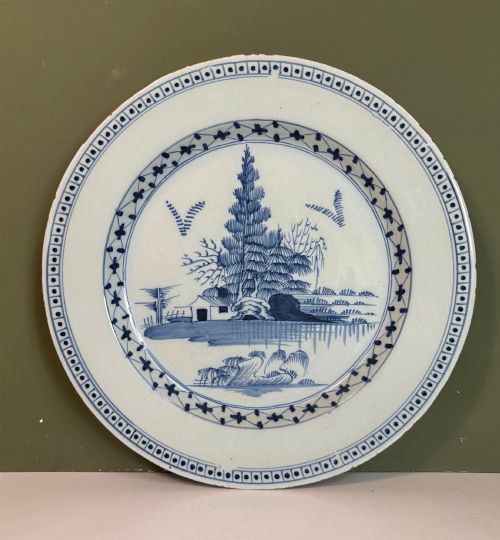
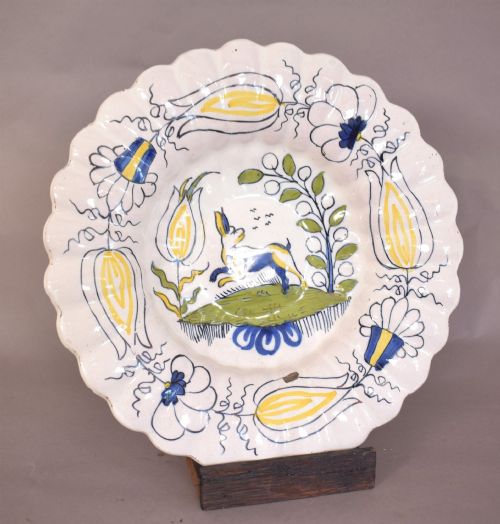
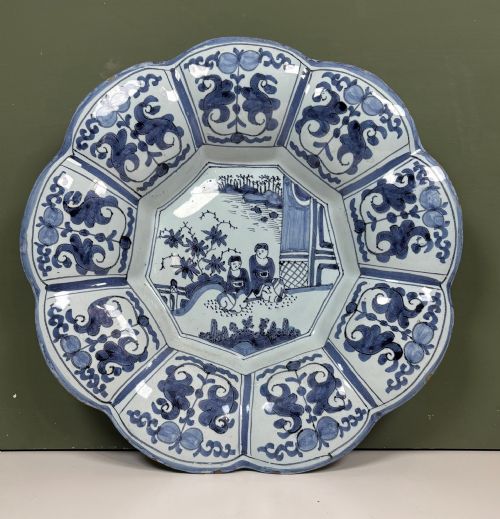
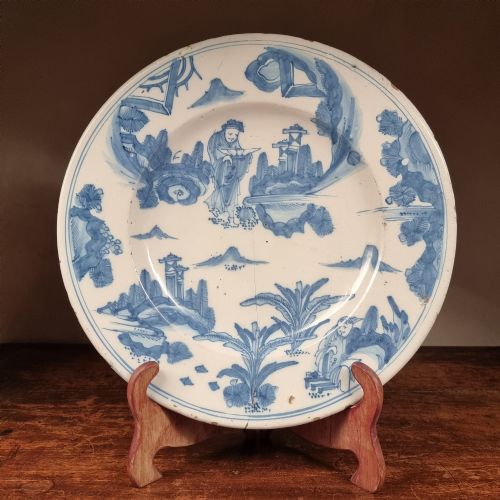
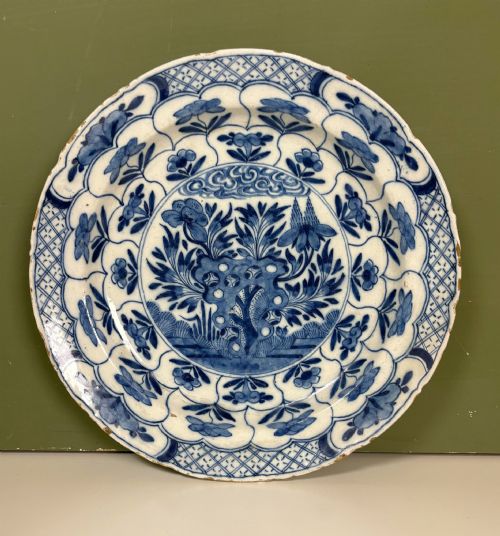
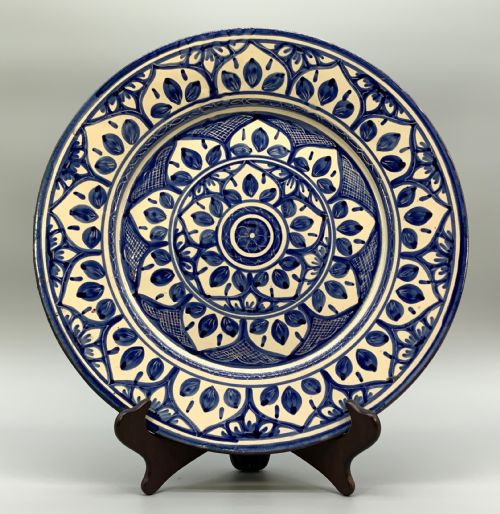
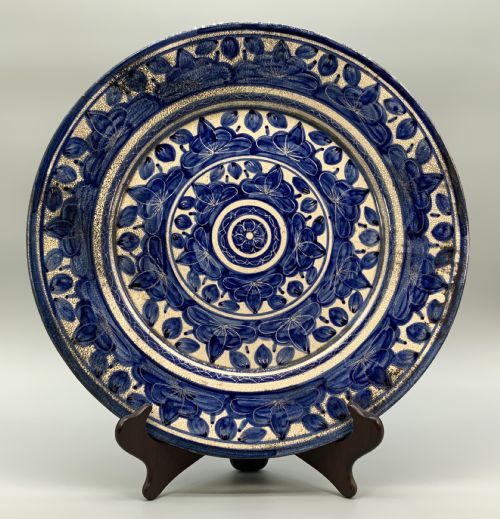
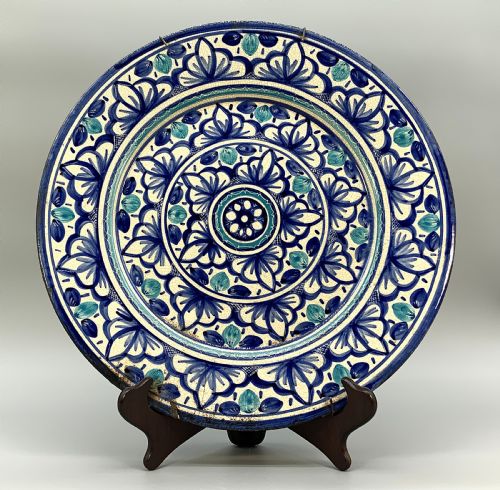
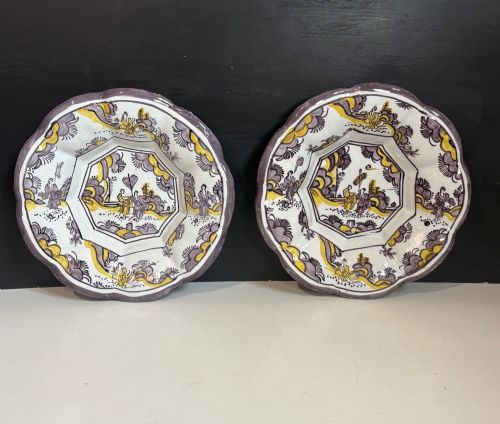
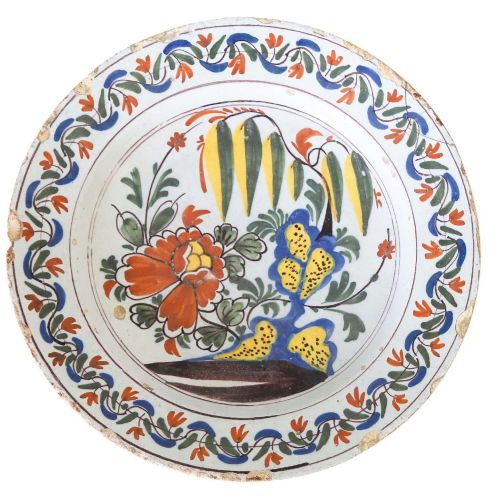
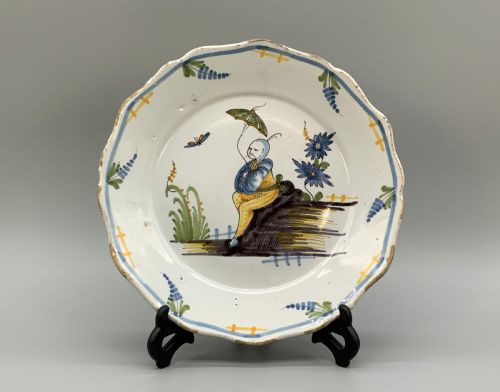
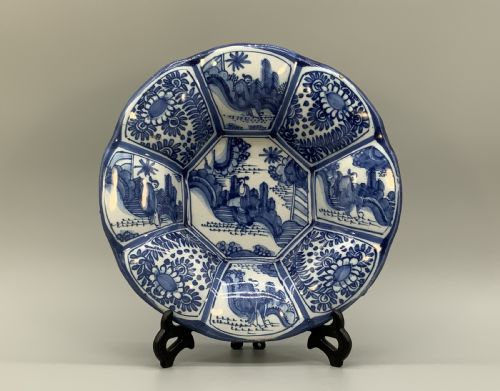
A delftware charger plate is a large decorative dish produced across the seventeenth, eighteenth, and nineteenth centuries. These pieces display distinct styles ranging from Dutch Baroque and Baroque Chinoiserie to Georgian forms.
The objects seen here include large charger plates and decorative plates originating from English and Dutch traditions. Most examples date from the eighteenth century, including specific items from around seventeen-forty and seventeen-eighty, alongside seventeenth-century and nineteenth-century pieces.
How They Were Made
Potters shaped these charger plates from ceramic and earthenware, applying an opaque tin glaze over the clay body to create a smooth white surface. Artisans then painted directly onto this unfired glaze using cobalt pigment.
The interaction between the liquid cobalt and the tin glaze produced the characteristic blue and white designs seen across Dutch delft and English delftware traditions. Firing in kilns set the pigment permanently into the glaze layer.
Retail Price Guide 2026
Typical UK retail prices for delftware charger plate, calculated from the Sellingantiques database of over a million retail prices indexed since 2003. This retail price guide relies exclusively on Sellingantiques data; no external sources or auction records are used, so the figures do not describe the wider market.
Materials across these items include ceramic, earthenware, tin-glazed earthenware, tin glaze, and cobalt pigment.
What Varies in Quality
The refinement of the cobalt painting distinguishes finer charger plates from simpler utilitarian items. Nimble brushwork and complex pictorial scenes or floral motifs reflect the skill of the original decorator.
The consistency and brightness of the white tin glaze also mark the distinction between workshops. Smooth, even glazing that stabilizes the pigment enhances the visual depth of the plate.
The Delftware Charger Plate Glossary
- Charger plate
- A large decorative plate traditionally used for ceremonial display rather than daily dining. These substantial dishes measure wider than standard dinner plates.
- Tin glaze
- An opaque white ceramic glaze containing tin oxide, providing a bright background for painted decoration. This coating defines the delftware tradition.
- Cobalt pigment
- A metallic oxide used to create deep blue coloration on ceramic wares. It holds its dark hue under high kiln temperatures.
- Baroque Chinoiserie
- An artistic style combining European Baroque forms with imaginative interpretations of East Asian motifs. This aesthetic appears frequently on seventeenth and eighteenth-century plates.
Frequently Asked Questions
How were delftware chargers used?
These large plates served primarily as decorative items for display on walls or sideboards in prosperous homes rather than everyday tableware.
Their generous size and painted scenes made them central visual elements in historic interiors.
Are these chargers English or Dutch?
The inventory includes pieces from both English and Dutch traditions, spanning the seventeenth through the nineteenth centuries.
Dutch delftware and English delft share similar tin-glazed techniques while exhibiting distinct regional painting styles.
How do you date a delft plate?
Dating relies on stylistic clues, glaze characteristics, and the handling of the cobalt pigment across different periods like the Georgian era or Dutch Baroque.
Earlier seventeenth-century pieces often display heavier earthenware bodies compared to later eighteenth-century examples.
How do I care for tin-glazed earthenware?
Keep these historic ceramic objects away from moisture and direct sunlight to protect the fragile earthenware body and tin glaze.
Display them securely using appropriate plate hangers designed for heavy decorative chargers.