







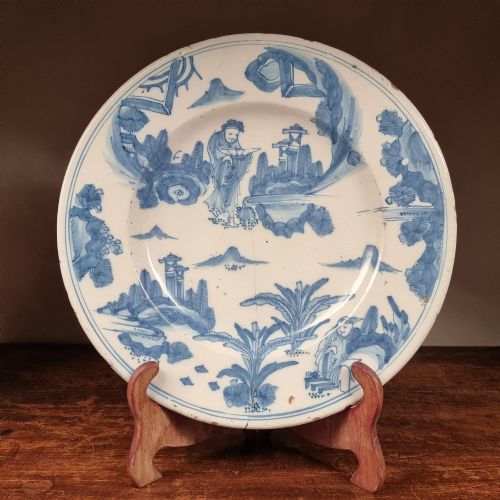
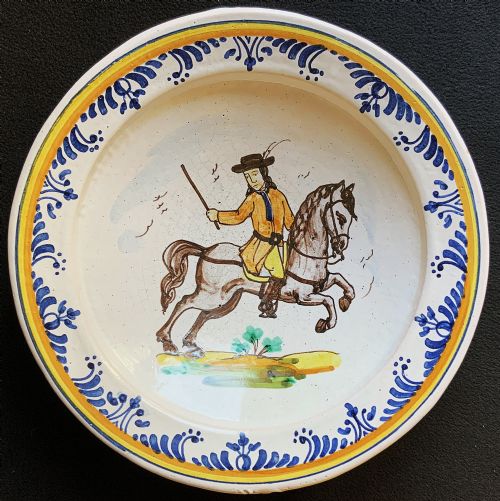
Antique Delftware Plate
An antique delftware plate brings the painted tin-glazed earthenware of past centuries into the modern room.

Antique Delftware Plate
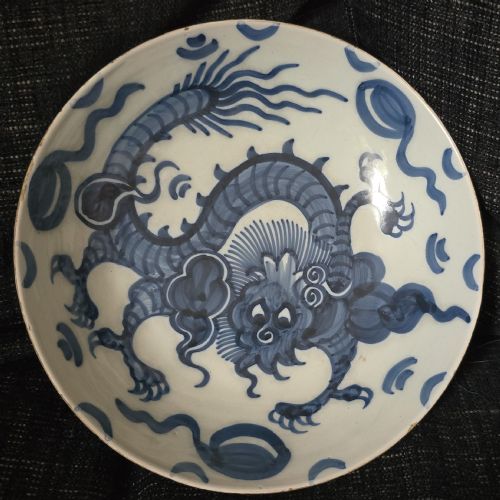
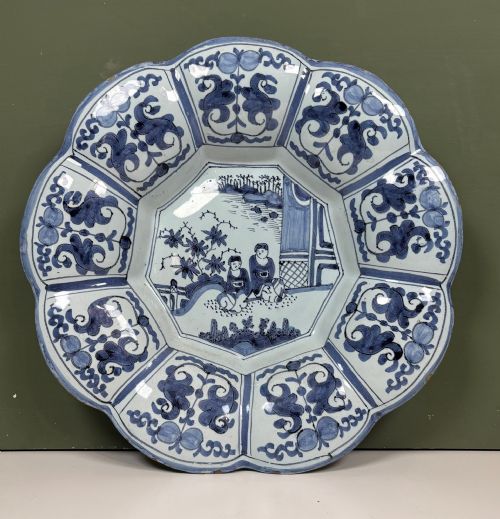
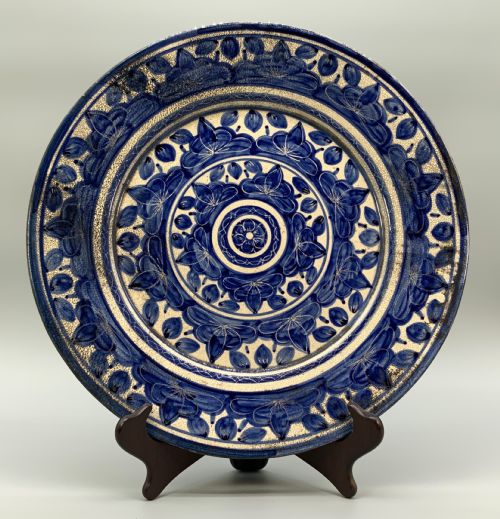
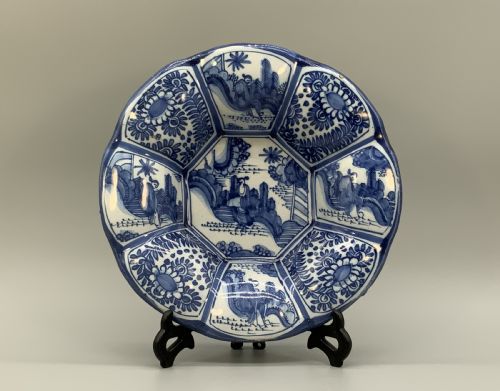
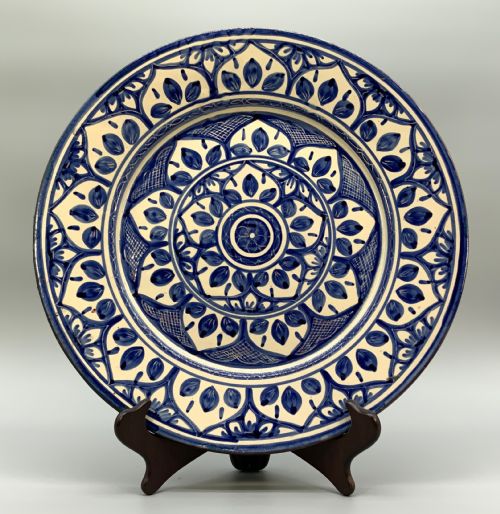
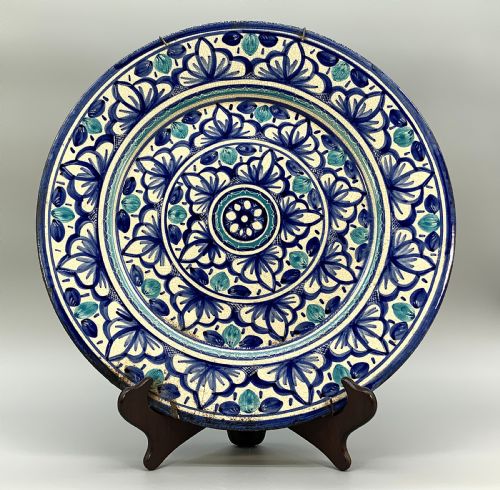
The search for an antique delftware plate leads to tin-glazed earthenware dishes, bowls and large chargers produced across Europe. Most examples found here originate from English, Dutch, French, Spanish and Irish potteries spanning the seventeenth and eighteenth centuries.
The forms range from small flat plates to broad decorative chargers and lobbed dishes. Domestic tableware sits alongside pieces designed primarily for display, carrying motifs drawn from European gardens, classical architecture and East Asian porcelain.

How they were made
Potters shaped earthenware bodies from local clays, fired them once, and dipped the biscuit ware into an opaque white glaze containing tin oxide. This absorbent tin glaze provided a smooth white ground for painters to work directly onto the surface before a final kiln firing.
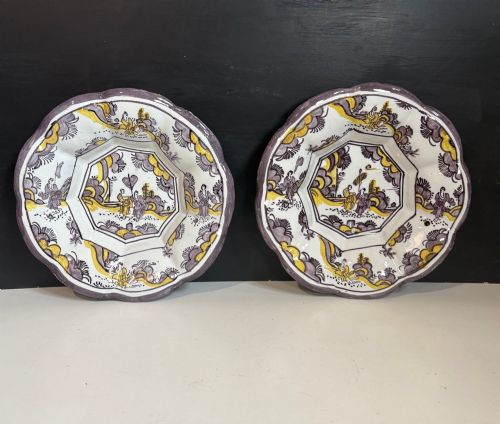
Decoration relied on cobalt pigment for blue and white designs, alongside metal oxides of copper, antimony and manganese for polychrome palettes. Grand feu techniques fixed certain mineral colours directly into the glaze at high temperatures, while other pigments required a softer second firing.
Antique Delftware Plate Retail Price Guide 2026
Typical asking prices for delftware plate among the pieces listed under this phrase on Sellingantiques today, from the lower quarter to the upper quarter. They describe what is for sale here now, not the wider market.
Historic marriage plates recorded anniversaries with portraits of the happy couple baked right into the glaze.
What varies in quality
Quality rests upon the crispness of the brushwork and the stability of the glaze during firing. Confident, fluent brushstrokes separate skilled studio painting from hurried production, while a smooth, even tin glaze without excessive pitting distinguishes better potting.
The complexity of the composition also defines the piece, from simple border lines to intricate Chinoiserie scenes and commemorative marriage designs. Well-preserved glaze surfaces with minimal flaking retain the visual depth intended by the decorator.
Lambeth·Bristol
The Antique Delftware Plate Glossary
- Tin-Glazed Earthenware
- Earthenware coated in a glaze rendered white and opaque by the addition of tin oxide. This technique forms the fundamental white surface used for all delftware decoration.
- Charger
- A large decorative plate or platter intended for display on a wall or dresser rather than everyday dining. These wide surfaces often carried the most ambitious painted scenes.
- Chinoiserie
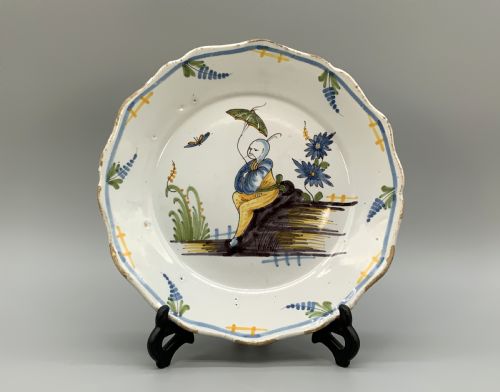
- European interpretations of Chinese artistic motifs and landscapes, popular on seventeenth and eighteenth-century ceramics. Painters adapted oriental figures, pavilions and flora into blue and white or polychrome designs.
- Polychrome
- Decoration employing multiple colours, typically utilising copper green, iron red, manganese purple and antimony yellow alongside blue. These diverse pigments created vibrant floral and figural compositions.
- Kraak Style
- A Dutch imitation of Chinese Kraak porcelain, featuring panelled borders and central aquatic or floral motifs. This style heavily influenced early delftware production.
Antique Delftware Plate: Frequently Asked Questions
Were these plates used for dining?
Many smaller plates served practical functions at the dining table during the seventeenth and eighteenth centuries. Their tin-glazed surfaces handled everyday food service before surviving examples were retired to display cabinets.
Larger chargers and platters were primarily ornamental, displayed on dressers or hung on walls to impress guests. Their broad centres offered painters ample space for elaborate pictorial decoration rather than heavy daily use.
How do I care for an antique plate?
Keep these earthenware objects away from direct moisture, damp environments and automated dishwashing. Dust them gently with a dry, soft cloth to protect the historic glaze surface.
Display them securely on stable plate stands or hanging wires designed for heavy ceramics. Minimise handling to prevent accidental impact to the fragile edges of the tin glaze.
How can I tell English and Dutch pieces apart?
English factories like those in Lambeth and Bristol often utilised slightly pinker or coarser clay bodies beneath the glaze. Their potting profiles and blues sometimes differed subtly from continental output.
Dutch production from centres such as Delft frequently displayed thinner, whiter glazes and distinct footrim characteristics. Comparing the weight, clay tone and border motifs helps separate regional workshops.
What does polychrome mean on delftware?
Polychrome refers to tin-glazed pieces decorated with a range of mineral colours beyond standard cobalt blue. Painters introduced yellows, greens, reds and purples to bring floral and figural scenes to life.
These multi-coloured plates required careful pigment selection and additional firing stages to bond the metallic oxides. The resulting palette offers a brighter alternative to traditional blue and white designs.