





English Delftware Charger
An english delftware charger brings eighteenth-century wall display and table service together through tin-glazed earthenware and painted cobalt pigment.
English Delftware Charger
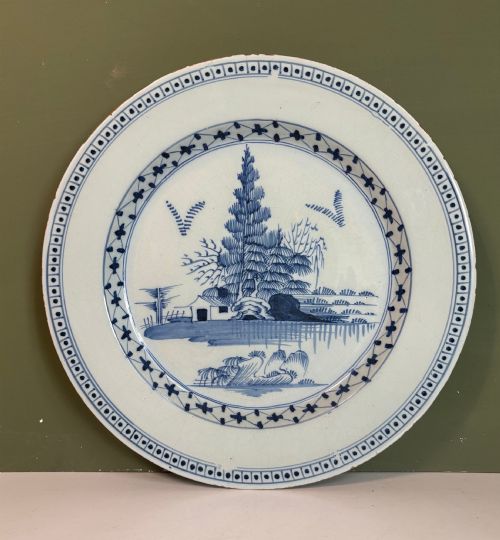
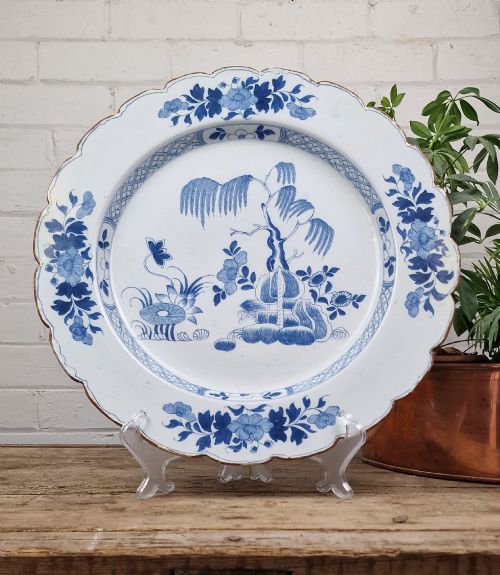
An english delftware charger represents a wide, shallow earthenware dish designed primarily for display or serving during the eighteenth century. When you search for this phrase, you encounter large plates and chargers spanning eras from the early eighteenth century to around eighteen hundred.
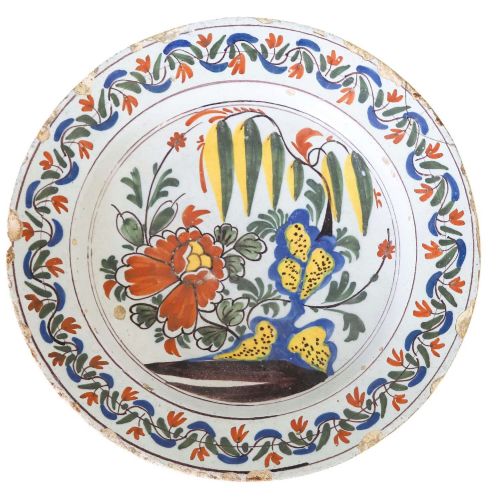
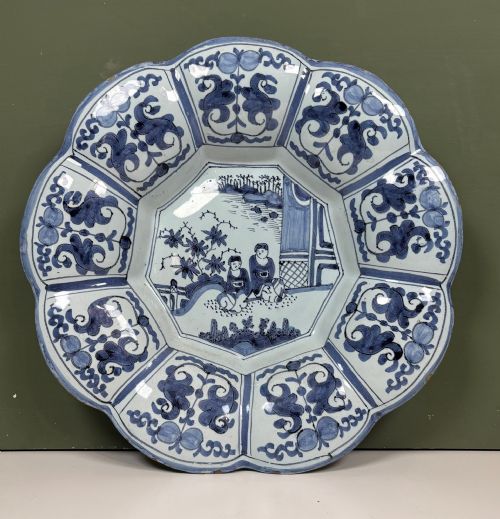
The objects appearing here comprise blue and white chargers, polychrome examples, marriage plates, and shallow bowls. Bristol and Lambeth emerge as specific origins among pieces carrying regional attribution alongside general eighteenth-century dating.
Forms range from large decorative chargers to small plates and sets of matching dishes. The prevailing items present hand-painted floral motifs, chinoiserie scenes, and commemorative designs upon circular ceramic bodies.
How they were made
Potters formed these pieces using clay shaped into earthen plates and shallow bowls. The body received an opaque tin glaze that provided a smooth, white surface for subsequent painting.
Decoration relied upon cobalt pigment and cobalt oxide applied directly to the unfired glaze. Artisans also utilised polychrome pigments to create multi-coloured floral and figural schemes across eighteenth-century chargers.
English Delftware Charger Retail Price Guide 2026
Typical asking prices for english delftware charger among the pieces listed under this phrase on Sellingantiques today, from the lower quarter to the upper quarter. They describe what is for sale here now, not the wider market.
The inventory records regional English production centres alongside pieces decorated with eighteenth-century chinoiserie and floral motifs.
What varies in quality
Quality rests upon the crispness of the hand-painted decoration and the fluidity of the brushwork across the tin glaze. Polychrome examples with vibrant, detailed pigments and blue and white pieces with sharp cobalt motifs stand apart from simpler execution.
The visual appeal depends on the stability of the glaze and the harmony of the central design within the wide rim of the charger. Scale also plays a part, as large chargers demand greater technical skill in firing than smaller plates.
Bristol·Lambeth
The English Delftware Charger Glossary
- Tin Glaze
- An opaque white ceramic glaze containing tin oxide, providing the characteristic background for painted decoration. This coating absorbs metal oxides to create deep blue and polychrome hues during firing.
- Charger
- A large decorative plate or dish intended for display on a wall or sideboard rather than daily dining. These pieces measure significantly wider than standard dinner plates.
- Polychrome
- A style of decoration employing multiple colours rather than a single pigment. Artisans used various metallic oxides to achieve bright palettes on eighteenth-century earthenware.
- Chinoiserie
- European interpretations of Chinese artistic motifs, popular on domestic ceramics. These designs feature fanciful landscapes, figures, and architectural elements painted in blue or colour.
- Cobalt Pigment
- A metallic colourant producing deep blue tones when fused with ceramic glazes. It remained the primary pigment for traditional delftware production.
English Delftware Charger: Frequently Asked Questions
How were english delftware chargers used?
These large dishes served both functional and decorative roles in eighteenth-century households. Many were hung on walls or displayed on dresser shelves to show off bright painted patterns.
Smaller iterations functioned at the table for serving food, while specialised pieces recorded marriages or notable events.
How do you date an english delftware charger?
Dating relies on stylistic shifts in painting, tin glaze opacity, and rim profiles across the eighteenth century. Early pieces often feature heavier earthenware bodies and deep blue palettes.
Later examples from the seventeen-sixties and seventies introduce brighter polychrome pigments and refined floral layouts.
What is the difference between delftware and standard pottery?
Delftware uses a porous earthenware body covered in an opaque tin-glazed surface. This specific glaze allows artists to paint directly onto the unfired coating.
Standard utilitarian pottery often relied on lead glazes over red or buff clay bodies without the white tin layer.
How should you care for an antique delftware charger?
Keep these ceramic pieces away from moisture and extreme temperature fluctuations to protect the earthenware body and tin glaze. Dust them gently with a dry, soft cloth.
Display them securely on stable plate stands or hanging mounts designed for heavy chargers.