


18th Century Delftware Charger
An 18th century delftware charger brings historic tin-glazed earthenware into a room, offering collectors bold hand-painted cobalt and polychrome decoration.
18th Century Delftware Charger
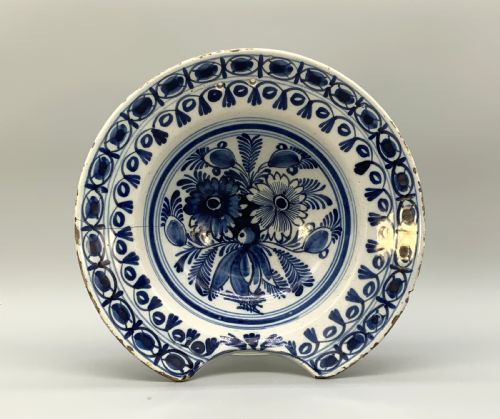
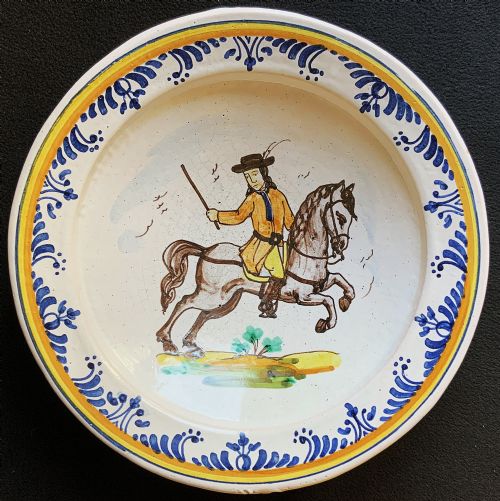
When searching for an 18th century delftware charger, collectors examine large earthenware plates and dishes produced across England, Holland, France, and Spain. These items take the form of broad decorative chargers, shallow bowls, and plates designed primarily for display rather than daily dining.
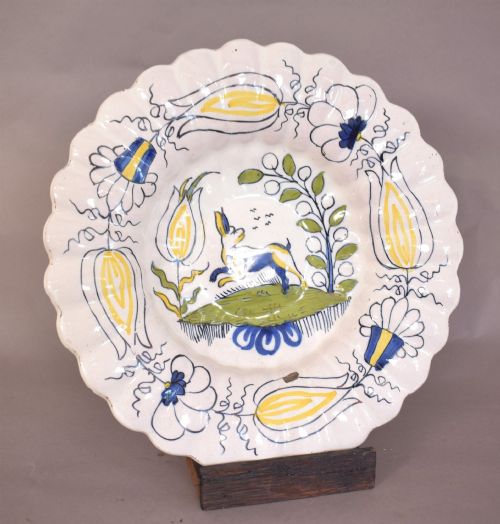
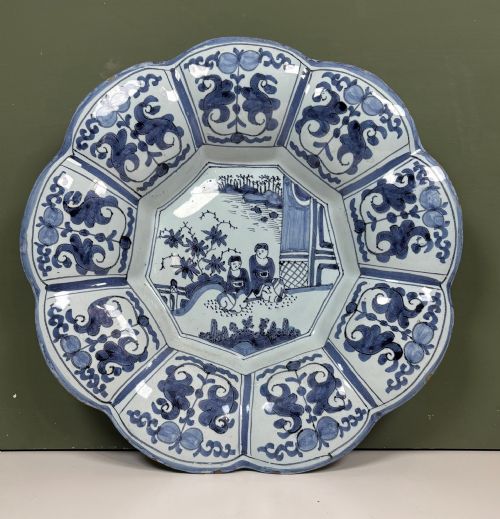
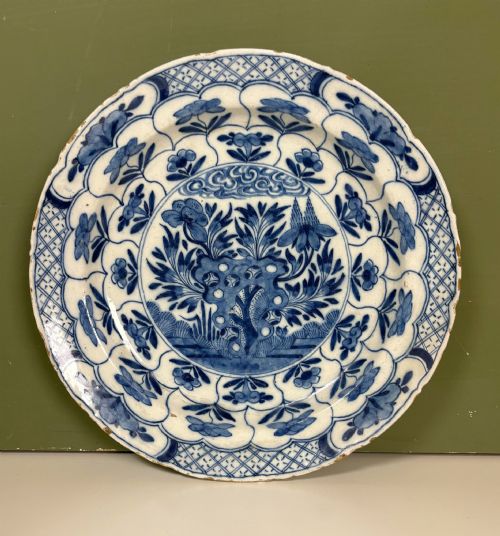
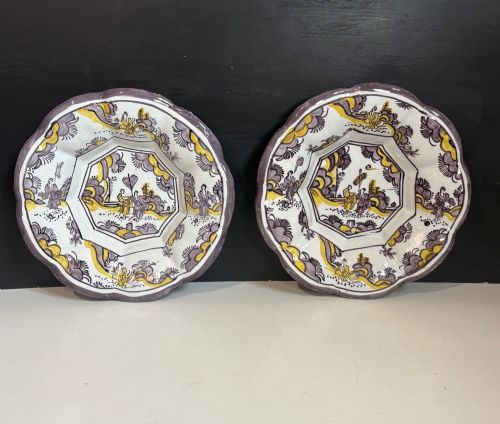
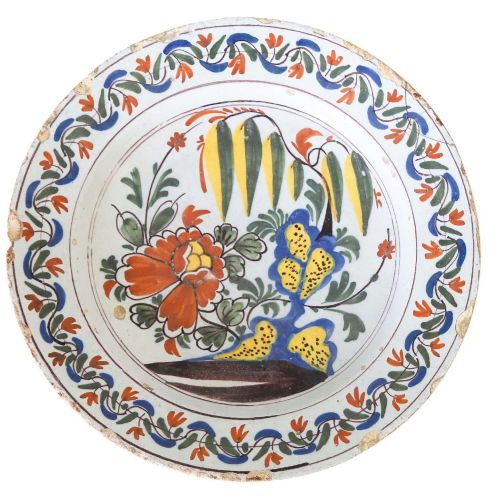
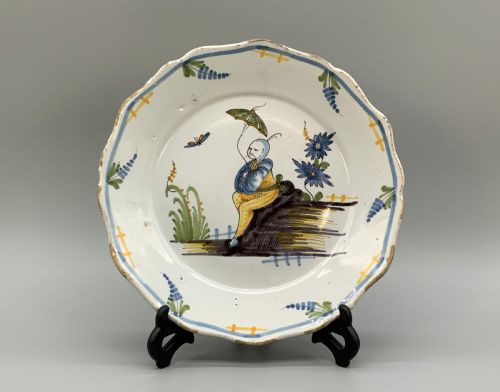
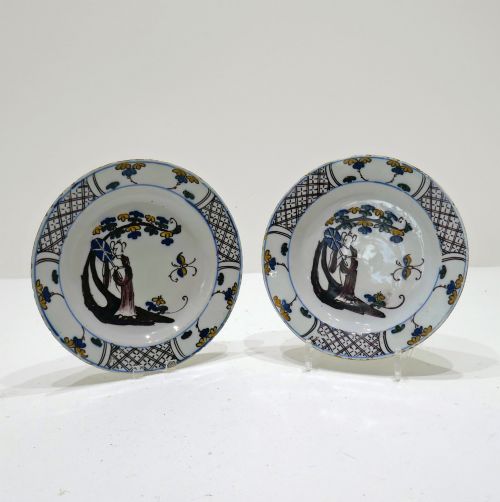
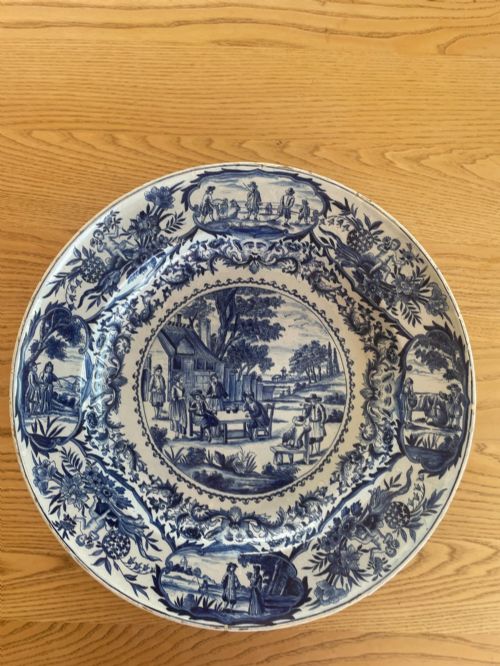
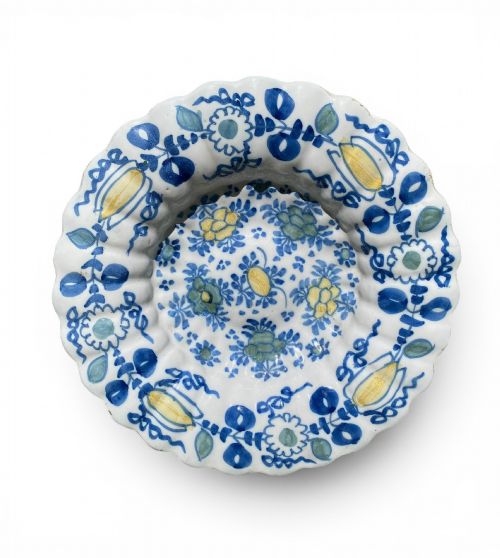
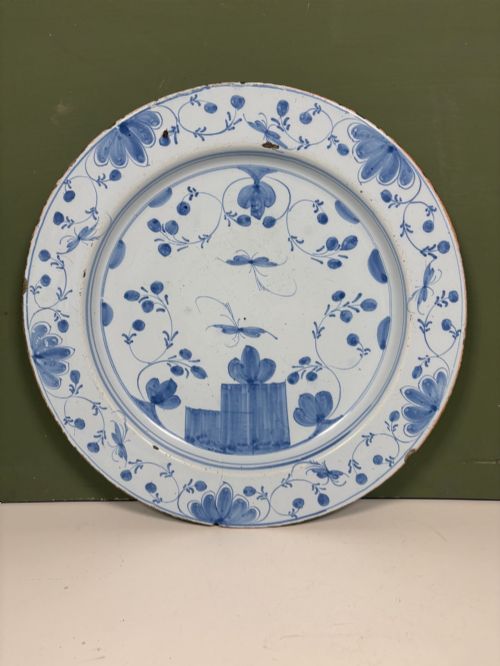
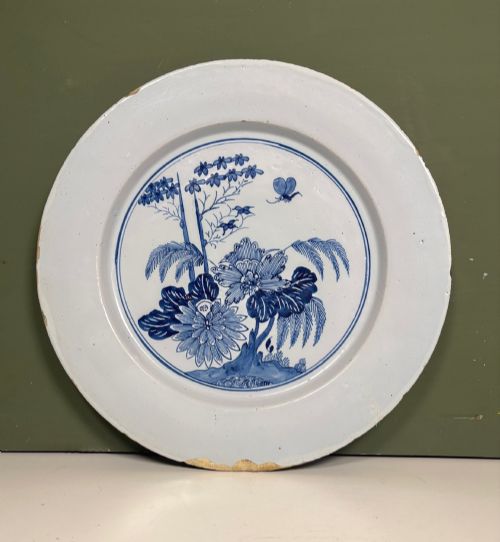
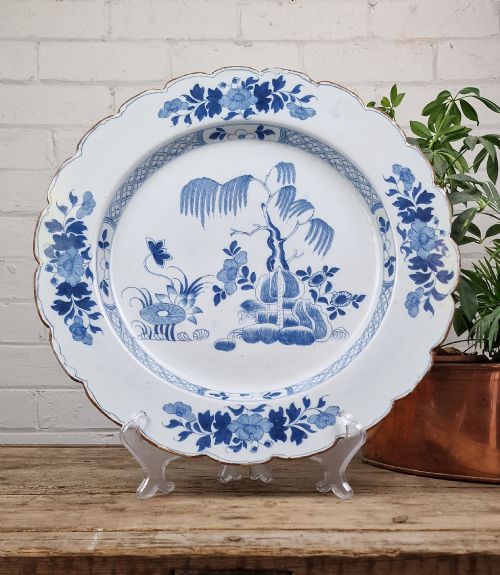
The most common examples on this page are blue and white or polychrome chargers originating from English potteries or Dutch workshops. Pieces span the seventeenth century through to the end of the eighteenth century, encompassing geometric floral motifs, chinoiserie scenes, and commemorative marriage designs.
Materials and Technique
Potters shaped local earthenware clay into broad plates and dishes before firing the body to create a porous base. Artisans then applied an opaque tin glaze, which dried to a milky white surface suitable for absorbing liquid pigments.
Painters applied cobalt pigment, manganese, and yellow colours directly onto the unfired tin glaze in a single firing process known as grand feu. This technique caused the pigments to sink slightly into the white glaze, producing soft edges around floral and figurative designs.
Some Bristol workshops painted lively blue patterns while kitchen cats slept nearby, leaving stray hairs permanently fired into the glaze.
Evaluating Quality
The visual success of an 18th century delftware charger depends on the confidence of the brushwork and the clarity of the tin glaze. Superior examples display brisk, assured hand-painted decoration that utilises the absorbent glaze without excessive pooling or smudging.
Colour palette also distinguishes the range, with vibrant polychrome combinations and deep cobalt tones commanding greater visual presence than dull or muddy applications. The crispness of the white tin glaze against the painted motifs determines the overall impact of the piece.
Bristol·Lambeth
The 18th Century Delftware Charger Glossary
- Tin-glazed earthenware
- Pottery covered with a white glaze made opaque by the addition of tin oxide. This surface provided a smooth canvas for hand-painted cobalt and polychrome decoration.
- Charger
- A large decorative plate or dish historically used for display on sideboards or walls rather than for serving food at the table.
- Polychrome
- Decoration employing multiple colours, typically including combinations of blue, green, yellow, orange, and manganese on tin-glazed surfaces.
- Grand feu
- A ceramic firing technique where pigments are applied directly to raw, unfired glaze and subjected to a high-temperature kiln burn together.
- Chinoiserie
- European decorative art influenced by Chinese artistic styles, frequently featuring imaginary landscapes, pavilions, and figures.
18th Century Delftware Charger: Frequently Asked Questions
How were chargers displayed historically?
Historic interiors utilised large plates and chargers as decorative wall hangings or arranged them upright on sideboards and dressers to showcase imported ceramic styles.
Owners frequently positioned these earthenware dishes in principal rooms to catch the light and display colourful painted motifs to visitors.
How do I distinguish English from Dutch pieces?
English pottery often reveals subtle differences in clay body density, glaze tone, and distinct regional palettes associated with centres like Bristol and Lambeth.
Dutch workshops frequently produced bright blue and white or grand feu manganese chargers with specific floral borders typical of continental production.
What causes crazing on the surface?
Crazing occurs as the tin glaze and the underlying earthenware body age and respond differently to environmental temperature changes over centuries.
This network of fine lines is a normal characteristic of old ceramic glazes rather than a structural fault.