
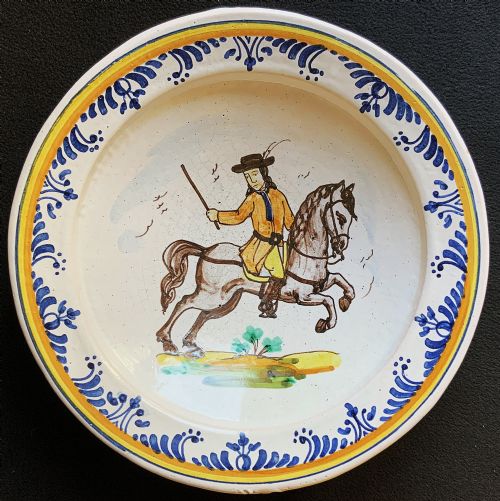


Large Delft Wall Plate
A large delft wall plate brings bold blue and white or polychrome punch to a room, offering centuries of earthenware craft for modern walls.
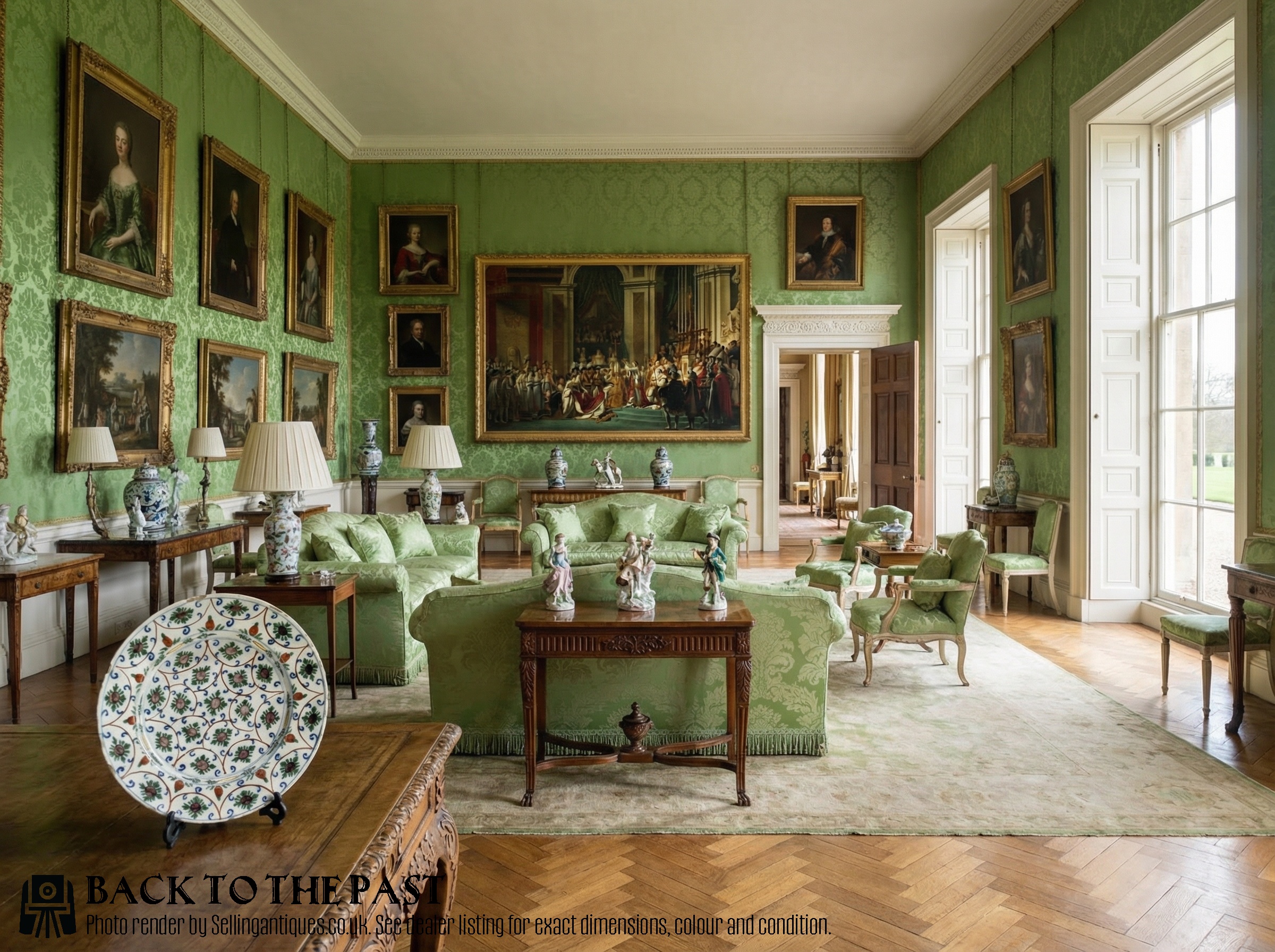
Large Delft Wall Plate
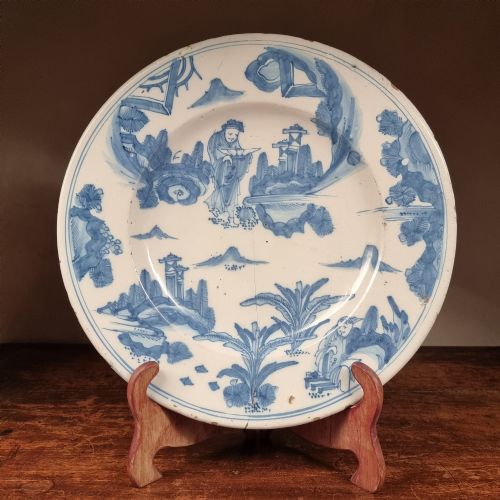
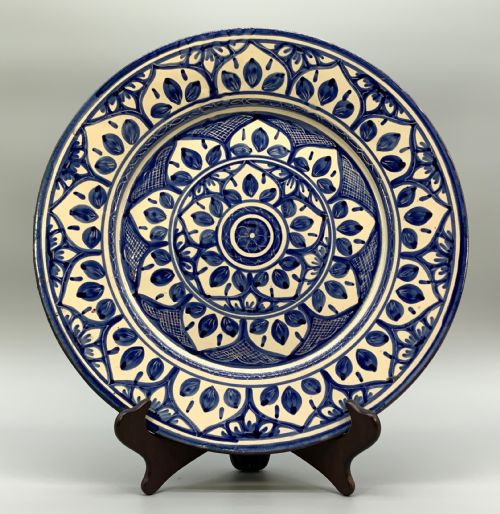
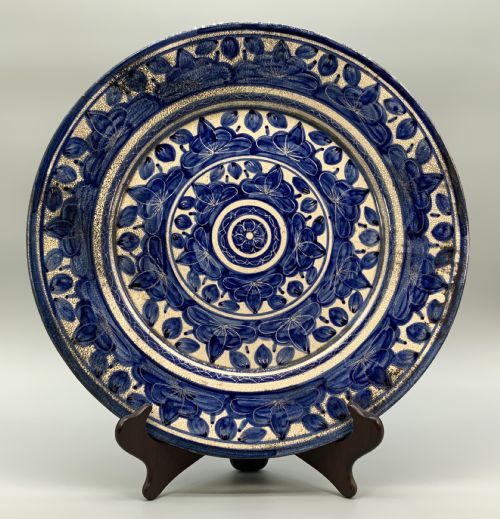
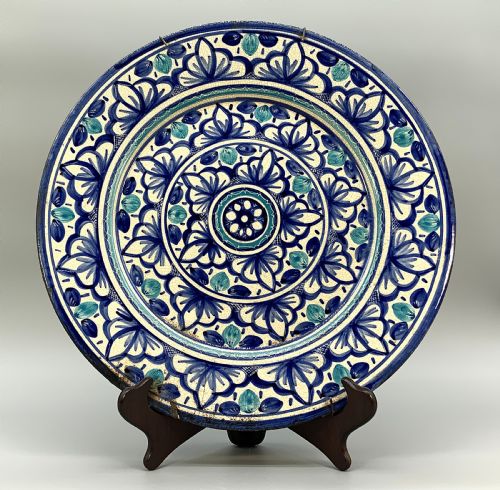
When you search for a large delft wall plate, you are looking at substantial earthenware display dishes spanning several centuries. These pieces appear in forms such as chargers, decorative plates, and wide bowls designed primarily for visual impact.
The examples available here encompass 17th century Dutch pieces, 18th century Dutch and Spanish items, and mid-20th century Moorish style continental interpretations. They range from classic blue and white Kraak designs to manganese and polychrome geometric florals.
Originating across different European centres, these large plates demonstrate various regional aesthetics, from traditional Dutch baroque motifs to spirited revival patterns. Their scale makes them commanding focal points when hung on a wall or displayed on a dresser.
How they were made
Potters shaped these items from earthenware and coated the clay body in an opaque tin glaze or faience glaze. This white or milky surface provided a smooth canvas for subsequent painted decoration.
Painters applied cobalt oxide and other pigments directly onto the porous unfired glaze, a technique known as grand feu or high-fire painting where the colours fused during the main kiln firing. This method created the characteristic soft bleeding of blue and manganese lines into the white background.
Listings feature tin-glazed earthenware spanning from the seventeenth century through to mid-twentieth-century Moorish revival interpretations.
What varies in quality
Quality rests in the confidence and clarity of the brushwork, distinguishing brisk, expressive floral or figurative painting from stiffer execution. The vibrancy of the palette, particularly in manganese and polychrome pieces, also marks out superior examples.
The smoothness of the tin glaze and the control shown during the firing process dictate the visual refinement of the surface. Plates with even glaze coverage and minimal kiln distortion represent the higher end of the range.
The Large Delft Wall Plate Glossary
- Tin-Glazed Earthenware
- Earthenware pottery covered with a lead glaze made opaque by the addition of tin oxide. This white surface forms the traditional base for delft painting.
- Charger
- A large decorative plate or platter intended primarily for display on a wall or sideboard rather than daily dining use.
- Grand Feu
- A high-temperature firing technique where pigments applied to the raw glaze fuse permanently with the surface during a single main kiln firing.
- Faience
- European tin-glazed earthenware produced in imitation of imported Chinese porcelain or fine Italian majolica. The term is often used interchangeably with continental delft.
- Kraak
- A style of Chinese porcelain decoration featuring panelled motifs and central bird or floral subjects, widely copied by Dutch and European delft potters.
Large Delft Wall Plate: Frequently Asked Questions
How do I hang a heavy charger safely?
Large earthenware plates require sturdy spring-loaded wire hangers that distribute weight evenly across the rim. Ensure the wall fixing is securely anchored into masonry or a stud.
Avoid hangers with tight or abrasive metal prongs that might bite into the soft earthenware body. Check the fit periodically to maintain a secure hold against the wall.
Were these plates used for food?
Most large chargers and wall plates were created for display rather than the dining table. Their generous scale and decorative painted surfaces made them status items for affluent households.
While some historical examples saw utilitarian service, tin glaze remains relatively soft and prone to staining. Modern owners generally treat them as decorative wall art.
How do I tell Dutch delft from Spanish pieces?
Dutch pieces frequently rely on blue and white cobalt palettes or manganese tones, often reflecting maritime or floral themes. Spanish examples, such as those from Catalana traditions, lean towards richer polychrome palettes and distinct local geometric or figurative motifs.
Examining the foot ring, glaze tone, and brushwork style helps clarify the regional origin. Different European potteries adapted imported Chinese aesthetics through their own distinct local filters.