
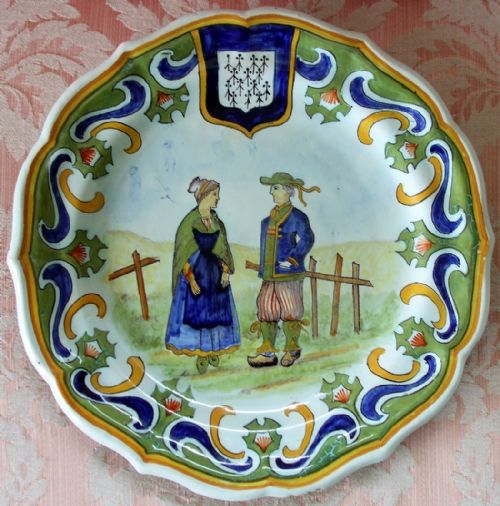
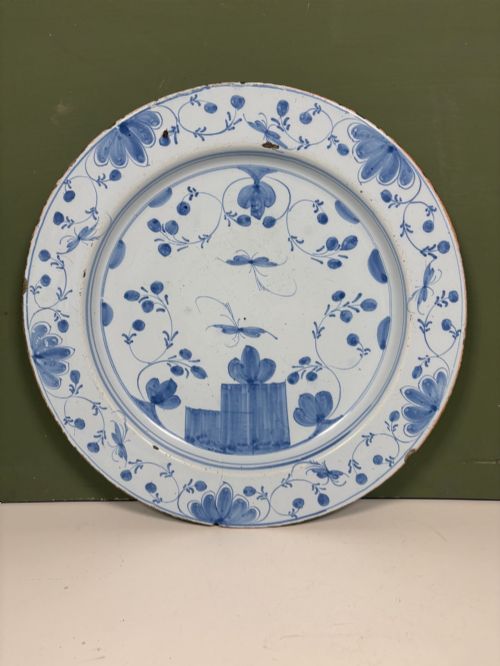


Hand Painted Faience Charger
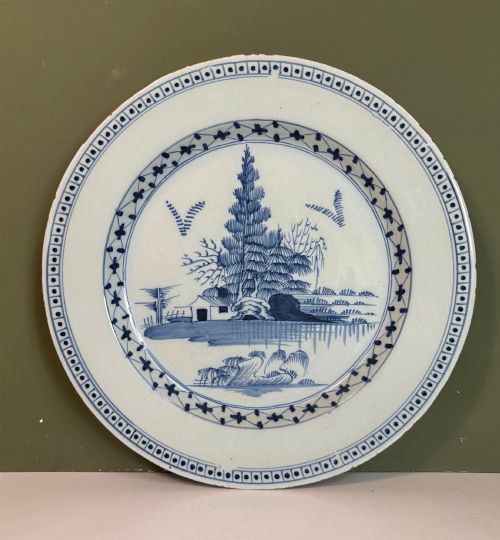
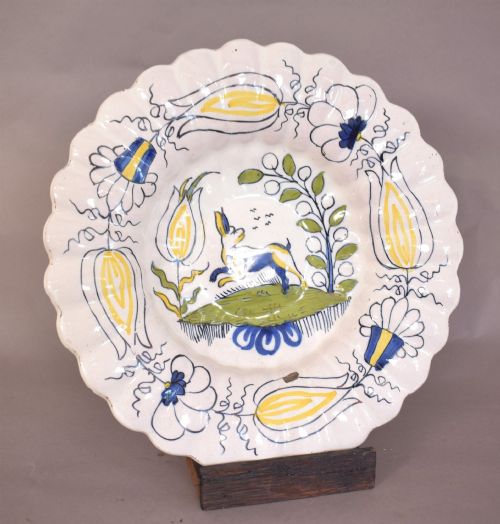
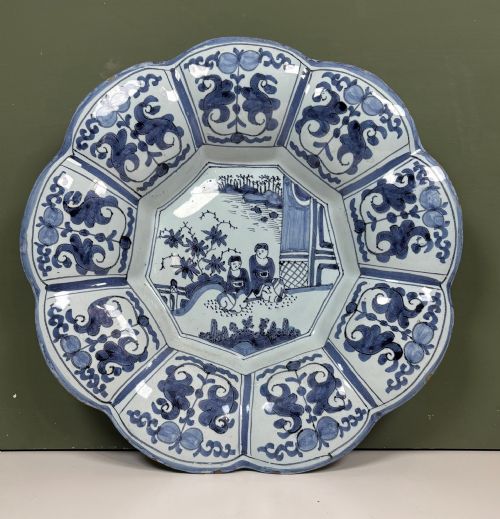
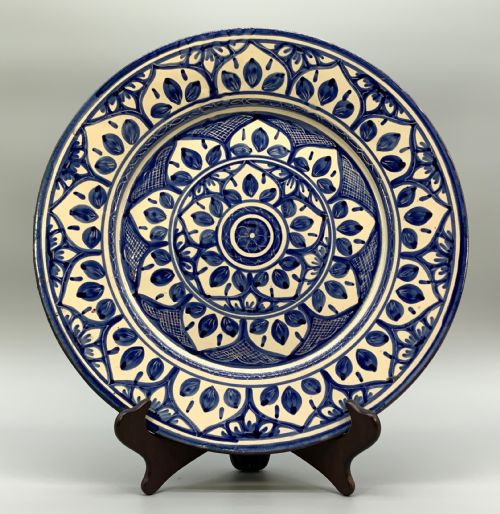
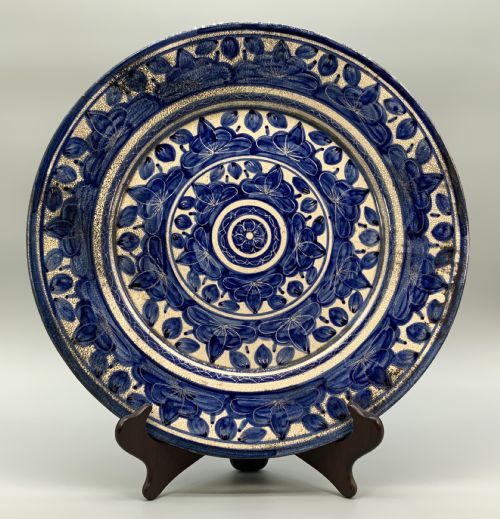
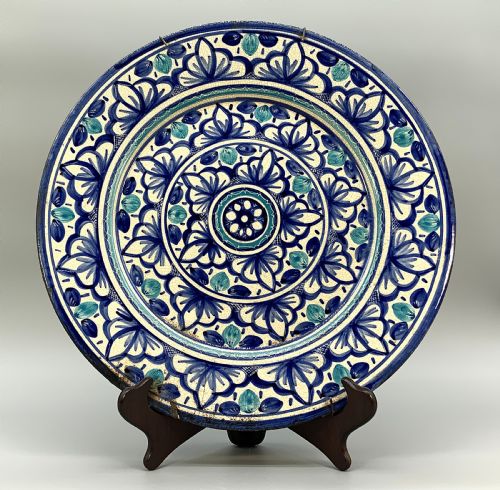
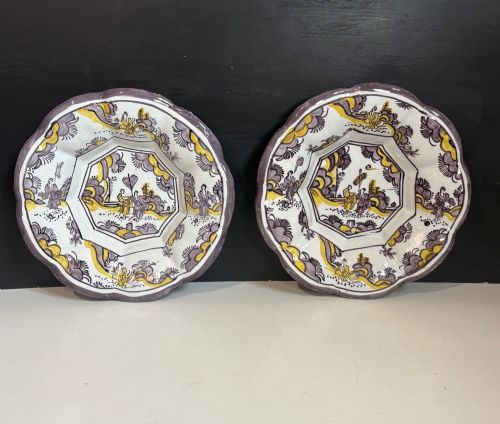
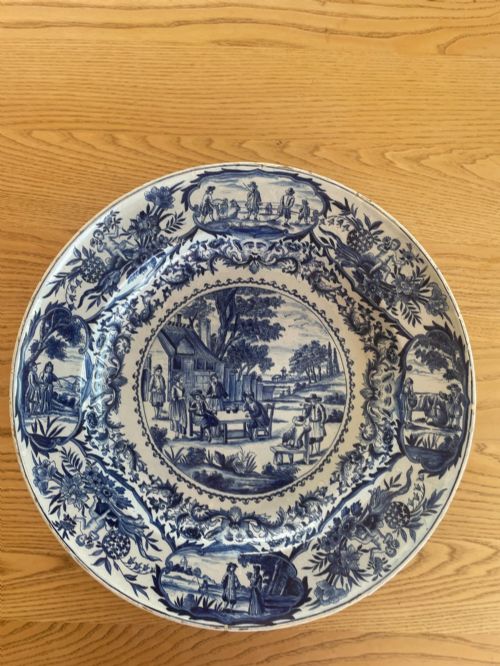
These hand painted faience charger examples offer bold tin glazed earthenware decoration for display, ranging from seventeenth century Dutch work to later French pieces.
Hand Painted Faience Charger
A hand painted faience charger is a large decorative ceramic plate or dish intended primarily for wall hanging or display rather than dining use. The selection brings together tin glazed earthenware spanning the seventeenth century through to the twentieth century.
The version most commonly encountered on this page is the eighteenth century Dutch delft charger, featuring either blue and white or polychrome geometric and floral patterns. Continental pieces influenced by Moorish style and French regional pottery from places like Desvres and Lille also appear.
Makers recorded in the archive and listings include Bassano pottery works and individual decorators such as A. L. Regnier working for Théodore Deck. Forms range from simple wall chargers and decorative platters to lobed dishes and rectangular plaques.
Materials and production methods
These pieces are constructed from earthenware coated in an opaque white tin glaze, which provided a smooth surface for hand painting. Artisans applied cobalt pigment and other mineral colours directly onto the unfired or absorbent glaze.
Firing in traditional kilns set the pigments into the glaze, producing the characteristic glossy finish seen on seventeenth and eighteenth century delftware. The combination of earthenware body and tin glaze defined the faience tradition across England, France, Holland, and Italy.
Listings feature tin glazed earthenware and faience spanning the seventeenth century through to 1940, originating from Dutch, French, English, and Italian workshops.
Assessing quality and character
Quality in a hand painted faience charger lies in the crispness and confidence of the brushwork, particularly within the painted floral or geometric motifs. Stronger pieces display deliberate control over cobalt pigment and polychrome enamels across the broad surface of the dish.
The depth of the tin glaze and the stability of the earthenware body during firing determine the tactile presence of the charger. Early examples from the seventeenth and eighteenth centuries show individual potting characteristics that distinguish them from later Continental revivals.
Théodore Deck·Bassano pottery works·Desvres French Faience·Antique Lille
The Hand Painted Faience Charger Glossary
- Faience
- Tin glazed earthenware produced in France, Italy, and other parts of Europe. It relies on a white opaque glaze to receive hand painted pigments.
- Charger
- A large decorative plate or dish traditionally sized for display on a wall or dresser rather than for serving food at table.
- Tin glaze
- An earthenware glaze rendered opaque by the addition of tin oxide. This creates a milky white surface suitable for direct painting.
- Polychrome
- Decoration employing multiple colours rather than a restricted palette of blue and white. In these listings it often describes floral and geometric eighteenth century designs.
- Delftware
- Tin glazed earthenware originating from towns in the Netherlands, particularly Delft. It encompasses both blue painted and multi-coloured decorative plates.
Hand Painted Faience Charger: Frequently Asked Questions
What is a faience charger?
A faience charger is a large tin glazed earthenware plate made for visual display rather than table service.
These pieces feature hand painted designs in blue and white or polychrome colours across a broad ceramic surface.
How were these chargers used?
Historically, large dishes and chargers were hung on walls or arranged on dressers to display wealth and taste.
Today they function as decorative wall art or cabinet centerpieces within traditional and eclectic interiors.
How do I date a delft charger?
Dating relies on observing the characteristics of the earthenware body, the tone of the tin glaze, and the style of the hand painted motifs.
Seventeenth and eighteenth century examples display different potting weights and pigment qualities compared to nineteenth and twentieth century revivals.
Can I hang an antique charger on the wall?
Many chargers from the seventeenth century onwards were produced specifically for display and feature structural traits suited to mounting.
Properly fitted hardware designed for heavy ceramics ensures secure placement without placing undue stress on the earthenware rim.