


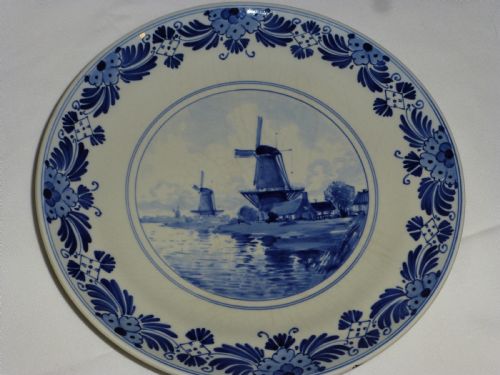
Tin Glazed Earthenware Plaque
These tin glazed earthenware plaque examples range from Dutch Delft to Italian maiolica, offering substantial wall display pieces with historic narrative scenes.
Tin Glazed Earthenware Plaque
A tin glazed earthenware plaque serves primarily as wall art or a decorative charger, appearing in forms such as large circular plates and rectangular devotional panels. When you search for a tin glazed earthenware plaque, you encounter pieces that span centuries of European ceramic traditions from Spanish catalana bowls to French faience and Dutch Delftware.
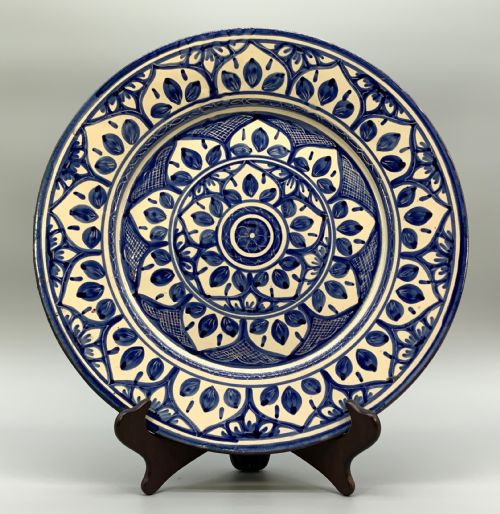
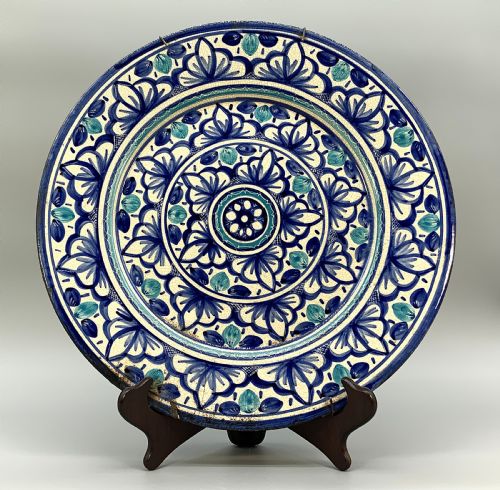
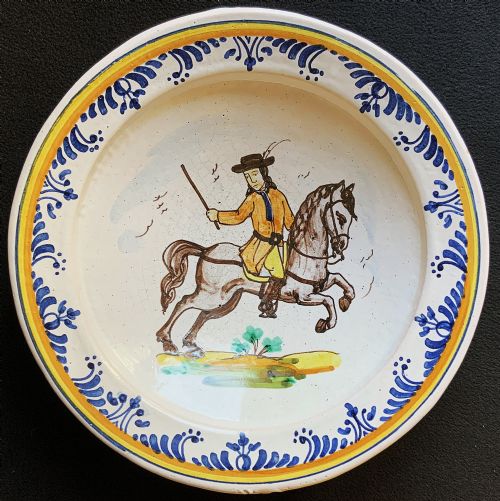
The pieces on this page lean heavily towards large chargers and wall plaques originating from the eighteenth and nineteenth centuries, alongside a few mid-twentieth century Continental interpretations. Styles stretch across Renaissance Revival, Moorish Revival, Dutch Baroque, and French Rococo, reflecting the diverse regional revivals that kept these historic techniques alive.
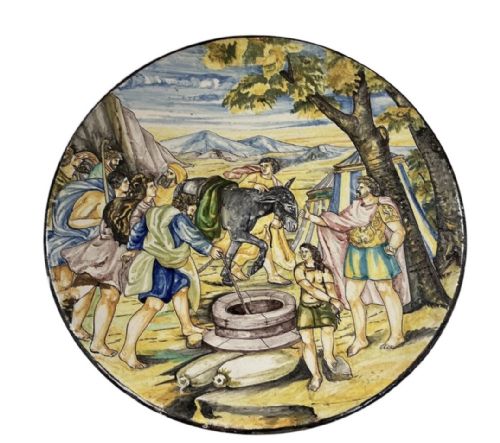
Subjects depicted on these surfaces vary from classical historical scenes and biblical narratives like the Last Supper to Chinoiserie patterns and literary satirical sequences. Collectors find both polychrome brilliance and classic blue and white painting traditions across these varied national schools.
Materials and construction
Makers shaped a clay body into plates or flat panels before firing the piece to create a sturdy earthenware biscuit. This foundational ceramic layer absorbs the liquid coatings applied subsequently during the decorative process.
Artisans applied an opaque white glaze containing tin oxide directly onto the fired clay, creating a smooth canvas for pigments. Cobalt blue and polychrome pigments were then painted straight onto this absorbent unfired glaze surface before a final kiln firing fused the colours permanently.
The listings here include examples from the eighteenth century, the nineteenth century, and nineteen forty, spanning ceramic traditions across Spain, France, Italy, and the Netherlands.
Factors influencing quality
Visual distinction rests primarily in the ambition and execution of the painted surface, separating hurried workshop production from masterwork narrative painting. Finer pieces demonstrate confident brushwork in complex istoriato scenes or intricate Chinoiserie details rather than stiff, repetitive patterns.
The purity and opacity of the tin glaze itself affect the visual depth of the background, while the vibrancy of the fired pigments determines the overall impact of the piece. Physical scale also elevates certain chargers and plaques, especially when combined with ambitious moulding or heavy throwing.
C. Ravier
The Tin Glazed Earthenware Plaque Glossary
- Tin-glazed earthenware
- Pottery covered with a lead glaze made opaque by the addition of tin oxide. This white surface provides the ideal background for subsequent pigment painting.
- Faience
- The French and general European term for tin-glazed earthenware. It encompasses wares produced in France, the Netherlands, and across the Continent.
- Charger
- A large decorative plate intended primarily for display on a sideboard or wall rather than for dining use. Many examples in this category take this substantial circular form.
- Istoriato
- A style of ceramic decoration featuring detailed narrative scenes that cover the entire surface of the object. This technique draws heavily on classical history and religious iconography.
- Polychrome
- Decoration employing multiple distinct colours rather than a restricted single-colour palette. These palettes often incorporate rich yellows, greens, blues, and manganese purples.
Tin Glazed Earthenware Plaque: Frequently Asked Questions
What is a tin glazed earthenware plaque?
A tin glazed earthenware plaque is a decorative ceramic panel or charger coated in an opaque white glaze and painted with pigments. These objects were made across Europe to hang on walls or display on furniture as works of art.
They combine the potter's craft with the painter's brush, recording historical, religious, and decorative motifs from the eighteenth and nineteenth centuries.
How were these wall plaques displayed?
Historical chargers and plaques were typically hung on walls using specialist wire hangers or displayed upright on sideboards and dressers. Their large scale and vibrant painted surfaces made them ideal focal points in formal rooms.
Today, collectors use similar mounting methods to showcase these historic ceramic panels safely on interior walls.
How do I tell Dutch Delft from Italian maiolica?
Dutch Delft pieces often lean towards blue and white palettes or Chinoiserie motifs, reflecting strong East Asian trade influences and local Baroque traditions. Italian maiolica frequently employs the istoriato style with dense polychrome history paintings rooted in Renaissance aesthetics.
Examining the palette, brushwork style, and regional characteristics helps separate the Dutch workshops from Italian centres like Pesaro or Urbino.
Are these plaques meant for daily use?
These pieces were created primarily for visual display rather than functional dining or utility. The historic tin glaze and earthenware bodies can be vulnerable to heavy wear and surface impact over time.
Living with them involves treating them as fragile historic artworks suited for secure wall mounting or stable shelf placement.
How can I distinguish eighteenth century pieces?
Eighteenth century examples often exhibit specific glaze characteristics, softer clay bodies, and hand-mixed mineral pigments typical of period workshops in Spain, France, and Holland. Their subject matter frequently includes traditional devotional imagery, biblical narratives, or early European interpretations of imported styles.
Comparing the stylistic markers and overall wear patterns against documented period examples helps confirm the dating of each plaque.