
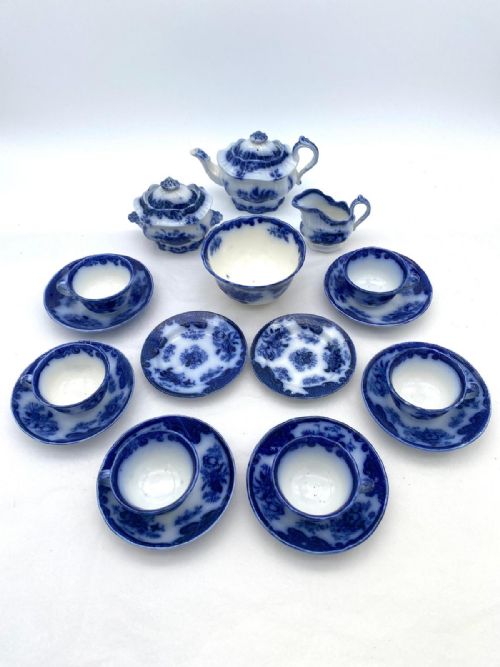
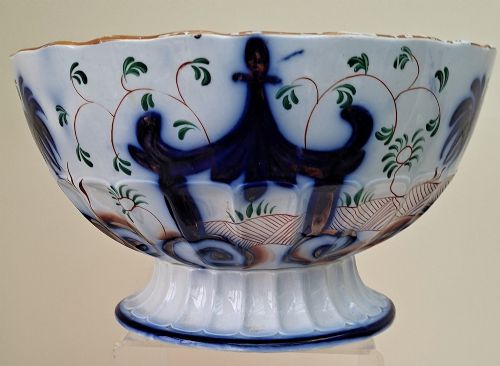


Victorian Blue White China
Victorian blue white china brings patterned earthenware to the table through printed plates, tureens and serving platters.

Identifying Victorian blue white china
Victorian blue white china covers domestic tableware produced across the nineteenth century in earthenware and pearlware bodies. You will regularly encounter plates, serving platters and tureens carrying printed cobalt designs in various tones.
The objects on this page span the nineteenth century, including specific dates such as 1840, 1844, 1890 and the wider Victorian period. Surviving examples range from individual botanical plates to complete custard sets and large carving platters with reservoirs.
Makers and regional potteries across England produced these utilitarian and decorative ceramic forms for daily dining and service. The selection reflects domestic table use through utilitarian tureens and decorative plates.
Materials and manufacture
Potteries shaped these items from earthenware and pearlware, applying glazes over ceramic bodies to create smooth, durable surfaces for food service. Manufacturers utilised transfer printing techniques to transfer intricate blue motifs onto the clay before firing.
Specialised workshops produced items such as large carving platters featuring integrated reservoirs to catch juices during meat preparation. Custard sets and multi-piece tureen collections demonstrate the varied production methods employed by nineteenth-century English potteries.
Retail Price Guide 2026
Typical UK retail prices for victorian blue white china, calculated from the Sellingantiques database of over a million retail prices indexed since 2003. This retail price guide relies exclusively on Sellingantiques data; no external sources or auction records are used, so the figures do not describe the wider market.
Some nineteenth-century cooks required specialised ceramic reservoirs simply to keep Sunday joint juices from pooling on the dining room cloth.
Assessing quality
Quality rests in the crispness of the transfer print and the uniformity of the glaze across the ceramic body. Finer pieces maintain sharp cobalt lines without blurring, while heavier utilitarian items prioritize structural thickness for carving and service.
Completeness dictates standing within sets, as matched groups of plates or intact custard sets command greater interest than isolated vessels. The sophistication of the botanical or pictorial subject matter further separates standard production from superior output.
Doulton Burslem·Elkin And Newbon·Staffordshire
The Victorian Blue White China Glossary
- Pearlware
- A refined earthenware body developed in the late eighteenth century featuring a subtle bluish glaze that pooled in recesses. This ceramic substrate formed the basis for many early nineteenth-century blue and printed wares.
- Tureen
- A deep covered vessel designed for serving soups, sauces or vegetables at the dining table. These large holloware pieces often rested on matching platters.
- Transfer printing
- A decoration technique where an engraved copper plate applied an ink design onto tissue paper, which was then transferred onto the unglazed ceramic surface. This method allowed potteries to produce detailed repeating patterns efficiently.
- Reservoir
- A sunken well or channel incorporated into the surface of large serving platters to collect meat juices during carving. Such functional additions mark specialised serving pieces.
Frequently Asked Questions
How do I use these plates?
Many collectors display these antique pieces on walls or within cabinets to protect the transfer-printed glaze from modern detergent wear. Alternatively, robust platters and plates see occasional service during formal dining occasions.
Careful hand washing preserves the historic earthenware and prevents thermal shock from modern dishwashers.
What periods do these pieces span?
The available selection covers the nineteenth century, encompassing Georgian, Early Victorian and late nineteenth-century manufacture around 1890. Each era brought subtle shifts in ceramic body composition and printing clarity.
Examining the glaze colour and base styling helps place an object within this timeline.
Are these items earthenware?
Most pieces on this page are formed from traditional earthenware or pearlware ceramics. These porous clay bodies received protective glaze coatings to ensure they remained functional for holding food.
Heavier serving pieces utilised thicker earthenware walls to withstand the demands of meat carving.