


Antique Transferware Platter
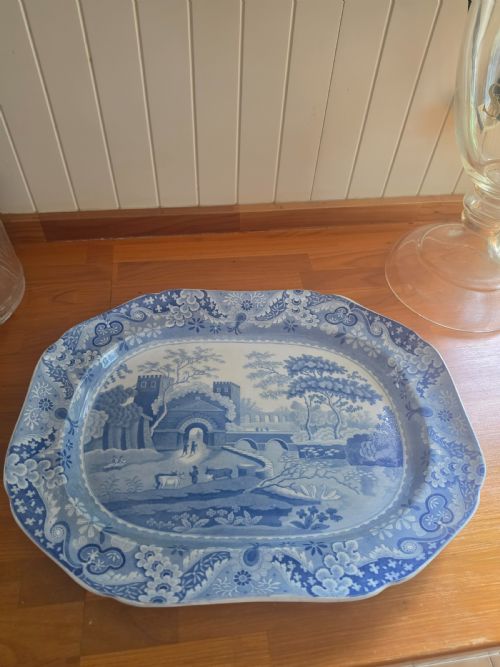
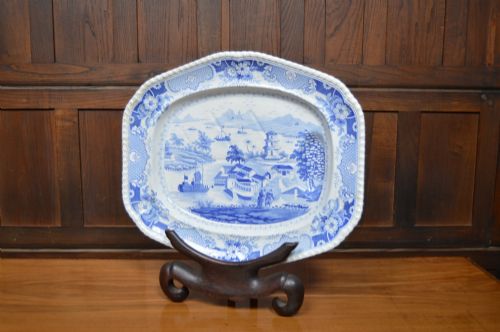
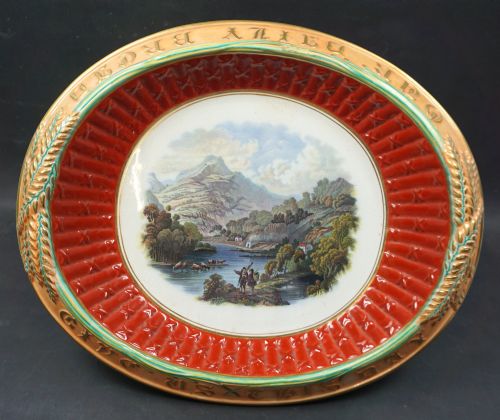
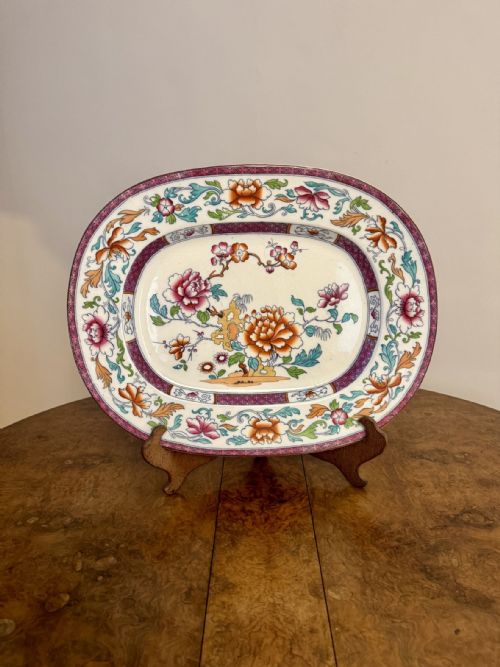
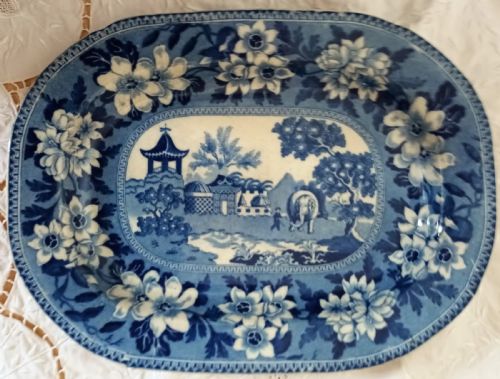
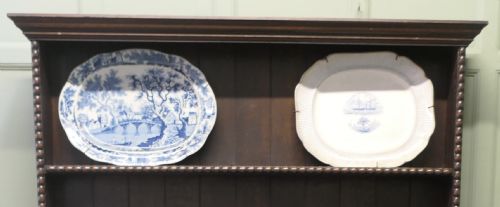
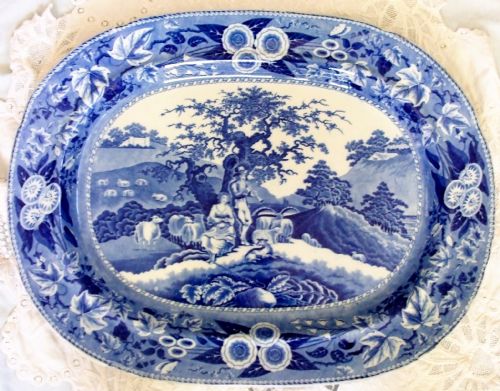
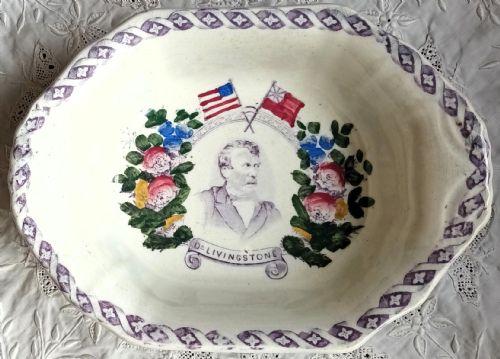
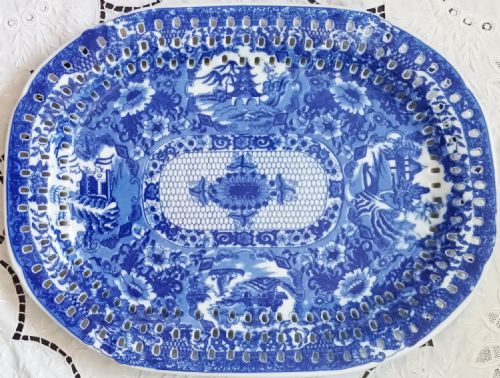
These antique transferware platters bring grand nineteenth-century dining tables to life with rich cobalt scenes.
Defining the antique transferware platter
An antique transferware platter is a large serving dish designed for carving meat at the table during the nineteenth century. These pieces appear in forms such as chargers, meat plates, and serving dishes.
The objects on this page belong to the nineteenth century, including the Victorian period and the year 1800. English transferware and Chinoiserie styles dominate the selection.
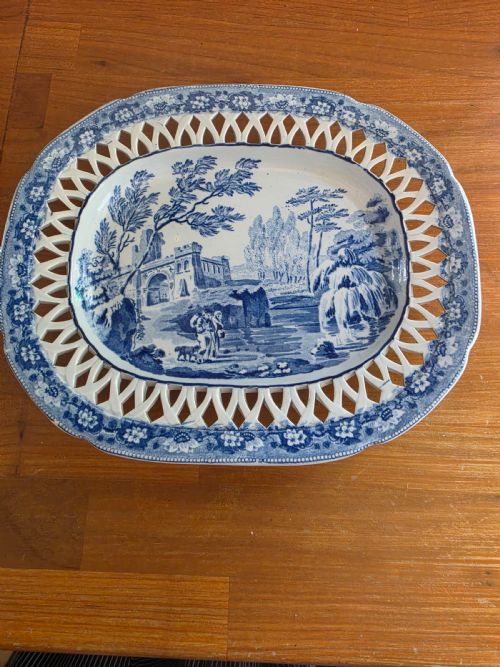
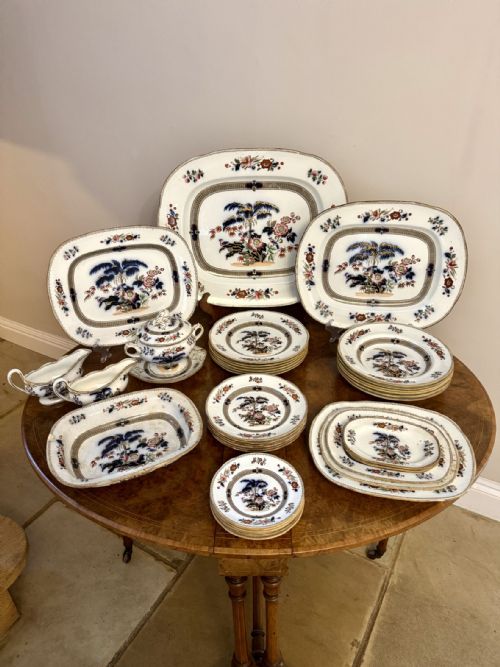
Buyers will encounter large formats like the huge Minton meat platter and drainer, alongside standard serving plates. Makers such as Minton and Mason's Ironstone represent the origin of these kitchen staples.
Materials and construction
Potters built these serving dishes from earthenware, ceramic, and ironstone. Cobalt glaze and enamel added colour and durability to the glazed pottery surface.
Makers applied patterns using a copperplate transfer technique before glazing and firing. Drainers were sometimes included in the manufacture to catch meat juices during service.
Retail Price Guide 2026
Typical UK retail prices for transferware platter, calculated from the Sellingantiques database of over a million retail prices indexed since 2003. This retail price guide relies exclusively on Sellingantiques data; no external sources or auction records are used, so the figures do not describe the wider market.
Listings span the nineteenth century, featuring earthenware, ironstone, and cobalt glaze across serving platters and meat plates.
Judging quality and distinction
Quality rests in the crispness of the cobalt glaze transfer and the complexity of the pattern, such as the Indian grasshopper design. Ironstone versions offer heavier, more robust bodies than standard earthenware.
Additional functional elements, like an integrated drainer or a bespoke crest such as the London Goldsmiths coat of arms, elevate a platter above basic servingware.
Minton
The Antique Transferware Platter Glossary
- Transferware
- Pottery decorated by printing a design from an engraved copper plate onto tissue paper, then transferring it onto the unglazed or bisque ceramic before firing. This method allowed for intricate, repeating patterns.
- Ironstone
- A dense, durable type of ceramic patented in the nineteenth century to rival Chinese porcelain. It provides a heavy, resilient base for meat plates and large serving dishes.
- Charger
- A large decorative or serving platter that sits beneath other courses. In nineteenth-century dining, these massive plates held large joints of meat.
- Drainer
- A perforated ceramic insert that fits inside a platter to keep meat elevated from accumulated juices. These additions are particularly sought after by collectors.
- Chinoiserie
- A decorative style reflecting European interpretations of Chinese and East Asian artistic traditions. It appears frequently in early blue and white pottery patterns.
Frequently Asked Questions
What is a transferware platter?
A transferware platter is a large nineteenth-century serving dish decorated with printed patterns transferred from a copper plate onto ceramic.
These pieces were essential for presenting large roasts and joints of meat at grand dining tables.
How do I use an antique platter?
These platters function well for serving large portions of food or displaying fruit and floral arrangements on a sideboard.
Due to their age and delicate glazes, hand washing is necessary to preserve the ceramic surface.
What is ironstone?
Ironstone is a heavy, durable type of ceramic developed in the nineteenth century to resist chipping.
Platters made from this material offer greater weight and resilience than standard earthenware.
Why do some platters have drainers?
Platters with drainers included a removable ceramic insert that kept roasted meat raised above its juices during carving.
This feature helped keep the meat tidy and made serving easier at the table.