


Blue Transferware Serving Dish
A blue transferware serving dish brings robust Staffordshire earthenware and cobalt scenes to the table, combining utility with pictorial depth.
Blue Transferware Serving Dish
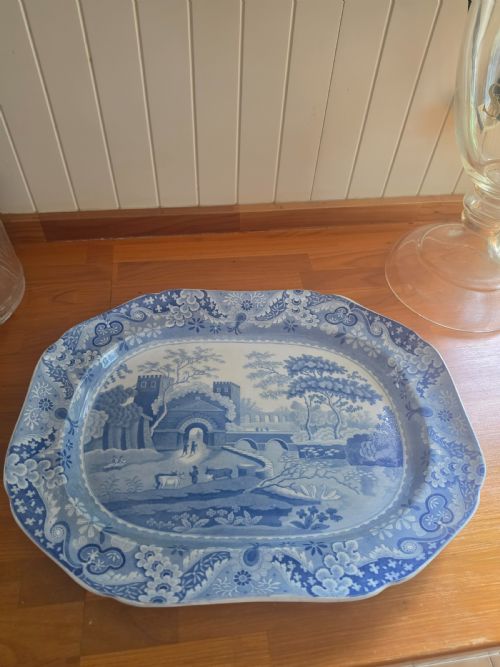
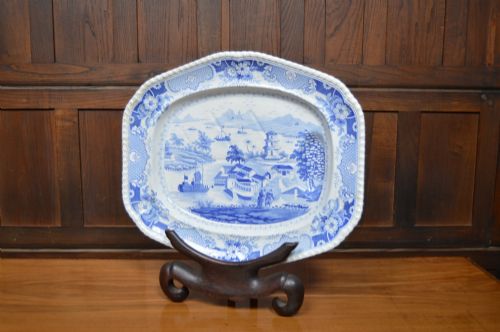
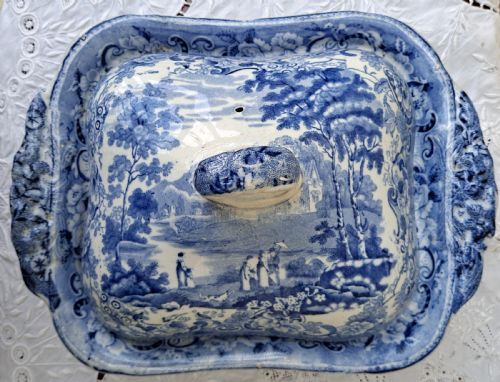
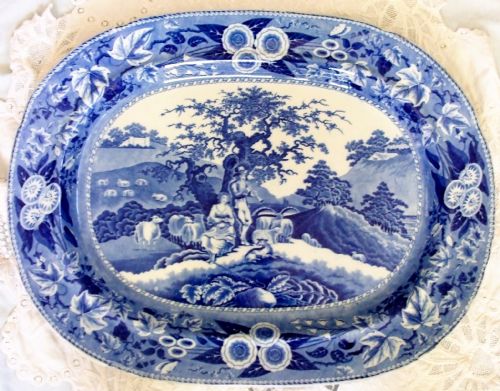
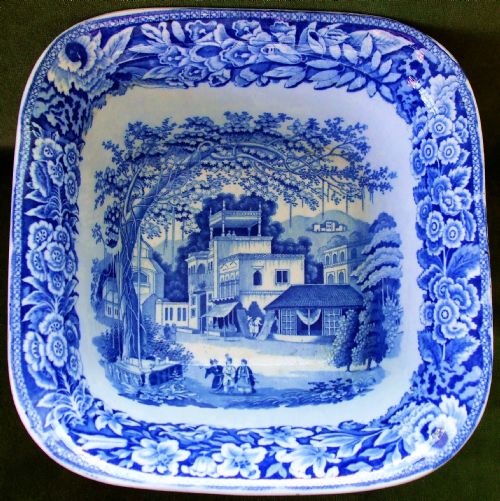
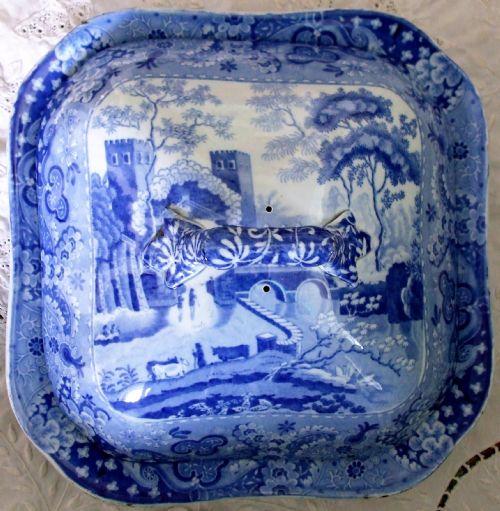
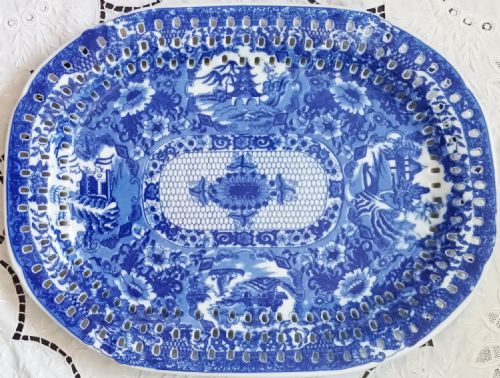
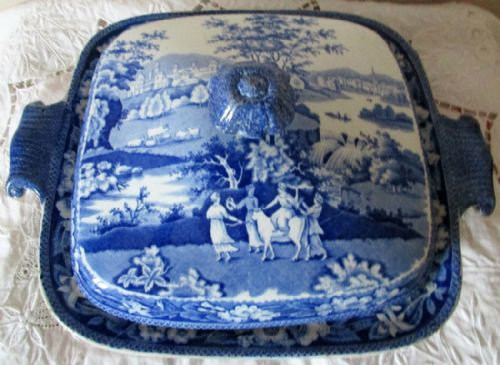
A blue transferware serving dish is a utilitarian ceramic vessel created for presentation at the table during the Georgian and Victorian periods. Buyers encounter large meat platters, vegetable tureens with covers, bread stands, and drained chargers bearing printed cobalt landscapes.
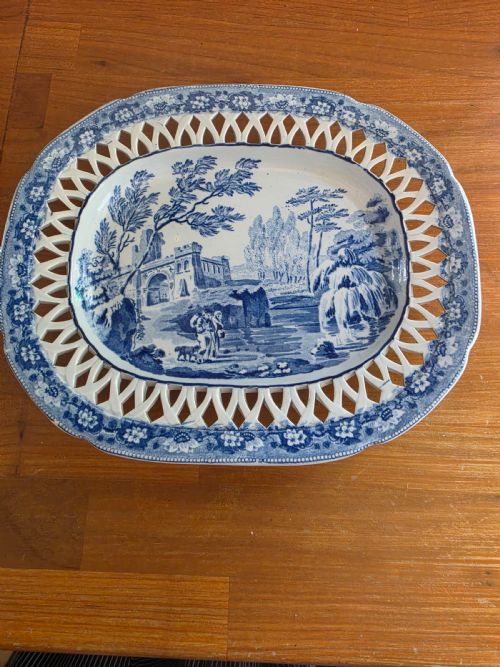
Most examples originate from 19th-century English potteries operating in Staffordshire and related manufacturing centres. The forms range from heavy meat plates designed for carved joints to pierced trays intended for draining sauces or water.
How they were made
Potters shaped earthenware, pearlware, or improved stone china bodies on wheels or in moulds before applying cobalt pigment transfers. The printed design was transferred from an engraved copper plate onto tissue paper and rubbed onto the biscuit ceramic.
A transparent lead glaze was applied over the pigment before the vessel underwent a high-temperature kiln firing to fix the blue colour and seal the porous clay body.
Blue Transferware Serving Dish Retail Price Guide 2026
Typical asking prices for blue transferware serving dish among the pieces listed under this phrase on Sellingantiques today, from the lower quarter to the upper quarter. They describe what is for sale here now, not the wider market.
Early potters occasionally left faint fingerprints in the cobalt glaze where a clumsy apprentice moved a wet dish toward the kiln.
What varies in quality
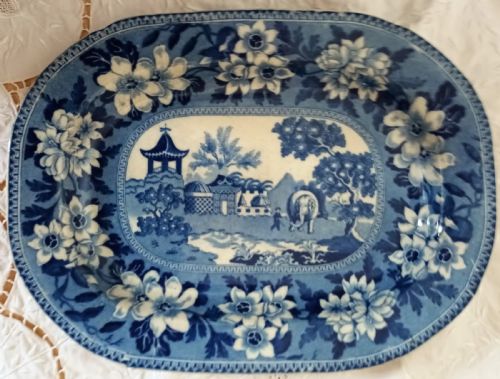
The clarity of the transfer print distinguishes finer pieces from ordinary production, with superior examples showing crisp lines and well-registered details in complex patterns like India Temple or Bridge of Lucano. Smudged lines or overlapping transfer tissue indicate hurried workshop output.
Form complexity also separates the range, as pierced rims, moulded handles, complete tureen lids, and matched ladles demand greater ceramic skill than plain flat meat plates.
Spode·Davenport·John Rogers and Son·James Wallace and Co·J and R Riley·J and R Clews·Minton·Doulton Burslem·Thomas Lakin·Don Pottery
The Blue Transferware Serving Dish Glossary
- Transferware
- Ceramic pottery decorated by applying a printed design from an engraved copper plate using pigment and tissue paper. This mechanised process allowed complex pictorial scenes to be replicated consistently across large dinner services.
- Pearlware
- A refined earthenware developed in the late 18th century featuring a slightly bluish glaze that pooled in recesses to mask the underlying cream-coloured body. It served as a popular canvas for early cobalt blue printed landscapes.
- Tureen
- A deep covered vessel designed for serving soups, vegetables, or sauces at the dining table. Many 19th-century examples include matching stands and ladles.
- Charger
- A large decorative or serving plate utilised primarily for presentation rather than individual dining. These substantial ceramic pieces often display expansive topographical or architectural transfer prints.
- Drainer
- A perforated ceramic insert placed inside a meat platter to allow juices to collect beneath the joint. These scarce components are specific to large serving dishes of the Georgian era.
Blue Transferware Serving Dish: Frequently Asked Questions
How were serving dishes used?
These vessels held roasted joints, vegetables, or sauces on the dining table during large meals. Platters often utilised internal drainers to separate meat juices from the food.
Tureens kept contents warm beneath fitted ceramic covers while resting on matching stands. They formed central components of extensive 19th-century dining services.
How do I date a blue and white dish?
Pottery body characteristics offer primary clues, as early pearlware bodies with bluish glazes point toward the Regency period. Later Victorian pieces frequently utilise heavier earthenware or improved stone china.
Maker marks stamped or printed on the base provide specific attribution. Pattern names and registry numbers further narrow the production era.
Can I use antique platters for food?
These glazed earthenware pieces remain structurally sound for serving dry foods or bread. Historic lead glazes suggest caution with high-acidity or wet contents.
Hand washing preserves the historic glaze and prevents moisture ingress through any underlying crazing lines.
What are transferware patterns?
Patterns depict topographical views, classical ruins, historical battles, and romanticized rural scenery derived from contemporary engravings. Series such as Byron Views or the Shipping Series named specific design groups.
Chinoiserie motifs and romantic castles reflected contemporary tastes in Victorian and Georgian households.