


Staffordshire Transferware Tureen
A Staffordshire transferware tureen brings remarkable blue and white pictorial design to the table, offering a durable earthenware serving vessel collectors prize.
What they are
A staffordshire transferware tureen is a ceramic serving vessel designed for table service, appearing in forms such as sauce tureens and vegetable tureens with matching covers and bases. These pieces date across the nineteenth century, including Georgian and Victorian periods, showcasing distinct regional pottery production.
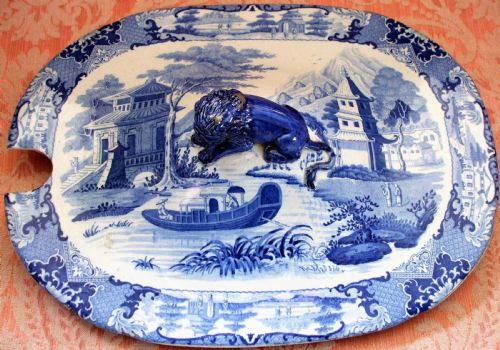
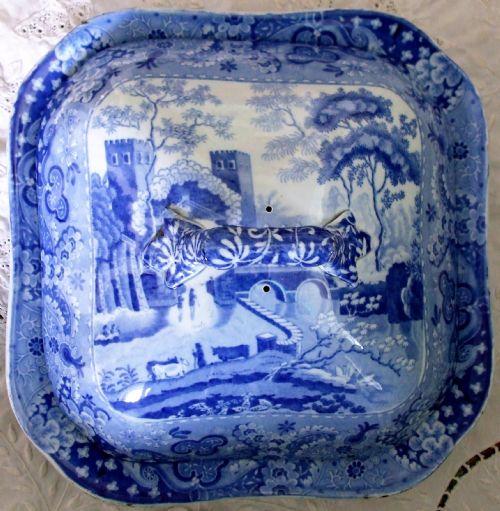
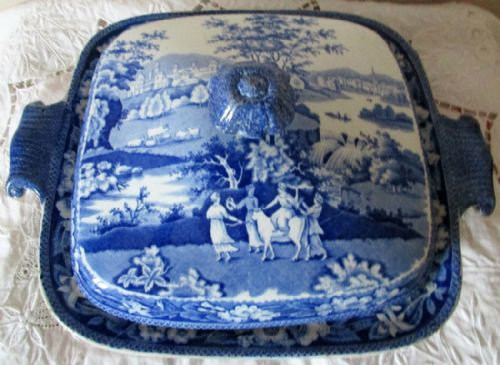
The objects on this page present various transfer-printed patterns including pictorial designs like elephant motifs, castle scenes, europa subjects, and landscapes after artists like Landseer. Most examples incorporate blue and white decoration applied to earthenware bodies.
Buyers encounter servingware originating from notable nineteenth century potteries, reflecting domestic dining customs of the period. Each tureen combines functional utility with decorative narrative landscapes characteristic of early ceramic printing.
How they were made
Potters formed these pieces using ceramic earthenware, shaping bodies to function as tureens, covers, and bases. Lead glaze was applied over the surface to seal the porous clay and provide a smooth finish.
Decoration relied on cobalt oxide pigment transferred onto the ceramic body via engraved copper plates and tissue paper. This transfer print technique allowed intricate pictorial scenes to transfer consistently onto curved surfaces before firing.
Retail Price Guide 2026
Typical UK retail prices for staffordshire transferware tureen, calculated from the Sellingantiques database of over a million retail prices indexed since 2003. This retail price guide relies exclusively on Sellingantiques data; no external sources or auction records are used, so the figures do not describe the wider market.
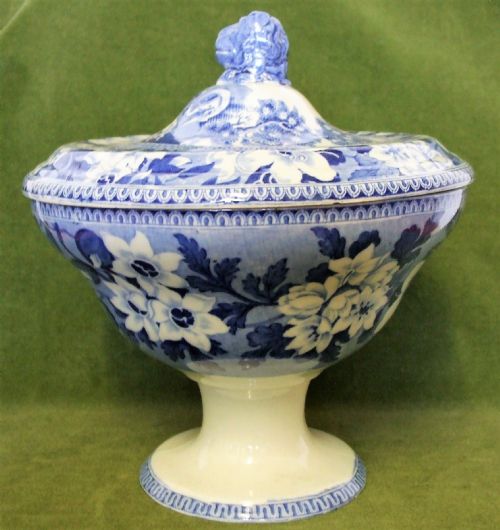
Several tureens feature fierce lion head handles gripping the covers while serene pastoral scenes unfold across the bowls.
What varies in quality
The clarity and registration of the transfer print dictate the visual success of the piece, with sharper cobalt application distinguishing finer output. Faint or blurred lines indicate less precise copper plate transfer during production.
The survival of matching components such as covers, bases, and lion head elements determines the completeness of an individual tureen. Integrity of the lead glaze and the overall crispness of the earthenware moulding complete the assessment.
John Rogers & Son·J. & R. Clews·J. & R. Riley·Copeland and Garrett
The Staffordshire Transferware Tureen Glossary
- Transferware
- Earthenware decorated by printing a design from an engraved copper plate onto tissue paper and transferring it to the ceramic body. This technique enabled intricate pictorial scenes to be produced in volume.
- Earthenware
- Porous ceramic pottery fired at lower temperatures than stoneware or porcelain. It serves as the primary body material for these nineteenth century tureens.
- Cobalt oxide
- Mineral pigment used to produce the deep blue colour seen in nineteenth century transfer printing. It withstands high firing temperatures without losing its hue.
- Lead glaze
- Glassy coating containing lead applied to ceramic surfaces to provide a glossy, impermeable finish. This coating protected the transfer print and earthenware beneath.
Frequently Asked Questions
What is a Staffordshire transferware tureen used for?
These ceramic vessels served soups, sauces, and vegetables at nineteenth century dining tables.
They functioned as both practical tableware and decorative centrepieces during formal meals.
How do I care for antique earthenware?
Wash these ceramic pieces gently by hand using mild soap and warm water.
Avoid dishwashers and harsh scouring pads to protect the historic lead glaze and cobalt print.
How can I tell the period?
Dating relies on recorded potter marks, stylistic design elements, and historical ceramic manufacturing techniques.
Nineteenth century pieces often show specific transfer patterns tied to known makers from the Georgian and Victorian eras.
Why are some patterns rare?
Specific pictorial subjects, such as those after Landseer or uncommon animal motifs, were produced in smaller quantities by individual potteries.
Limited production runs mean certain designs appear less frequently on the market today.