


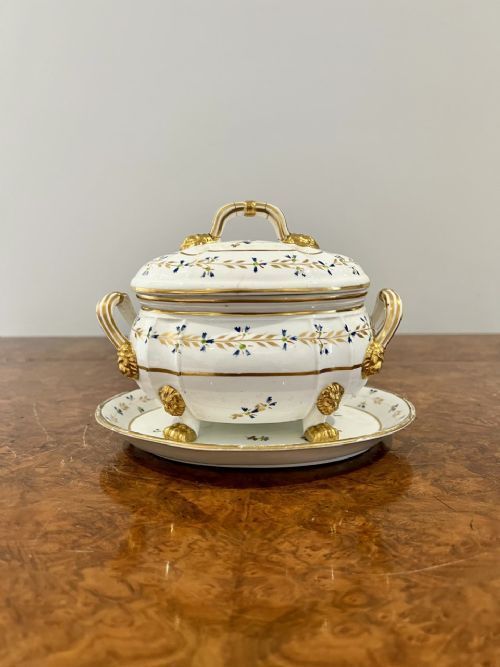


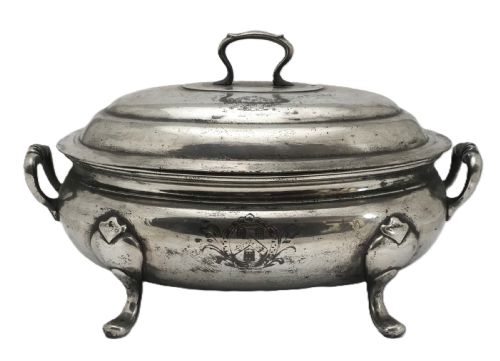


Antique Vegetable Tureen
An antique vegetable tureen brings formal nineteenth-century dining ceremony directly to the modern table.
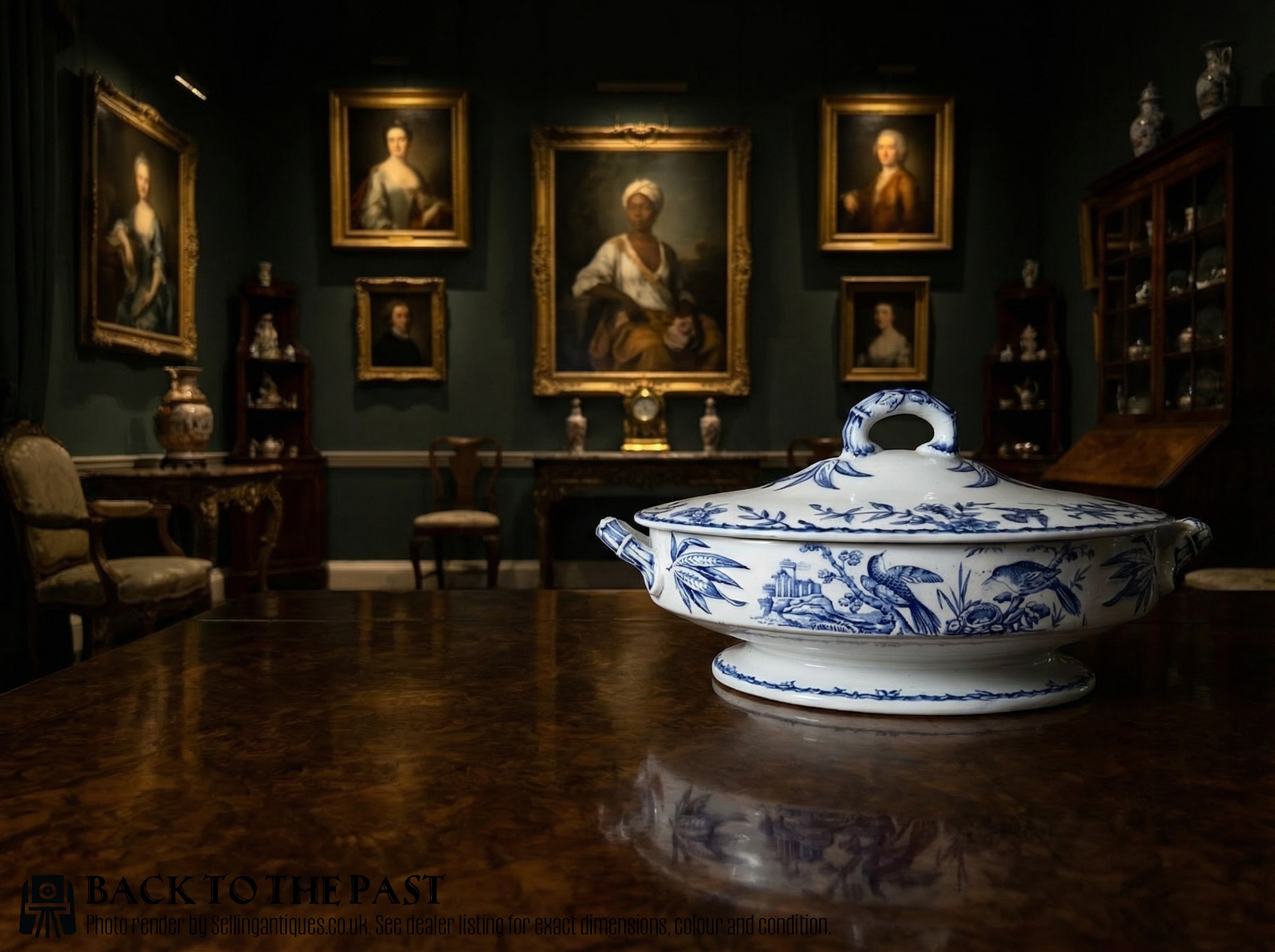
Antique Vegetable Tureen
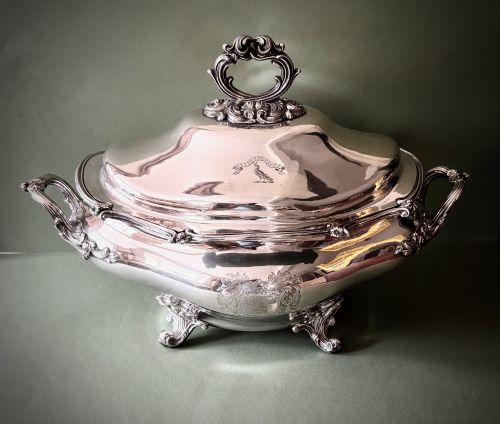
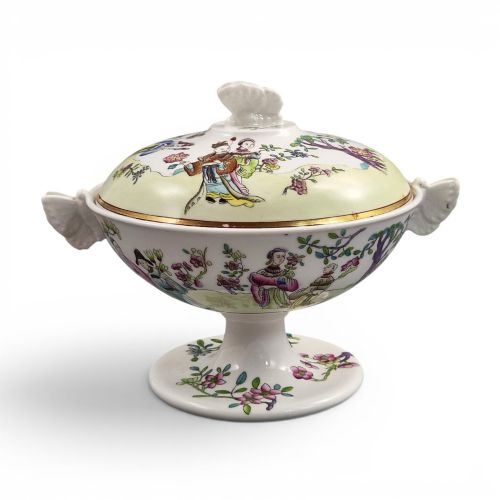
An antique vegetable tureen is a covered vessel designed to hold and warm side dishes for the dining table. The pieces found here span the eighteenth, nineteenth, and early twentieth centuries, encompassing earthenware, ironstone, porcelain, and silver plate.
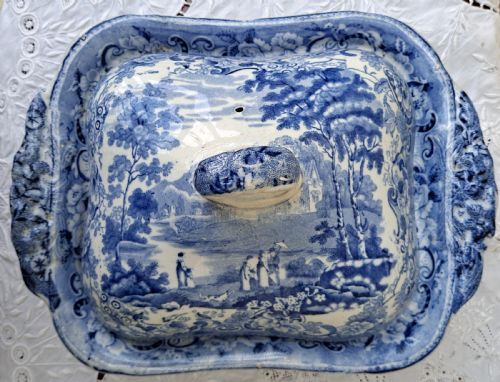
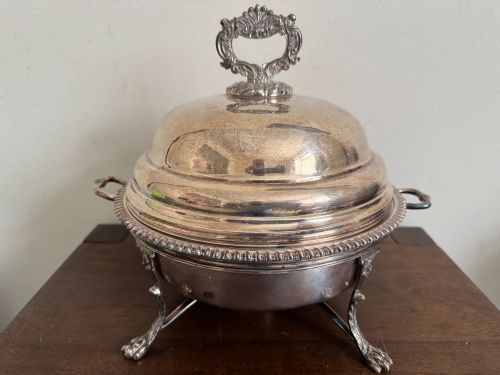
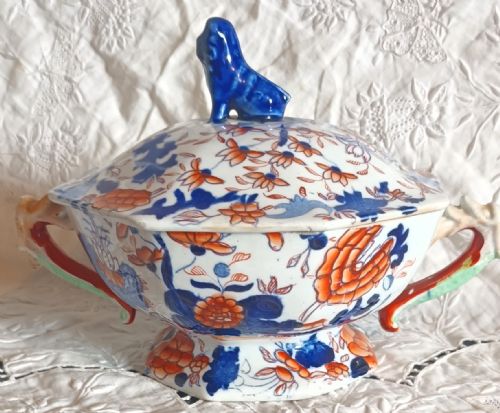
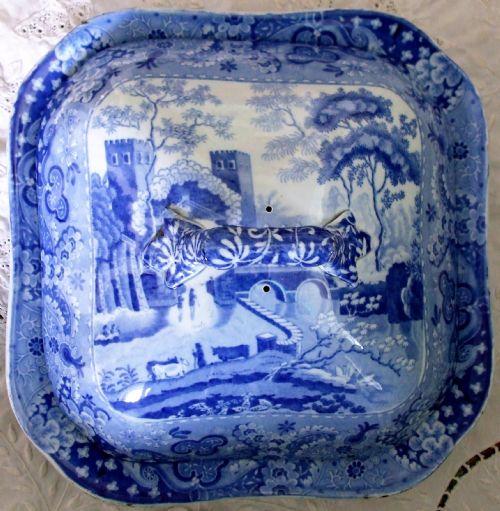
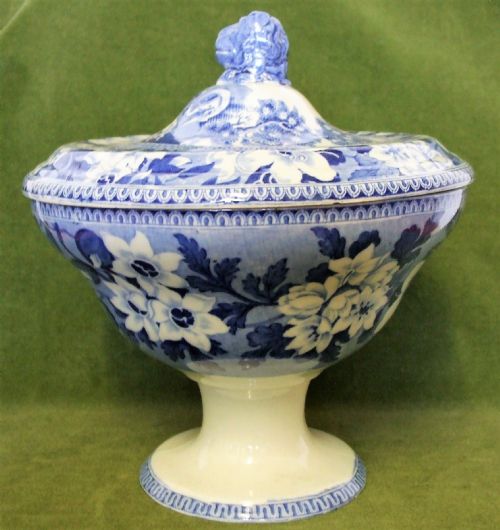
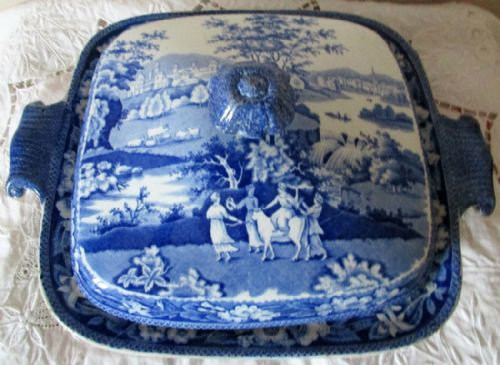
The most common examples on this page are ironstone and earthenware tureens decorated with blue and white transfer prints, alongside silver-plated Edwardian entrée dishes and Regency porcelain pieces. These items frequently include matching covers and occasionally ladles or lampstands.
Originating across English, Chinese, and European workshops, these serveware pieces reflect the changing tastes of formal domestic dining. Buyers encounter everything from large pedestal bowls to smaller sauce tureens intended for specific table dressings.
How they were made
Pottery and porcelain tureens were shaped from clay or felspar porcelain, often finished with detailed blue and white transfer printing or hand-painted enamel and gold leaf accents. Ironstone provided a durable, heavy body suited for daily household use.
Metal versions relied on Old Sheffield Plate, fusing silver sheet to a copper base, or later silver plating over base metal. Silversmiths hammered, cast, and engraved these metals to create heraldic crests, handles, and warming stands.
Antique Vegetable Tureen Retail Price Guide 2026
Typical asking prices for vegetable tureen among the pieces listed under this phrase on Sellingantiques today, from the lower quarter to the upper quarter. They describe what is for sale here now, not the wider market.
Listings feature eighteenth-century Chinese export porcelain alongside nineteenth-century English ironstone and Edwardian silver-plated serving dishes.
What varies in quality
Quality rests in the crispness of the transfer print, the retention of original gilding, and the crisp definition of cast handles and feet. Makers known for high standards applied precise attention to detail on both the vessel and its cover.
Weight, balance, and the integrity of the silver plating or ceramic glaze distinguish standard utilitarian kitchenware from exhibition pieces created by prominent factories and silversmiths.
James Wallace And Co·J And R Clews·John Rogers And Son·John And Richard Riley·Coalport·Crown Derby·Flight Barr And Barr·Mappin And Webb·Hamilton And Inches·Doulton Burslem
The Antique Vegetable Tureen Glossary
- Ironstone
- A patented ceramic body known for its strength and durability, frequently used for nineteenth-century transfer-printed kitchenware and tableware. It mimics porcelain while offering heavier resistance to chipping.
- Old Sheffield Plate
- An early method of fusing a thin layer of silver to a copper core by heating and rolling the metals together. This technique leaves a subtle copper show-through along exposed edges over time.
- Transfer Print
- A decoration applied to ceramics by pressing a paper sheet engraved with a copperplate design onto the biscuit or glazed surface. This allowed factories to produce intricate pictorial scenes like castles and rural landscapes consistently.
- Entrée Dish
- A shallow covered serving vessel designed for individual courses or side dishes on the formal nineteenth-century table. They often feature removable handles to convert into multiple open dishes.
- Sauce Tureen
- A scaled-down version of the standard dining table tureen, specifically sized for gravies, sauces, and melted butter. These typically accompany a small ladle and an attached or separate undertemper.
Antique Vegetable Tureen: Frequently Asked Questions
What was a vegetable tureen used for?
These covered vessels held hot vegetables at the dining table, keeping steam and heat trapped beneath the lid until service. Servants brought them to the table as part of multi-course nineteenth-century meals.
They also served as decorative centrepieces when matched with platters and sauce tureens. Their deep bowls prevented spills during transit from the kitchen.
How do I care for an antique tureen?
Wash ceramic and silver-plated tureens gently by hand using mild soap and warm water. Avoid abrasive sponges or harsh chemical detergents that strip fragile enamels, gold leaf, and thin silver plating.
Dry metal components immediately to prevent spotting. Store ceramic lids slightly offset if the fit is tight to protect the rim edges.
Can I use an antique tureen for serving food?
Ceramic and ironstone tureens function safely for dry or moist foods, provided the glaze remains intact and free from heavy cracking. Avoid thermal shock by not exposing cold antique ceramic to boiling liquids.
Silver-plated pieces accommodate food service, though acidic foods should not sit in them for extended periods. Modern dishwashers must be strictly avoided for all antique tableware.
How do I distinguish ironstone from porcelain?
Ironstone presents a heavier, opaque body that feels dense and substantial in the hand. It rings with a duller thud when tapped compared to the high-pitched resonance of true porcelain.
Porcelain transmits light through thin sections and displays a smoother, glassier vitrification. Ironstone developed as a sturdier, utilitarian alternative for heavy nineteenth-century household use.