


Earthenware Soup Tureen
An earthenware soup tureen brings generous weight and bold transfer-printed scenes to the table, offering a centrepiece for dining with deep historic character.
Earthenware Soup Tureen
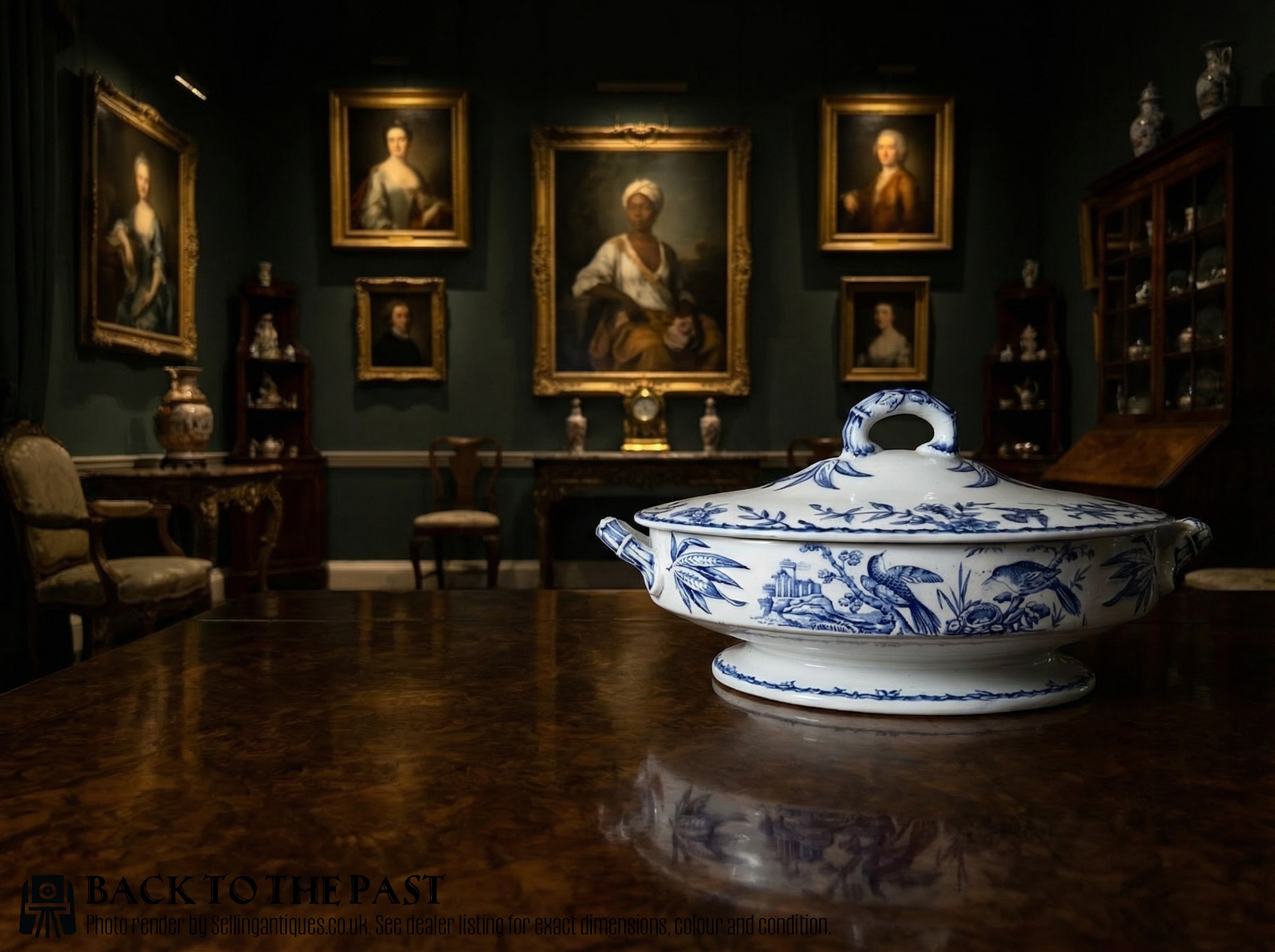
An earthenware soup tureen is a large ceramic serving vessel designed for holding soup at the dining table, often accompanied by a matching cover and ladle. When searching for an earthenware soup tureen, buyers encounter pieces primarily spanning the Georgian and Victorian eras, alongside later twentieth-century examples.
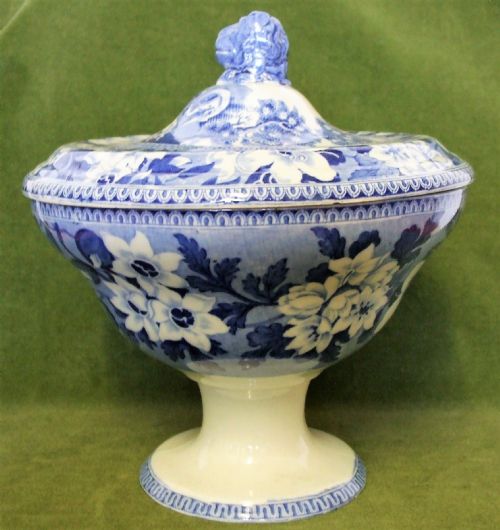
The selections available range from blue and white transfer-printed pottery featuring river scenes and castle patterns to ornate Majolica designs and creamware dinner services. Covered serving pieces and complete dinner services demonstrate the varied forms this tableware takes across different nineteenth-century workshops.
Most pieces date from the nineteenth century, reflecting the domestic dining habits of the period. Forms include lidded vegetable tureens, large soup vessels with ladles, and multi-piece dinner services.
Materials and production methods
Potters utilised earthenware, creamware, and ironstone as the primary ceramic bodies for these serving vessels. These porous or semi-vitrified clays provided a stable base for the application of glazes and printed decorations.
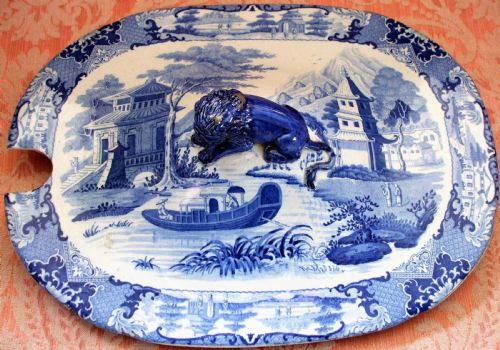
Decoration relied heavily on blue and white transfer printing, applying intricate patterns such as the Canton River scene or architectural views onto the pottery before firing. Enamel colours and lead glazes also feature across the period, adding glossy protective surfaces and vibrant colour to majolica and transfer-printed wares.
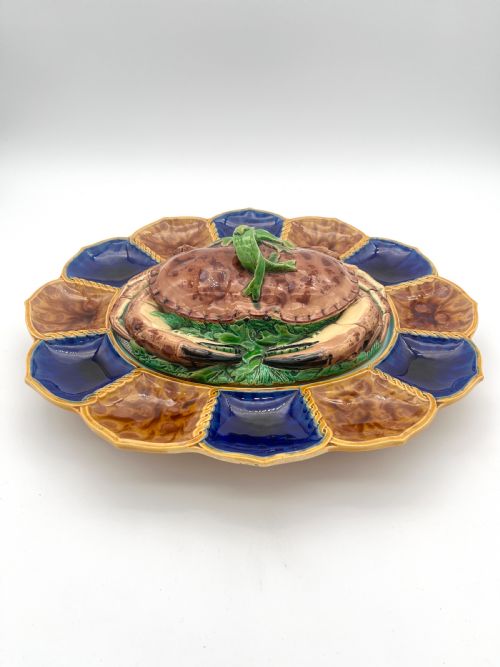
Crab tureens by Minton prove that nineteenth-century diners enjoyed their seafood served from an unnervingly realistic crustacean.
Evaluating quality and execution
Quality in these vessels rests upon the clarity of the transfer print and the crispness of the moulded relief work. Finer examples show precise alignment in multi-layered prints and careful hand-painting over the glaze.
The weight of the ceramic body and the uniformity of the glaze application distinguish superior pieces from standard utilitarian wares. Master potteries achieved a finer finish on handles, finials, and covers, ensuring the vessel balanced decorative ambition with practical utility.
Robert Hamilton·John Rogers and Son·Minton·Wedgwood·Booths·Doulton Burslem·J and R Clews·Ridgways·Copeland and Garrett
The Earthenware Soup Tureen Glossary
- Earthenware
- Porous pottery fired at lower temperatures, requiring a glaze to become impermeable to liquids. It serves as the primary body for the majority of these tureens and serving dishes.
- Transfer printing
- A method of applying detailed designs to ceramics by engraving a copper plate, pulling the image on tissue paper, and pressing it onto the biscuit ware. This technique enabled intricate blue and white patterns to be produced consistently.
- Creamware
- A refined, pale yellow-cream earthenware developed in the eighteenth century by Staffordshire potters. It provided a smooth, light surface ideal for botanical and classical dinner services.
- Majolica
- A colourful, lead-glazed earthenware characterised by rich, mottled mineral pigments. Minton famously produced sculptural examples modelled on natural forms such as sea creatures.
- Ironstone
- A durable, dense type of semi-vitrified earthenware patented in the nineteenth century to imitate Chinese porcelain. It offers increased resistance to chipping and heavy daily use.
Earthenware Soup Tureen: Frequently Asked Questions
How do I date an antique tureen?
Dating relies on stylistic markers, ceramic bodies such as creamware or ironstone, and printed registry marks or maker stamps on the base.
Georgian and Victorian examples typically display distinct transfer print motifs and manufacturing techniques characteristic of their specific decade.
Can I use these tureens for serving food?
Many antique earthenware tureens remain structurally sound for serving dry foods or warmed dishes at the table.
Because older glazes can be sensitive, modern dishwashers and microwaves should be avoided to protect the historic ceramic body.
What styles are common in these tureens?
Common styles include blue and white transfer-printed patterns depicting landscapes, rivers, and architectural ruins from the nineteenth century.
Other notable styles range from Georgian creamware to Victorian Majolica modelled in naturalistic plant and animal forms.