


Blue White Meat Plate
These large earthenware platters display rich cobalt pigment beneath clear lead glazes, offering collectors robust historical utility and decorative presence.
Blue White Meat Plate
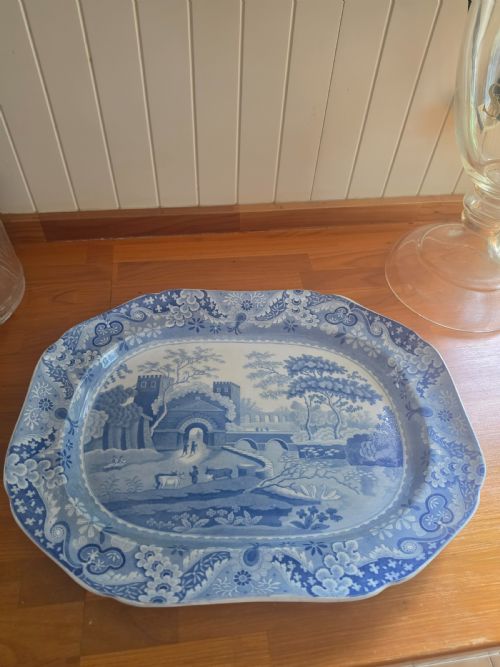
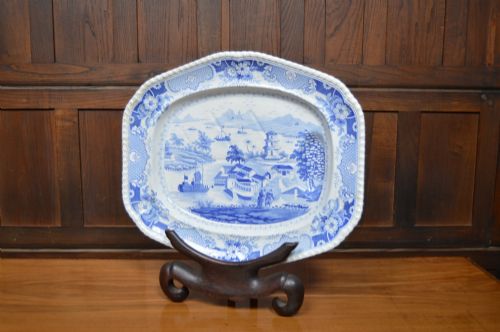
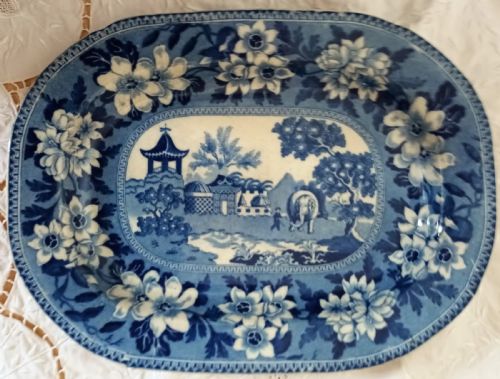
A blue white meat plate is a substantial ceramic serving platter designed for carving and presenting joints at the dining table. These surfaces frequently span large dimensions to accommodate game, poultry, and substantial cuts of meat during formal meals. The versions you encounter here originate predominantly across the nineteenth century, including Georgian and Victorian periods, alongside earlier examples.
Makers utilised earthenware, ironstone, and ceramic bodies to form these heavy platters, applying cobalt pigment transfer prints before glazing. Common decorative themes feature Chinoiserie scenes, classical ruins, topographical views such as Windsor Castle, and traditional patterns like Willow. Surviving pieces sometimes include integrated drainers designed to catch juices during service.
How they were made
Potters shaped earthenware and ironstone bodies on wheels or in moulds before applying printed cobalt pigment designs from copper plates. This transfer printing method allowed intricate architectural, landscape, and animal motifs to cover large surfaces with precision.
Workers then coated the decorated pottery in transparent lead glaze and fired the pieces in kilns to achieve a durable, glossy finish. Ironstone bodies received higher temperature firings, resulting in a denser, heavier ceramic capable of resisting heavy daily use.
The site records nineteenth-century production alongside earlier eighteenth-century examples.
What varies in quality
The clarity and registration of the transfer print dictate much of the visual success, separating sharp, deep cobalt applications from blurred or smudged impressions. Crisp lines in complex subjects like classical ruins or detailed landscapes show greater technical skill in the printing process.
Body thickness and the presence of specialised components, such as matching drainers or deep gravy wells, distinguish utilitarian service pieces from grand dining room platters. Finer examples display balanced weight, even glaze coverage without excessive pooling, and well-preserved maker marks stamped into the ceramic base.
Spode·John Rogers And Son·Thomas Lakin·Don Pottery·Copeland And Garrett·Minton·Elkin Knight And Bridgwood·Mason Ironstone·Dillwyn And Co
The Blue White Meat Plate Glossary
- Transferware
- Pottery decorated by pressing a design engraved on a copper plate onto tissue paper, then transferring the ink onto the ceramic surface before glazing. This technique allowed factories to produce intricate pictorial scenes efficiently.
- Ironstone
- A dense, durable type of earthenware patented in the early nineteenth century by Staffordshire potters. It mimics porcelain through its strength and heavier weight.
- Drainer
- A perforated ceramic insert that fits inside a meat plate to elevate joints and allow juices to collect beneath. These inserts are often found with large serving platters.
- Cobalt pigment
- A metallic oxide used under the glaze to produce deep blue coloration on ceramics. It withstands high kiln temperatures without losing intensity.
- Chinoiserie
- A European stylistic interpretation of Chinese artistic motifs, featuring imaginary landscapes, pagodas, and figures. This style frequently appeared on nineteenth-century transfer-printed earthenware.
Blue White Meat Plate: Frequently Asked Questions
What were blue white meat plates used for?
These large platters served as the primary vessels for presenting roasted meats, poultry, and game at the dining table during the Georgian and Victorian eras. Their generous proportions accommodated large joints, while specialised versions featured wells and drainers to manage carving juices.
Beyond functional dining, families displayed these decorative platters on sideboard tables or hung them in dining rooms when not in active service. The pictorial scenes provided visual interest and conversation pieces for guests during formal meals.
How do I date a blue white meat plate?
Dating relies heavily on ceramic body composition, transfer print styles, and maker marks stamped or printed on the reverse. Ironstone bodies generally point toward the nineteenth century, while finer earthenwares span both Georgian and Victorian periods.
Subject matter also offers clues, as classical ruins and topographical views frequently align with specific decades of production. Examining the backstamp allows collectors to consult factory registers for active operational dates.
Can I use antique meat plates for serving food?
Many collectors continue to utilise robust ironstone and earthenware platters for serving dry foods at modern dinner parties. The durable lead glazes generally withstand careful hand washing, though harsh modern detergents should be avoided.
Dishes with delicate earthenware bodies or existing hairline cracks are best reserved for display rather than active dining use. Hand washing preserves the historic glaze and prevents thermal shock from hot water.
How do I display a large meat platter?
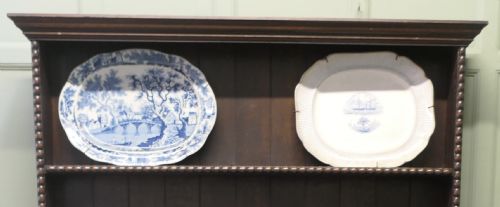
Large platters require sturdy plate stands or secure wall-mounting brackets designed to support significant ceramic weight safely. Placing them on dining room sideboards or dresser ledges highlights their scale and pictorial transfer prints effectively.
Ensure display areas avoid prolonged direct sunlight to protect the glaze and prevent any gradual fading of the cobalt pigment over time. Grouping graduated sets creates a strong visual statement in traditional interiors.