
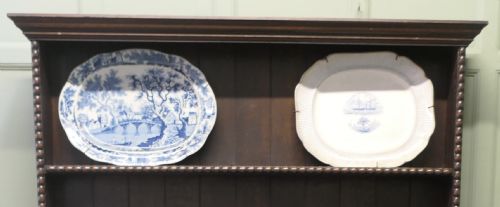
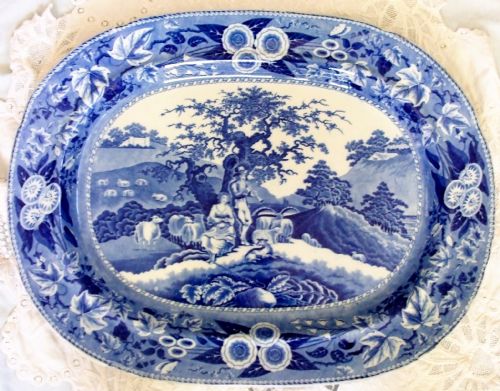
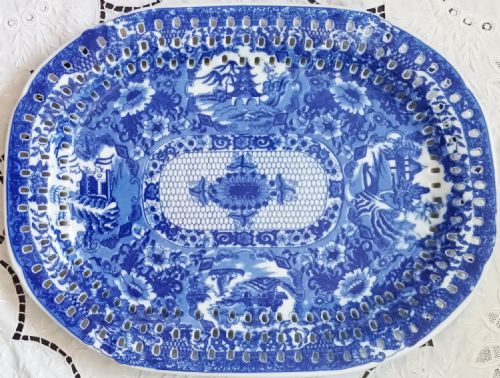


Blue White Transferware Platter
A blue white transferware platter brings bold cobalt scenes onto robust earthenware and ironstone surfaces, offering a striking centrepiece for a traditional dining table.
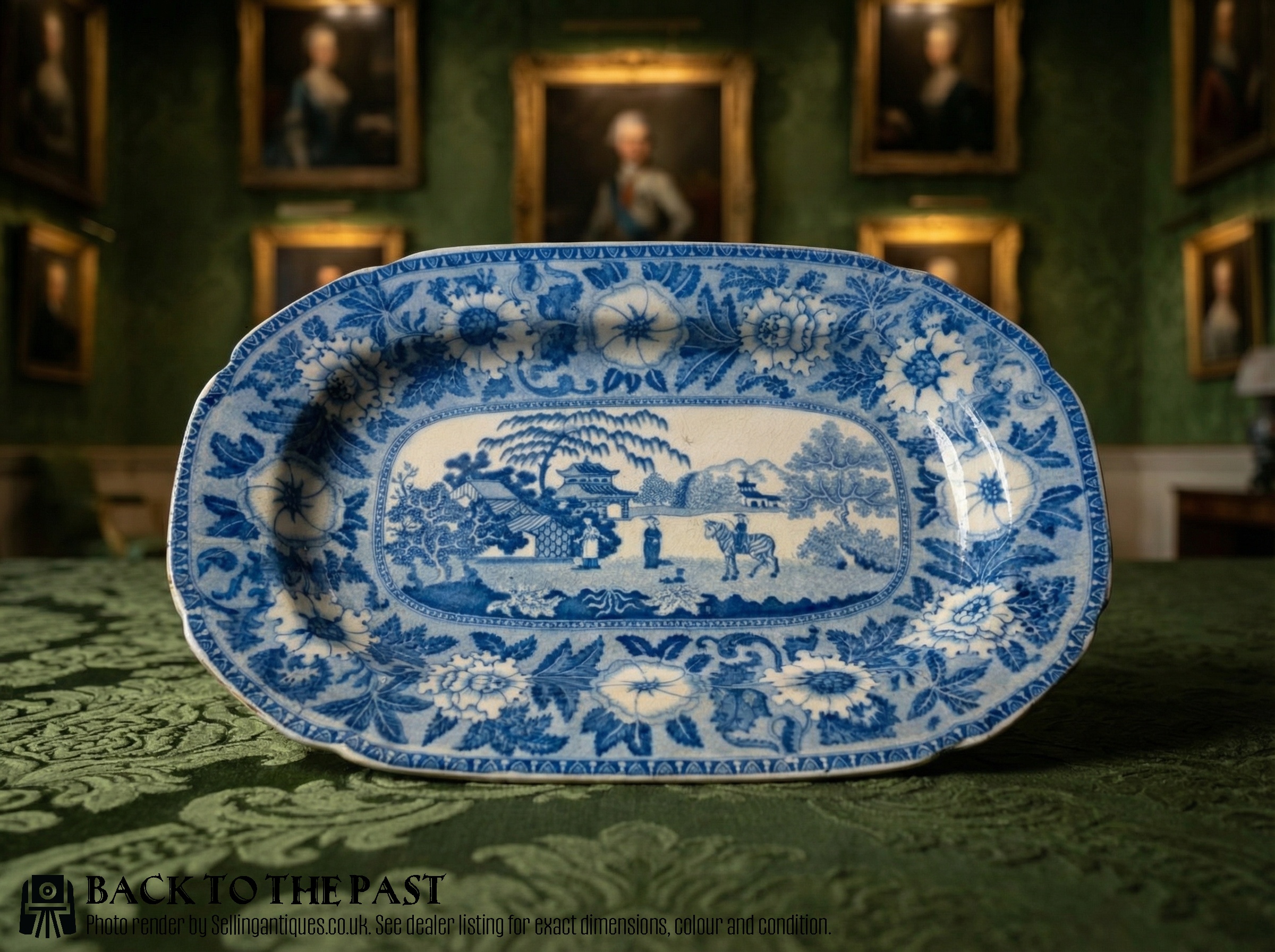
Blue White Transferware Platter
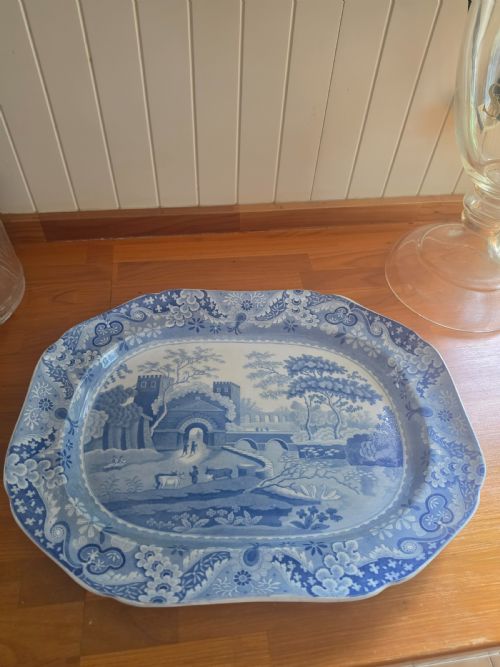
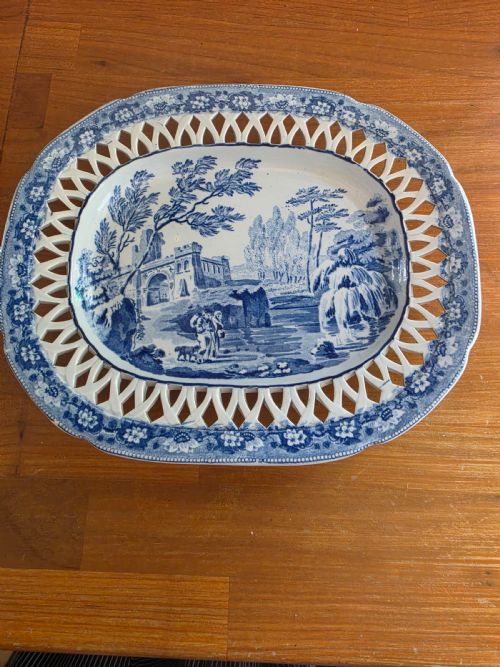
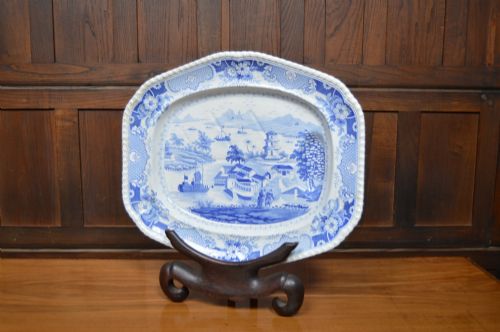
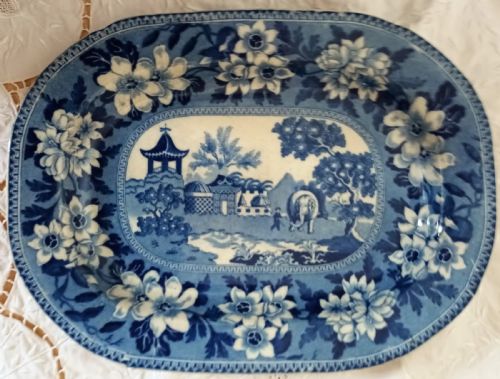
A blue white transferware platter is a large serving dish designed for carving meat or presenting food, created by British potteries during the Georgian and Victorian eras. These items feature intricate printed designs transferred from engraved copper plates onto the ceramic surface before glazing and firing. Buyers encounter forms ranging from massive meat platters with integrated drainers to deep chargers and specialised bread stands.
The pieces appearing on this page span the nineteenth century, including examples from Regency and early Victorian periods alongside Georgian predecessors. Common decorative motifs feature romanticized landscapes, architectural ruins, oriental scenes, and specific topographical views such as the Bridge of Lucano or foreign ports. Most originate from major Staffordshire potteries and English factories operating during the height of industrial ceramic production.
How They Were Made
Potters formed these heavy serving dishes using earthenware, pearlware, ironstone, and improved stone china, applying a liquid glaze over the fired body to create a smooth, protective finish. Cobalt pigment served as the primary colourant for the transfer printing technique, yielding deep blue tones that reacted chemically with the glaze during kiln firing.
Craftsmen transferred engraved copper plate designs onto specialised tissue paper before pressing the inked pattern onto the ceramic surface by hand. Pierced platters and items incorporating separate meat drainers required skilled manual cutting of the wet clay body prior to the initial firing stage.
The inventory spans the Georgian, Regency, and Victorian periods, showcasing nineteenth-century British ceramic production.
What Varies in Quality
The clarity and depth of the cobalt transfer print dictate visual success, separating sharp, detailed architectural lines from smudged or blurred impressions caused by worn copper plates or faulty pressing. Crisp application ensures that complex patterns remain legible across the entire curved surface of a large charger.
The weight, structural integrity, and presence of specialised components like matching drainers or deep wells distinguish standard utilitarian meat dishes from superior exhibition pieces. Potters who utilised refined ironstone or pearlware achieved a finer body and smoother glaze, elevating the finished serving plate.
Spode·Davenport·John Rogers and Son·Minton·John Ridgway·Mason·Copeland and Garrett·Thomas Lakin·Stubbs
The Blue White Transferware Platter Glossary
- Transferware
- Pottery decorated by printing an engraved design from a copper plate onto paper and then transferring it onto the ceramic body. This technique allowed factories to produce complex pictorial patterns with remarkable speed.
- Pearlware
- A refined earthenware developed by Josiah Wedgwood that featured a subtle bluish tinge in the glaze to mimic Chinese porcelain. It served as a primary substrate for early nineteenth-century blue and white printing.
- Ironstone
- A heavy, durable ceramic patented in the nineteenth century to provide a tougher alternative to standard earthenware. Platters made from this material resist chipping and heavy wear.
- Meat Drainer
- A separate ceramic insert pierced with holes or slots and placed inside a platter to separate juices from roasted meats. These functional components often survive alongside large serving dishes.
- Flow Blue
- A style of Staffordshire pottery where cobalt pigment intentionally blurred into the surrounding white glaze during firing. This created a hazy, ethereal effect popular on mid-nineteenth-century domestic wares.
- Charger
- A large decorative plate or platter utilised primarily for ceremonial display or grand service rather than everyday dining. These sizeable pieces showcase expansive landscape transfers.
Blue White Transferware Platter: Frequently Asked Questions
How were blue white transferware platters used?
These large ceramic dishes served central roles in nineteenth-century dining, carrying heavy joints of roasted meat to the table for carving. Their generous surfaces and recessed channels caught juices, often assisted by removable pierced drainers.
Beyond functional dining, larger chargers and decorated serving plates were frequently stood on sideboards or hung on walls to display picturesque topographical and architectural scenes to guests.
How do I care for an antique platter?
Wash antique earthenware and ironstone gently by hand using warm water and mild soap, avoiding modern dishwashers entirely. Harsh detergents and sudden thermal shocks can damage aged glazes and historic ceramic bodies.
Store large platters flat or supported securely in specialised vertical racks to prevent tipping and edge chipping. Weight distribution matters greatly when housing heavy nineteenth-century ironstone.
How do I distinguish Georgian from Victorian pieces?
Georgian platters, produced roughly around the turn of the nineteenth century into the 1830s, often utilise pearlware bodies with a characteristic bluish glaze pooling. Their transfer prints frequently lean toward delicate chinoiserie or classical ruins with softer cobalt tones.
Victorian pieces, emerging from the 1840s onward, typically employ heavier ironstone or refined earthenware with denser, darker cobalt printing. Patterns from this later era regularly incorporate industrial views, gothic revival motifs, and botanical borders.
What is the difference between a platter and a charger?
A platter is primarily an elongated serving dish shaped specifically to hold roasted meats, fowl, or vegetables at the dining table. They often feature deep wells and drainage channels for practical kitchen use.
A charger is traditionally a large, circular decorative plate intended for formal display, sideboards, or ceremonial presentation. While both share identical transferware printing techniques, chargers emphasise expansive pictorial compositions over utility.