
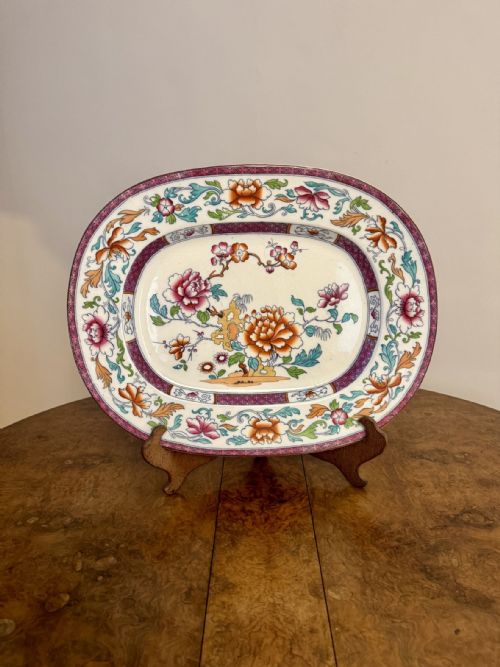
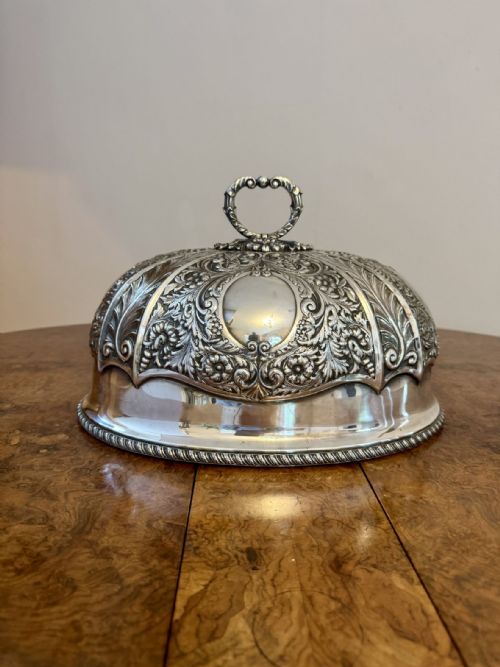


Victorian Meat Dish
A victorian meat dish brings the weight of nineteenth-century dining tables into a modern home, offering substantial service for joints of roast meat.
Victorian Meat Dish
A victorian meat dish serves the central role in nineteenth-century table service, designed to hold large joints of poultry, beef, or game. The pieces appearing most frequently on this page take the form of generous ceramic platters or heavy metal covers.
Makers produced these platters in earthenware, ironstone, and pearlware, often decorated with blue and white transfer print patterns such as castles, architectural scenes, and Chinoiserie landscapes. Alongside ceramic platters, silver plated domes, cloches, and warming trays complete the functional category.
Originating largely from English potteries and silversmiths, these items span the nineteenth century, encompassing early variants through to Edwardian production. Buyers encounter both utilitarian serving plates with internal draining wells and monumental covered dishes intended for grand dining.
How they were made
Ceramic meat platters rely on dense bodies like ironstone and earthenware, fired at high temperatures to resist the heavy weight of carved joints and repeated washing. Potters applied transfer print decoration from copper plates onto the biscuit or glazed surface before a final kiln firing.
Metal serving pieces utilise heavy silver plating techniques over base metals, alongside old Sheffield plate and electroplate nickel silver. Silversmiths formed domes and warming trays by hand-beating or rolling metal sheets, soldering handles and applied borders with precision.
Materials range from heavy ironstone and pearlware to electroplated silver and old Sheffield plate warming dishes.
What varies in quality
The distinction between standard utility ware and top-tier pieces rests on the clarity of transfer printing and the depth of the ceramic paste. Ironstone and pearlware examples with crisp, unblemished blue and white detail command greater appreciation than softer, blurred prints.
Copeland and Garrett·Minton·Mason·Elkington·Staffordshire
The Victorian Meat Dish Glossary
- Transferware
- Earthenware decorated by applying a printed paper design from an engraved copper plate onto the ceramic body. This technique allowed intricate pictorial scenes to be produced in volume.
- Ironstone
- A dense, durable type of heavy ceramic patented in the nineteenth century to imitate Chinese porcelain. It resists chipping and staining far better than standard earthenware.
- Cloche
- A domed metal cover designed to keep roasted meat warm between the kitchen and the dining table. These items fit neatly over matching platters.
- Mazarine
- A pierced draining tray or insert placed inside a meat platter to keep the joint elevated above accumulated juices. This ceramic or metal component prevented meat from sitting in liquid.
- Well and tree
- A platter design featuring a carved channel system leading to a central well that collects carving juices. This innovation kept the main surface tidy during service.
Victorian Meat Dish: Frequently Asked Questions
How do I use a meat platter today?
These large ceramic plates and metal trays serve wonderfully for presenting Sunday roasts, whole birds, or large seasonal vegetables at a dining table. Their generous proportions make them practical for modern family gatherings.
Take care to wash antique ceramics and silver plate by hand rather than placing them in a dishwasher. This preserves both the delicate transfer prints and the underlying glaze.
What is the difference between ironstone and earthenware?
Ironstone is a much denser, heavier ceramic material developed in the nineteenth century to withstand heavy daily use. Earthenware is softer, lighter, and more porous.
When buying a victorian meat dish, checking the weight and thickness helps determine whether the piece is robust ironstone or standard pottery.
Why do some platters have wells?
Platters with built-in wells and channels were engineered to drain carving juices away from the meat. The liquid pooled at the lower end for easy basting or gravy making.
This functional detail makes certain pieces particularly sought after by collectors of nineteenth-century dining silver and ceramics.
How do I date a transferware dish?
Dating relies on maker marks, pattern names, and the specific shade of blue used in the transfer print. Early pieces often feature distinct registry marks stamped into the ceramic base.
Comparing the style of the pictorial scene, such as Chinoiserie or romantic castles, against known factory production periods helps narrow down the decade of manufacture.