


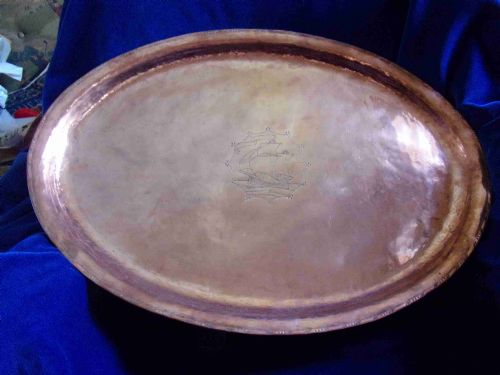


Large Oval Serving Platter
A large oval serving platter brings generous proportion and enduring utility to the table, spanning centuries of ceramic and metal craftsmanship.
Large Oval Serving Platter
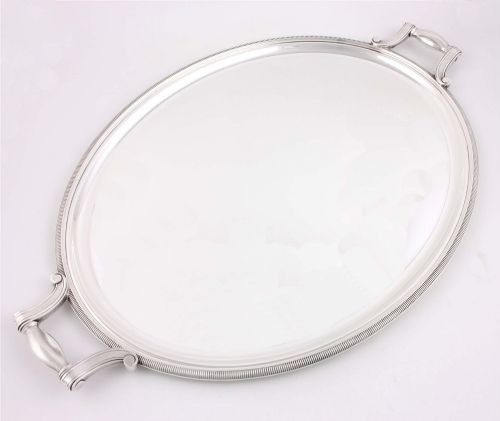
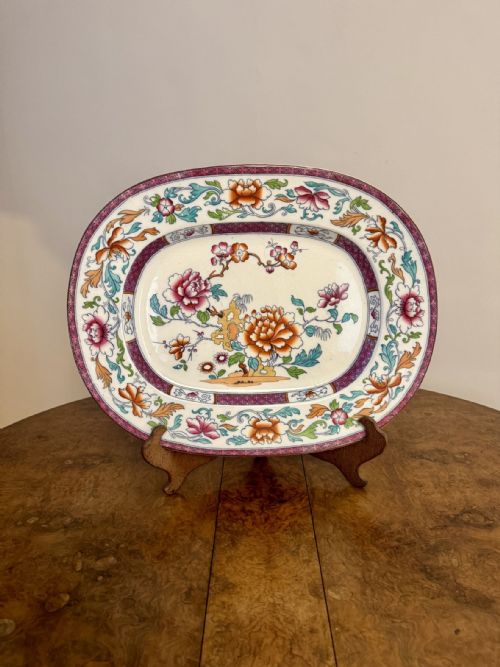
Buyers frequently encounter silver plated iterations alongside earthenware transfer print meat dishes and copper trays. The selection balances utilitarian dining vessels with decorative silver and copper serving trays designed for cocktails and tea.
Origins span English earthenware potteries, French manufacturers such as Christofle, and Chinese export wares. The common thread remains the elongated oval footprint, suited to presenting roasts or gathering decanters.
How they were made
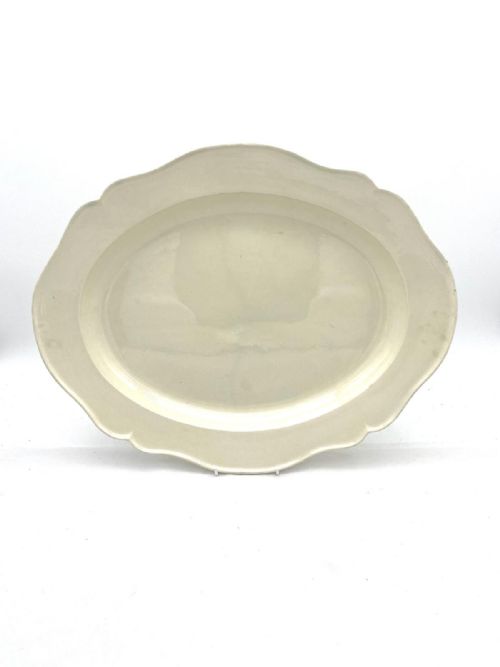
Ceramic platters rely on earthenware, ironstone, and creamware bodies shaped in moulds and finished with lead glaze or blue and white transfer printing. Ironstone offered exceptional durability for heavy meat dishes, while creamware provided a refined, warm-toned surface.
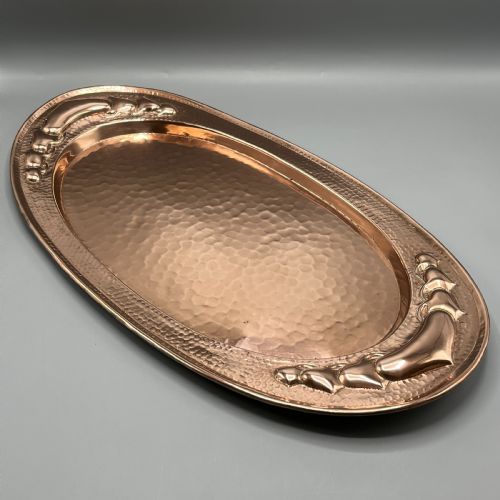
Metal vessels utilise silver plate over base metals, solid sterling silver, or hand-beaten copper. Arts and Crafts examples often display visible repousse hammer work, whereas silver plated and sterling pieces utilise engraving, applied gallery borders, and cast handles.
Large Oval Serving Platter Retail Price Guide 2026
Typical asking prices for large oval serving platter among the pieces listed under this phrase on Sellingantiques today, from the lower quarter to the upper quarter. They describe what is for sale here now, not the wider market.
Some nineteenth-century meat platters include secret sloping moats designed to pool gravy away from the Sunday roast.
What varies in quality
Quality rests in the crispness of transfer printing, the weight of the ceramic body, and the depth of hand-engraving on metal surfaces. Finer earthenware platters maintain a clear, unblemished glaze and sharp cobalt blue lines, whereas utilitarian vessels show heavier wear.
Metal pieces are distinguished by the thickness of the silver plating and the rigidity of the tray frame under weight. Substantial gauge copper and solid silver or heavy silver plate maintain structural integrity across generous proportions without flexing.
Hugh Wallis·Harrison Bros·Elkington Co·Christofle Paris·Peters Hamburg·Samson Paris
The Large Oval Serving Platter Glossary
- Creamware
- A fine earthenware developed in the eighteenth century with a pale yellow or cream-coloured lead glaze. It became widely utilised for tableware before white ironstone dominated.
- Ironstone
- A heavy, durable ceramic patented in the nineteenth century to imitate Chinese porcelain. It resists chipping and forms the sturdy body of many large meat dishes.
- Transfer print
- A decoration technique where an engraved copper plate transfers a design onto paper, which is then pressed onto the ceramic surface before glazing. Blue and white scenes represent the most common application.
- Repousse
- A metalworking technique where the artisan hammers the design from the reverse side to create a raised relief on the front. This method defines many Arts and Crafts copper trays.
- Silver plate
- A layer of silver fused or electroplated onto a base metal such as copper or Britannia metal. It allowed makers to produce luxurious serving trays at a fraction of sterling silver cost.
Large Oval Serving Platter: Frequently Asked Questions
How were large oval serving platters used historically?
These platters served joint roasts and large poultry at the Victorian or Edwardian dining table, catching juices in recessed wells.
Beyond the dining room, metal variants functioned as cocktail trays, holding decanters and glassware for drawing room hospitality.
Can I use antique platters for daily dining?
Sturdy ironstone and heavy silver plated trays withstand regular modern use and serving duties.
Delicate creamware and antique porcelain require gentle hand washing to preserve the historic glaze and transfer print.
How do I date a transfer printed meat platter?
The depth of the blue colour, the style of the romantic or Chinese garden border, and the ceramic body provide clues.
Mid-nineteenth-century pieces typically feature crisp blue transfer printing on heavier ironstone bodies than their eighteenth-century creamware predecessors.
What is the difference between a tray and a platter?
Platters are ceramic or metal dishes primarily shaped for presenting food items, often featuring shallow wells for carving juices.
Trays usually incorporate handles or raised gallery borders, designed principally for carrying glassware, teapots, and decanters.