




Polychrome Ironstone Platter
A polychrome ironstone platter brings durable nineteenth-century utility and vivid painted enamels to the table.
Polychrome Ironstone Platter
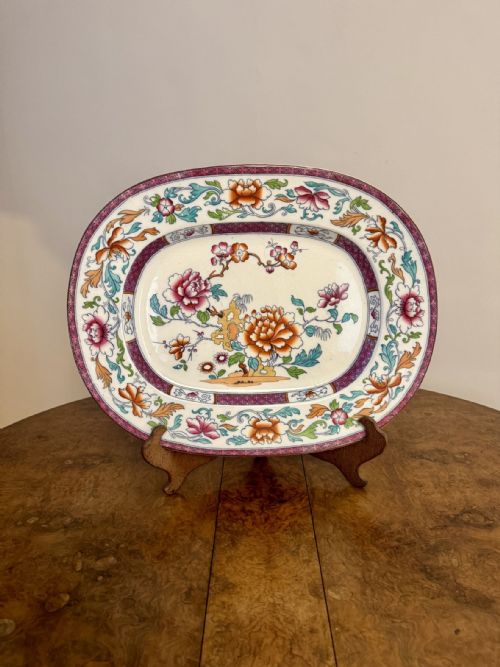
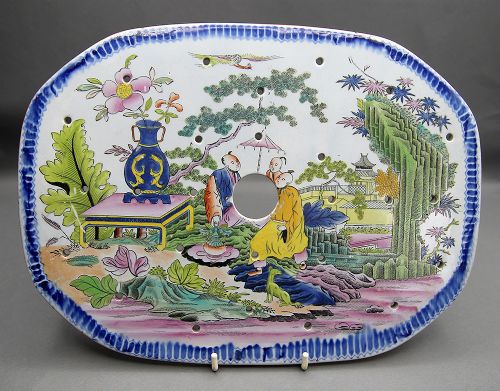
A polychrome ironstone platter is a heavy ceramic serving piece designed for meat, game or large courses, combining robust body strength with hand-painted multi-coloured decoration. You will most frequently encounter nineteenth-century examples spanning the Georgian, Victorian and Edwardian eras, often showing distinct regional influences or named decorative schemes. These objects include large meat dishes, footed cheese dishes, drainers and charger plates.
The decorative styles found on these platters frequently draw on Chinoiserie motifs, featuring exotic birds, grasshoppers, or oriental landscapes rendered in bright enamel colours. English makers such as Mason's and John Ridgway produced these substantial serving vessels using dense earthenware and stoneware bodies that offered superior durability over standard porcelain. Forms range from standard oval meat platters to specialised serving trays and decorative plates with elaborate yellow or patterned grounds.
Production materials and methods
These pieces are constructed from ironstone, a dense, heavy ceramic paste composed of earthenware and stoneware clays that yielded a robust body resistant to chipping. Manufacturers applied an opaque glaze over the ceramic base to create a smooth, impervious surface suitable for daily domestic service. Decoration was then added using vibrant enamel colours, sometimes accented with gold leaf to highlight intricate patterns.
Moulding and pressing techniques shaped the heavy clay into large platters, drainers and footed dishes capable of supporting heavy joints of meat. Artisans hand-painted the enamel designs directly onto the glazed or biscuit surface before a final kiln firing fixed the colours permanently. Transfer printing sometimes provided the outline of the pattern, which workers then filled in with polychrome washes.
Nineteenth-century potters painted cheerful grasshoppers onto heavy meat platters, proving that even a Sunday roast deserved an adventurous insect.
Assessing quality in polychrome ironstone platters
Quality in a polychrome ironstone platter rests upon the crispness of the moulding and the artistic skill evident in the hand-painted enamels. Superior examples display precise brushwork in complex scenes like the grasshopper or Penang patterns, with rich, well-fired colours that retain their original gloss. The weight and density of the ironstone body also indicate the care taken during production by prominent English potteries.
The complexity of the form further separates standard production wares from high-end display pieces, such as footed cheese dishes or large chargers with yellow grounds. Better platters maintain a clear, even glaze free from excessive kiln pitting, allowing the underlying ceramic and painted details to show to full advantage. The inclusion of subsidiary pieces like matching drainers adds significant compositional completeness to a service.
John Ridgway
The Polychrome Ironstone Platter Glossary
- Ironstone
- A heavy, durable ceramic body patented in the nineteenth century that bridges the gap between earthenware and stoneware. It offered households a tough alternative to delicate porcelain.
- Polychrome
- Decoration utilising multiple distinct colours, typically applied here through hand-painted enamels. This technique brought vibrant reds, greens, blues and yellows to otherwise utilitarian serving vessels.
- Chinoiserie
- A European artistic style reflecting Chinese and East Asian motifs, heavily featured on nineteenth-century platters. Designs often incorporate exotic birds, imaginary landscapes and oriental pavilions.
- Drainer
- A perforated ceramic insert designed to sit inside a meat platter. It allowed juices to run away from the joint during carving and serving.
- Enamel
- Opaque glass-based paints fused to the ceramic surface during a secondary kiln firing. These pigments provided the bright, lasting colours seen on decorated plates and chargers.
Polychrome Ironstone Platter: Frequently Asked Questions
What is ironstone?
Ironstone is a dense, heavy ceramic material developed in the nineteenth century to provide households with a durable, practical alternative to fine porcelain. It combines the strength of stoneware with the refined appearance of traditional earthenware.
This robust body made it ideal for large serving vessels like meat platters and footed cheese dishes that required everyday resilience.
How were these platters used?
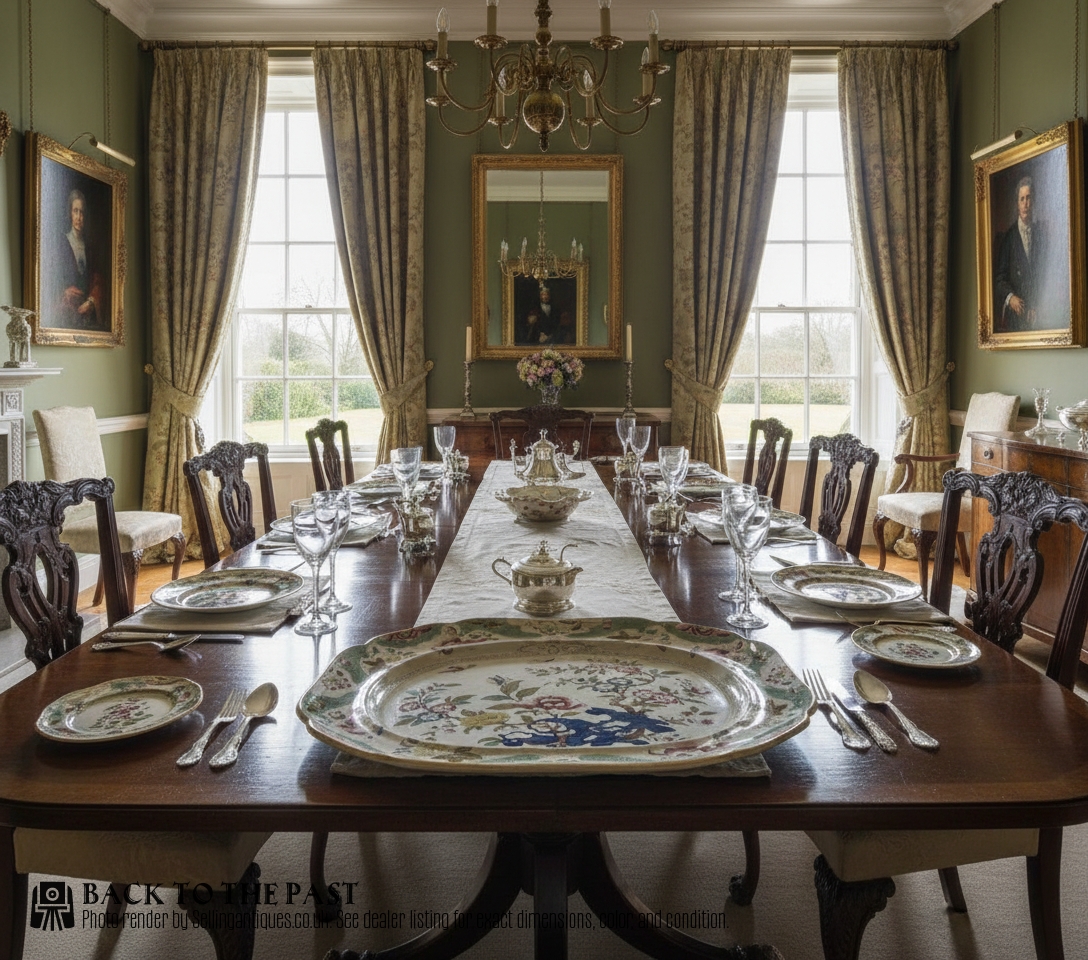
These large ceramic pieces served as the centrepiece for presenting heavy joints of meat, poultry, or game at nineteenth-century dining tables. Accessories such as ceramic drainers were often fitted inside to catch juices during carving.
Beyond functional dining use, larger charger plates and decorative platters were also displayed on sideboards or walls within country houses.
How do I date an ironstone platter?
Dating relies on identifying maker's marks stamped or printed on the reverse, alongside stylistic clues such as the specific enamel palette and decorative motifs. Georgian and Regency pieces often feature distinct Chinoiserie patterns like the grasshopper design, while later Victorian examples display heavier borders.
Comparing the density of the ceramic body and the style of the footrim also helps narrow down the period of manufacture.
Can I use antique ironstone daily?
These platters were built to withstand robust nineteenth-century dining use, possessing a tough ironstone body and durable glaze. Many buyers continue to use them for serving food at modern dinner parties.
Hand washing is strongly recommended to protect the hand-painted enamel colours and any subtle gold leaf details from harsh dishwasher detergents.