
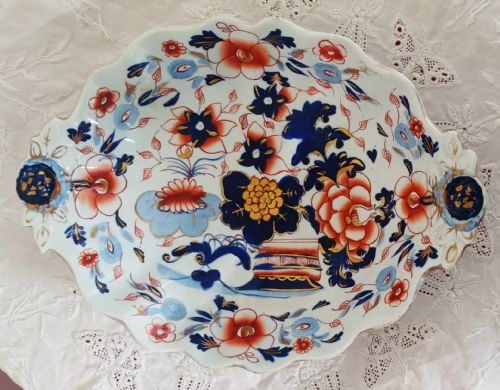
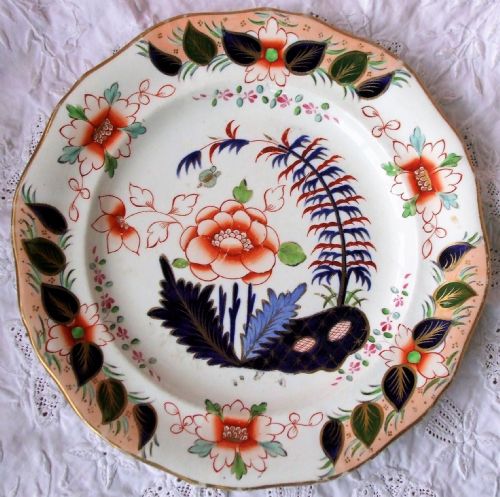
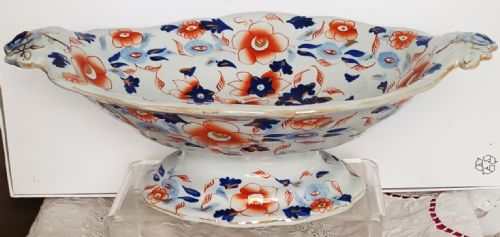


Hand Painted Ironstone Dish
These hand painted ironstone dish examples offer durable nineteenth-century utility with bold ceramic decoration.
What they are
A hand painted ironstone dish brings nineteenth-century serving forms into domestic spaces through heavy ceramic bodies. Buyers examine low comports, vegetable tureens, and large meat platters designed for nineteenth-century dining tables.
Makers such as Mason’s dominate the surviving record alongside unmarked English works and possible Coalbrookdale productions. Surviving forms range from covered tureens to expansive serving platters.
How they were made
Potters formed these items using durable ironstone ceramic and ironstone china bodies designed to resist chipping during heavy use. Artisans applied opaque glazes over the fired clay to create smooth surfaces for subsequent painting.
Decorators utilised coloured enamel paints by hand to execute detailed Chinoiserie and floral motifs across the ceramic surface. Guilders added accents of gold leaf and gilding to highlight rims, handles, and borders before final firing.
Retail Price Guide 2026
Typical UK retail prices for hand painted ironstone dish, calculated from the Sellingantiques database of over a million retail prices indexed since 2003. This retail price guide relies exclusively on Sellingantiques data; no external sources or auction records are used, so the figures do not describe the wider market.
Listings feature nineteenth-century Georgian and Victorian periods utilising ironstone ceramic, enamel, and gold leaf materials.
What varies in quality
Quality rests in the precision of the hand-painted enamel work and the crispness of the transfer-printed or hand-drawn outlines. Finer examples display meticulous brushwork in complex Chinoiserie scenes rather than hurried execution.
The preservation of delicate gold leaf and gilding defines the upper tier of surviving items. Uniform glaze coverage and well-modelled handles on tureens and comports distinguish superior nineteenth-century production.
Mason s·Coalbrookdale
The Hand Painted Ironstone Dish Glossary
- Ironstone China
- A heavy-bodied vitrified ceramic developed in the nineteenth century to provide a durable alternative to porcelain. It accepts enamel colours and glazes with exceptional stability.
- Comport
- An elevated serving dish or pedestal bowl used for fruit and sweetmeats during formal nineteenth-century dining. Low comports sit on short integral bases.
- Tureen
- A deep covered serving vessel designed for holding vegetables, soups, or sauces at the table. These pieces usually include matching lids and decorative handles.
- Chinoiserie
- A decorative style reflecting European artistic interpretations of Chinese and East Asian motifs. It appears frequently on nineteenth-century ceramic patterns.
- Gilding
- The application of gold leaf or gold paint to ceramic surfaces for ornamental effect. Skilled artisans applied this technique to highlight rims and handles.
Frequently Asked Questions
What is a hand painted ironstone dish?
These items are nineteenth-century ceramic serving pieces made from durable ironstone body material. Artisans decorated them by hand using enamel paints and gilding.
Potters produced forms including low comports, meat platters, and covered vegetable tureens. They served practical dining functions in Georgian and Victorian households.
How do I date these dishes?
Dating relies on stylistic markers, ceramic composition, and manufacturer records from the nineteenth century. Georgian and Victorian examples show distinct potting weights and decorative palettes.
Earlier pieces often feature hand-painted Japan patterns and Chinoiserie motifs. Comparing handle shapes and glaze characteristics helps narrow the production period.
Can I use these for serving food?
Most buyers display these ceramic pieces as decorative objects rather than using them for daily dining. Historic ironstone is robust, but hand-applied enamel and gilding require careful handling.
Hand washing preserves the delicate gold leaf and painted details. Modern dishwashers and abrasive cleaners can damage the historic glaze.
What patterns are most common?
Japan patterns and Chinoiserie designs appear frequently on nineteenth-century ironstone serving pieces. These styles reflect the period preference for imaginative Asian-inspired imagery.
Other examples feature the Indian Grasshopper pattern alongside floral motifs. The combination of underglaze body work and overglaze enamel creates striking visual contrast.