


Antique Porcelain Comport
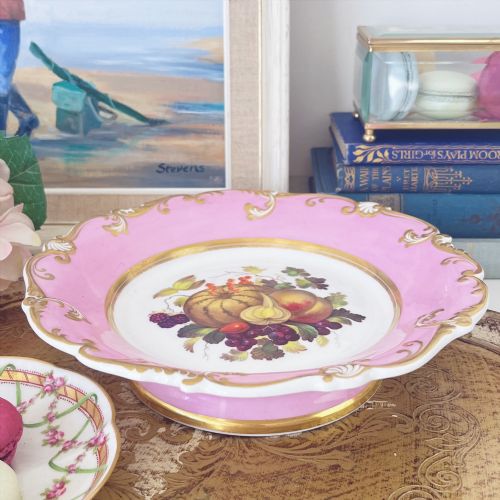
These antique porcelain comports are elevated service vessels for fruit and sweetmeats, bringing height and ceremony to a formal table.
What an antique porcelain comport is
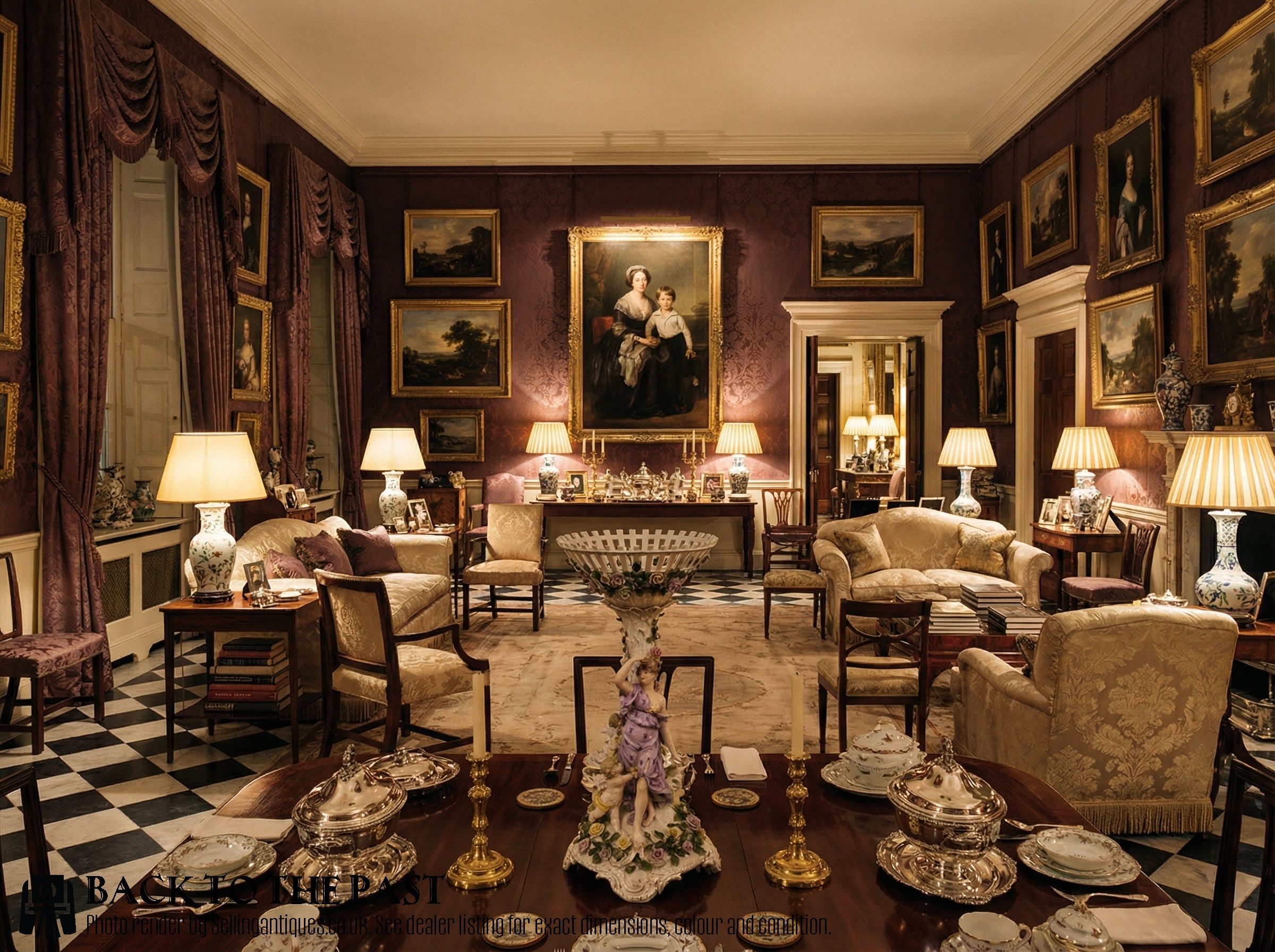
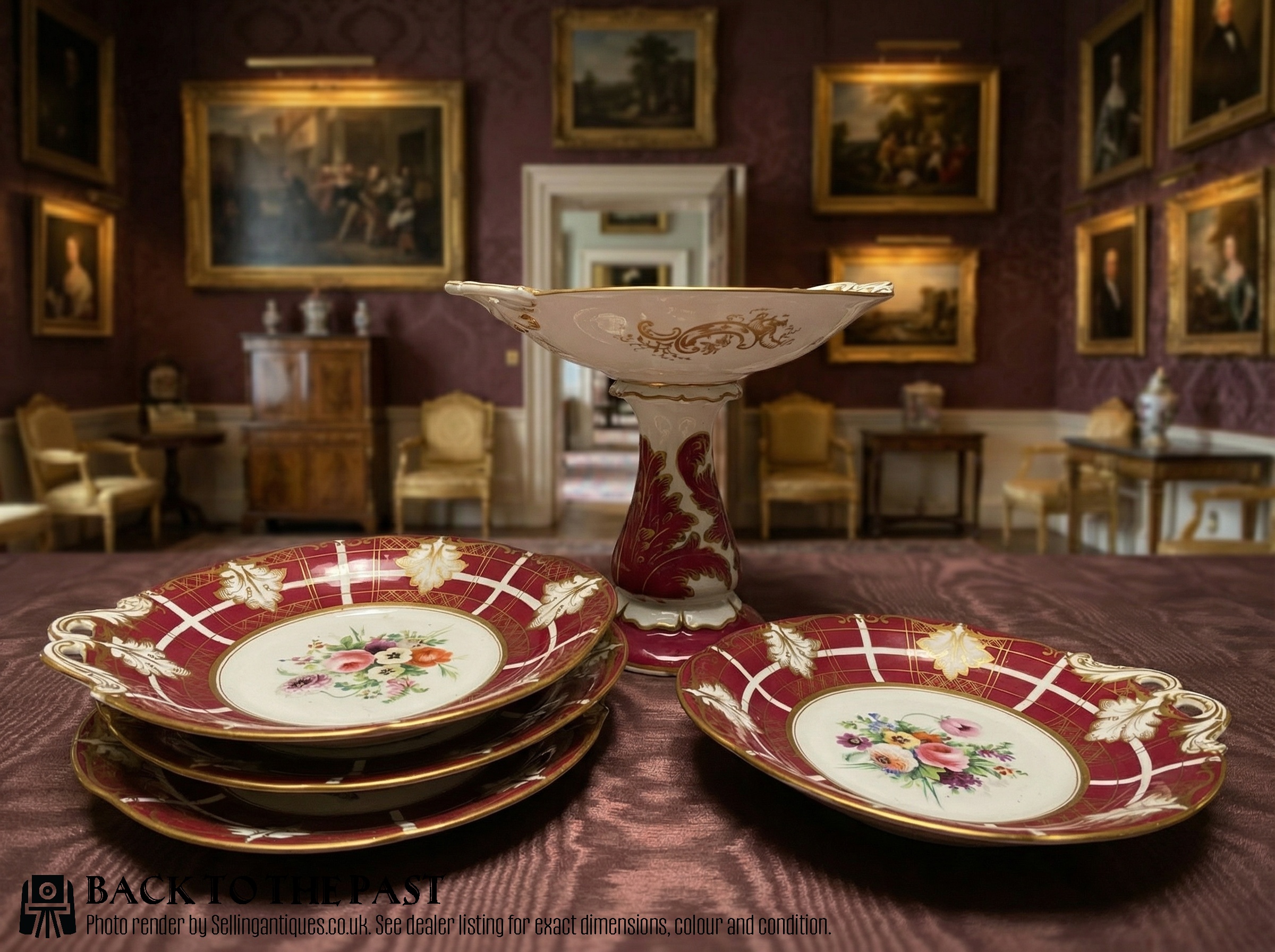
An antique porcelain comport sits on a raised pedestal or base, designed to anchor a formal dessert service. You will encounter these elevated serving dishes in single stands, matched pairs, or larger multi-tiered configurations.
The form spans centuries of dining tradition, appearing in Georgian, Regency, and Victorian settings. Makers utilised these grand centrepieces to display fruit and confections at the conclusion of a meal.
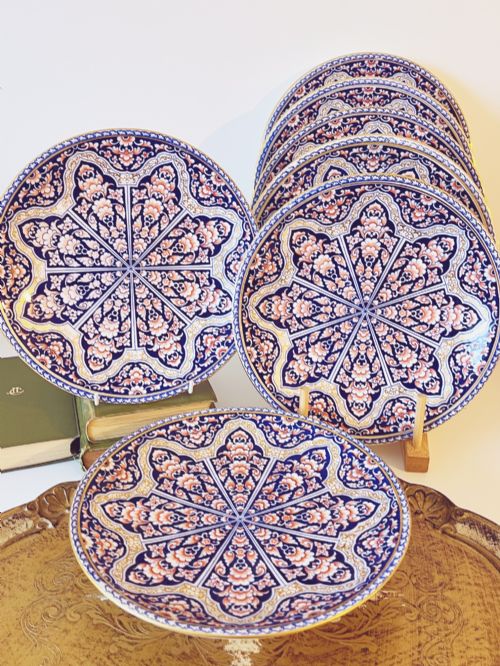
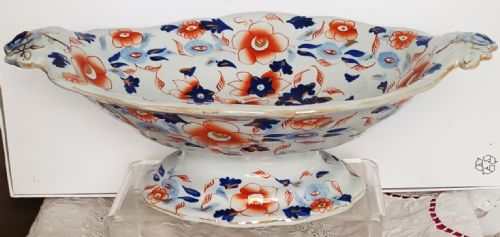
Forms on this page range from classical pedestal dishes to elaborate Chinese Export styles and German centrepieces. Each piece reflects the decorative taste of its specific period, from restrained neoclassical lines to exuberant revivalist ornamentation.
How they were made
Potters employed hard-paste porcelain, bone china, and sturdy ironstone to build the substantial bodies required for a pedestal vessel. These materials were shaped into deep dishes, decorative baskets, and multi-tiered stands.
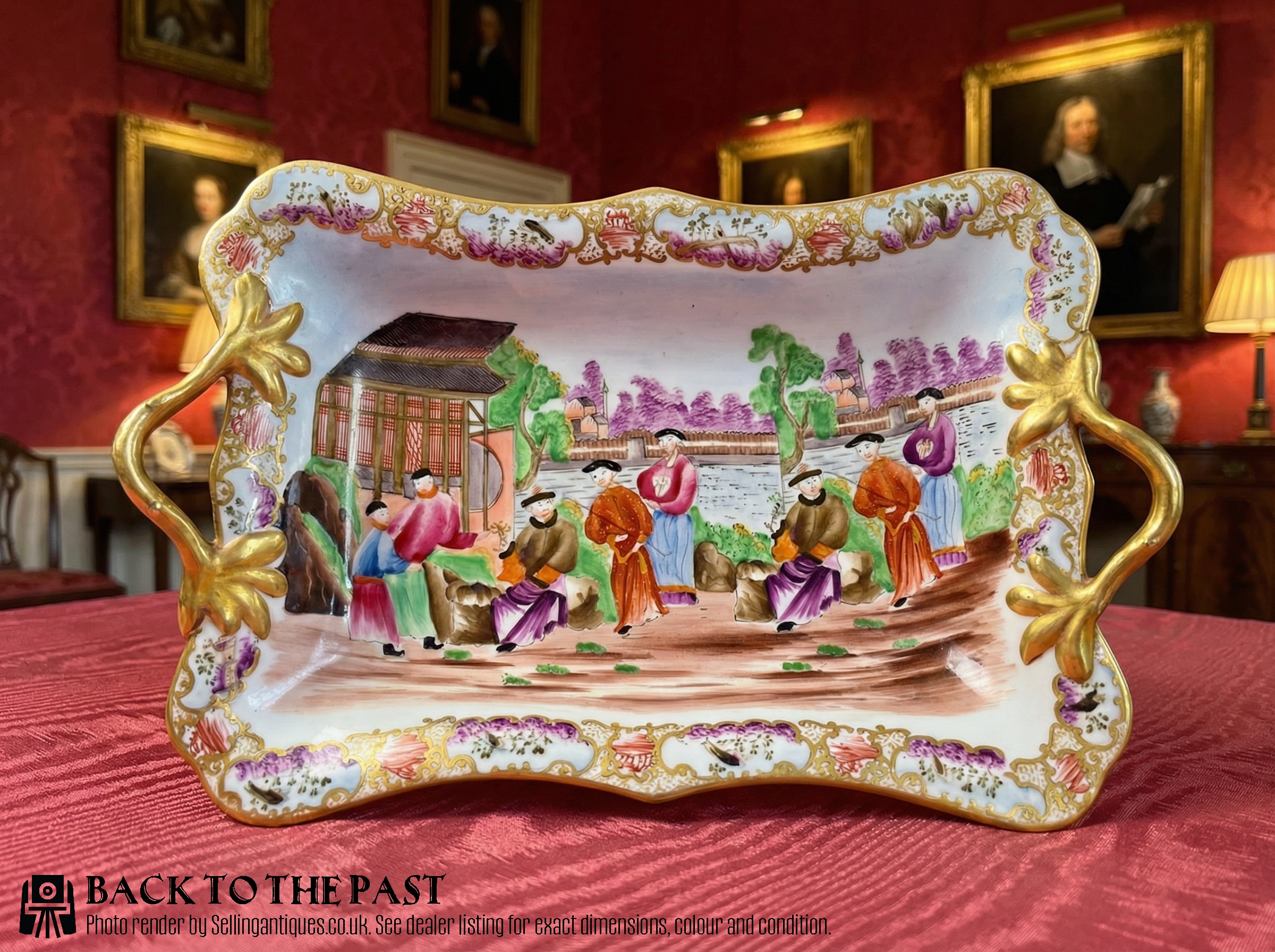
Surface decoration frequently combined hand-painted enamel colours with generous applications of gold leaf and gilt detailing. Many examples feature intricate Chinoiserie patterns or moulded rococo scrollwork integral to the porcelain body.
Retail Price Guide 2026
Typical UK retail prices for porcelain comport, calculated from the Sellingantiques database of over a million retail prices indexed since 2003. This retail price guide relies exclusively on Sellingantiques data; no external sources or auction records are used, so the figures do not describe the wider market.
Listings feature hard-paste porcelain, ironstone, and bone china across Georgian, Regency, and Victorian periods.
What separates the best from the rest
Quality rests upon the crispness of the porcelain moulding and the precision of the hand-painted enamels. Superior examples display fine brushwork and heavy, burnished gilding that has matured evenly across the pedestal and bowl.
The ambition of the form dictates distinction, separating simple utilitarian serving dishes from sculptural centrepieces and multi-tiered cake stands. Works from established factories like Swansea, Worcester, and Meissen command attention through superior paste and artistic execution.
The Antique Porcelain Comport Glossary
- Comport
- An elevated serving dish on a pedestal, used traditionally for fruit or dessert. These vessels lift the presentation above the level of the main table service.
- Ironstone
- A heavy, durable type of earthenware developed in the nineteenth century to resist chipping. It offers a dense body that mimics porcelain while remaining practical for service.
- Chinoiserie
- European artistic style reflecting Chinese motifs and decorative techniques. This aesthetic appears frequently on early nineteenth-century porcelain painted in bright enamel palettes.
- Gilt
- A thin layer of gold applied to the surface of the porcelain or highlights of the moulding. Burnished details catch the light on the raised portions of the design.
Frequently Asked Questions
What was an antique porcelain comport used for?
These elevated vessels served as the centrepiece for the dessert course in grand nineteenth-century dining. They held fruit, nuts, or sweetmeats, bringing height and visual interest to the middle of the table.
Beyond formal dining, their generous proportions made them suitable for display on sideboards or mantelpieces when not in active service. Today, collectors utilise them similarly for decorative arrangements.
How do I identify a Georgian comport?
Georgian and Regency examples often feature classical proportions, restrained pedestal bases, and hand-painted botanical or Chinoiserie motifs. The paste tends to be softer in appearance, reflecting the early English and Welsh factory methods of the period.
Later Victorian pieces frequently adopt heavier moulding, brighter transfer-printed colours, and more complex multi-tiered structures. Examining the footrim and the weight of the ceramic helps determine the era of manufacture.
Are these comports safe for serving food?
While these vessels were originally created for dining, centuries of wear mean the glaze and historical enamels require gentle treatment. Modern food safety standards also advise caution with older lead-based glazes.
Most collectors choose to exhibit these pieces or use them strictly for dry items like fruit with thick skins. Hand washing in lukewarm water is essential to protect the delicate gilding and enamel work.
What is the difference between a comport and a centrepiece?
A comport typically refers to a single pedestal dish designed for fruit or sweetmeats within a broader dessert service. It can stand alone or form part of a matched pair.
A centrepiece is often larger, more architecturally complex, or incorporates multiple tiers like two-tier cake stands and large decorative baskets. These grander items anchored the middle of the table during formal meals.