


Gilt Porcelain Comport
A gilt porcelain comport brings height and decoration to a table, combining ceramic form with rich metallic gilding.
Gilt Porcelain Comport
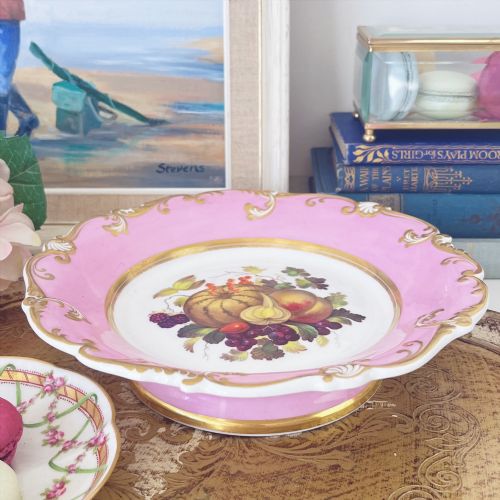
A gilt porcelain comport serves as an elevated vessel for display or service, frequently taking the form of a footed dish, tazza, or centrepiece. When searching for a gilt porcelain comport, buyers encounter pieces ranging from early nineteenth century English bone china to elaborate continental centrepieces adorned with applied figures and hand-painted botanicals.
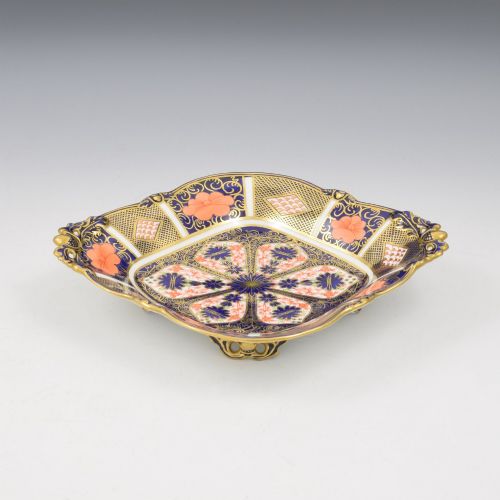
The selection on this page spans the nineteenth century through to the mid twentieth century, encompassing Regency, Victorian, and Edwardian aesthetic movements. Forms vary from simple shell-edge footed dishes to large centrepieces featuring putti, roses, and elaborate Chinoiserie patterns.
Origin points are diverse, including notable English factories alongside German and French workshops. Many pieces demonstrate revivalist styles, particularly Rococo Revival and Sevres style interpretations, executed in porcelain with extensive gilding.
Materials and production
The foundation of each piece is ceramic, utilising porcelain or bone china shaped into dishes, baskets, and footed tazzas. Skilled artisans formed these bodies manually or via moulds before applying detailed glazes and pigments.
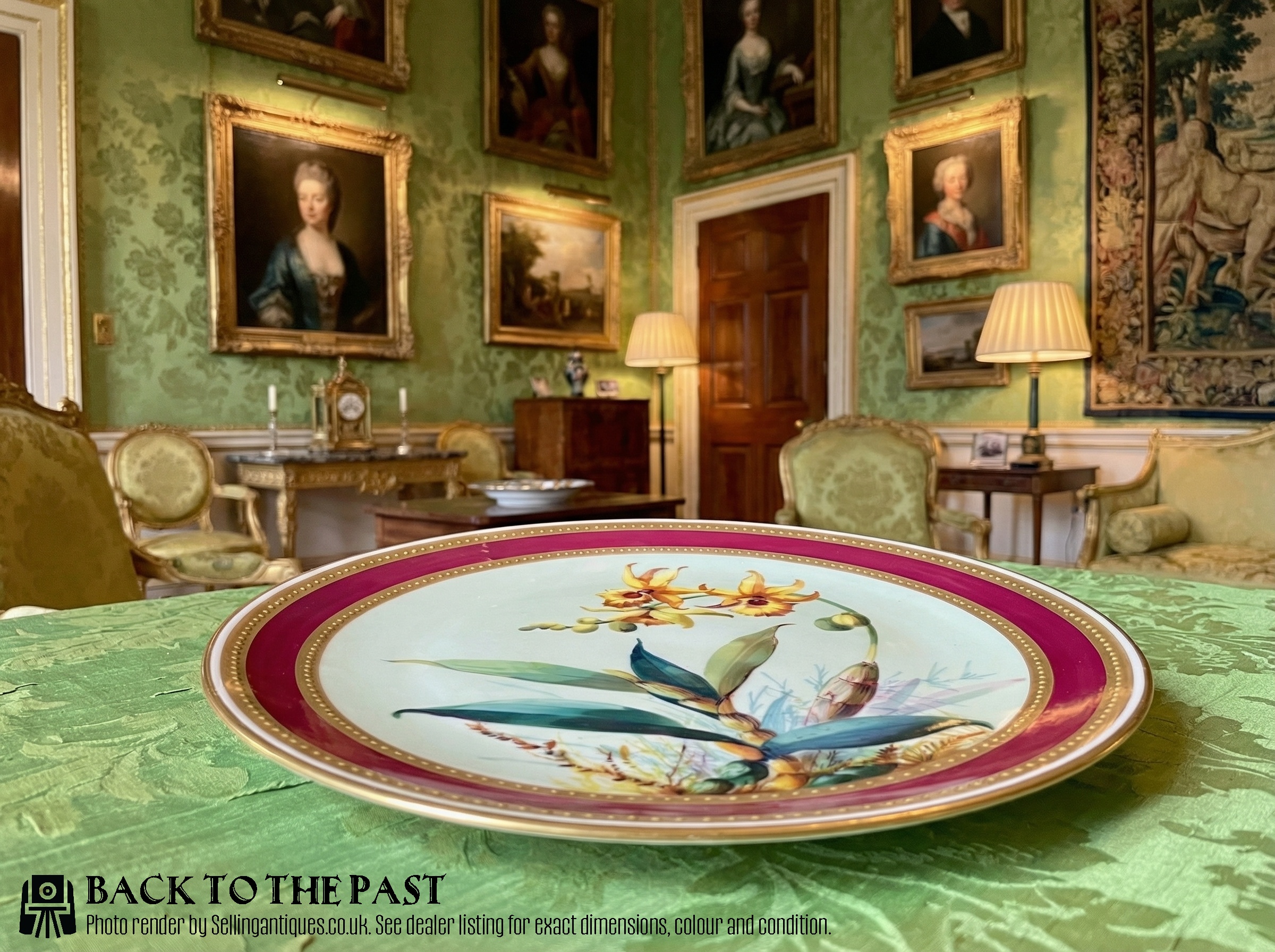
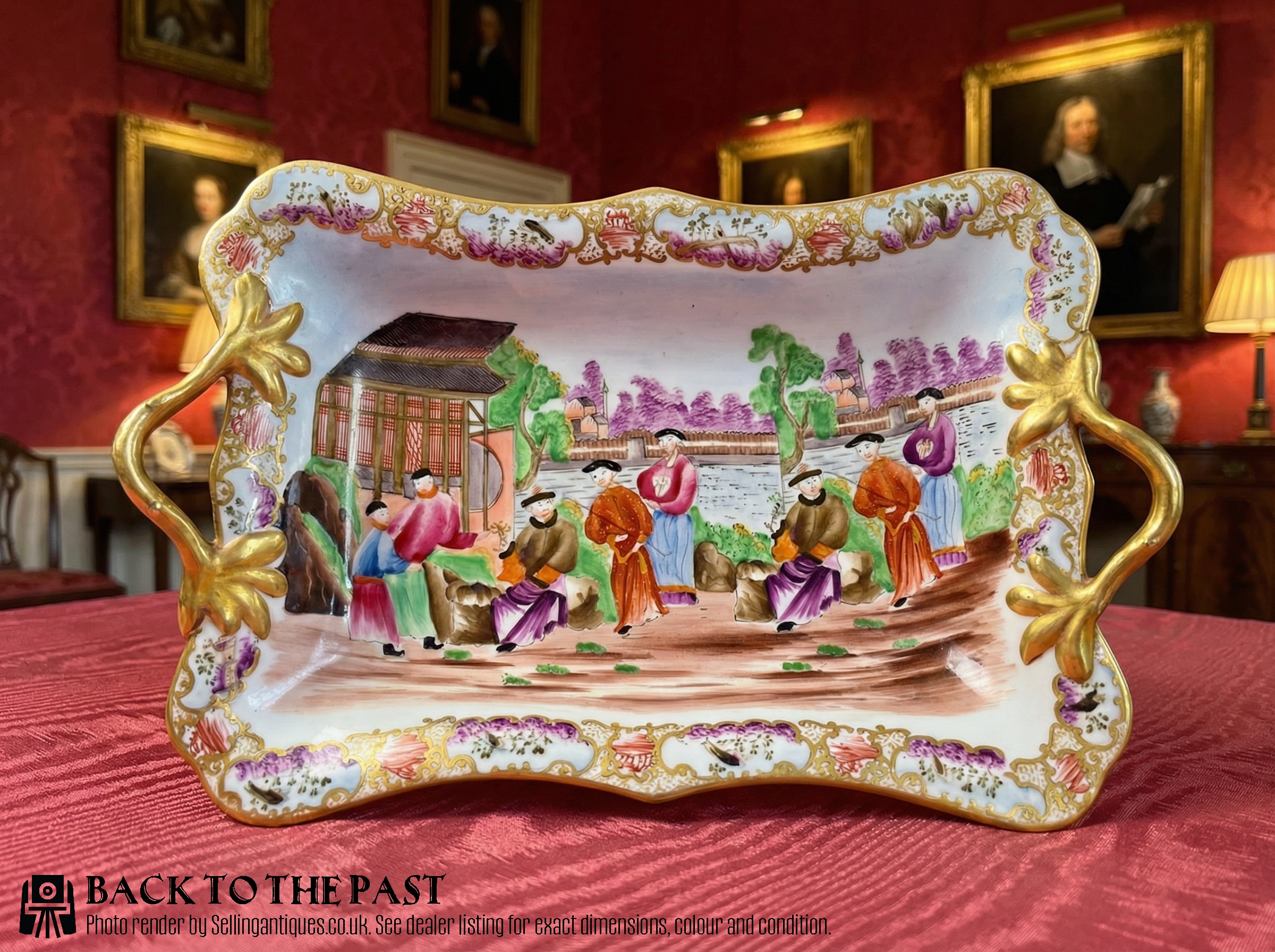
Decoration relied heavily on hand-painted botanical studies, landscapes, and Chinoiserie motifs executed in enamel colours. Gilding was applied using gold leaf, liquid gold, or ormolu mounts to highlight rims, handles, and structural supports.
Gilt Porcelain Comport Retail Price Guide 2026
Typical asking prices for gilt porcelain comport among the pieces listed under this phrase on Sellingantiques today, from the lower quarter to the upper quarter. They describe what is for sale here now, not the wider market.
Listings feature porcelain comports from the nineteenth century through the Edwardian period, incorporating materials like gold leaf, ormolu, and bone china.
Assessing quality
Quality rests in the execution of the painting and the precision of the gilding. Hand-painted fruit, floral studies, and figural work by named decorators command greater attention than transfer-printed decoration.
The crispness of the porcelain moulding, especially in pierced work and applied elements such as roses and putti, distinguishes superior examples from standard production.
Royal Crown Derby·H and R Daniel·Schierholz Plaue·C G Schierholz and Sohn·Swansea Porcelain·Flight Barr and Barr·Thomas Moorcroft·E J D Bodley·Wedgwood·Royal Worcester
The Gilt Porcelain Comport Glossary
- Comport
- A shallow dish on a high foot used for serving fruit or sweetmeats at the table. It shares its function with the tazza and often forms part of a larger table centrepiece set.
- Tazza
- An Italian term for a shallow saucer-like dish mounted on a stem and foot. In British ceramics, it is frequently used interchangeably with comport.
- Gilding
- The application of gold leaf or gold powder to a surface. On porcelain, it is often fired in a kiln and then burnished to a bright finish.
- Ormolu
- Gilded bronze or brass applied to decorative objects and furniture. It provides structural support and decorative mounts for ceramic bodies.
- Imari
- A style of Japanese export porcelain characterised by underglaze blue, iron red, and gold, which was widely copied by European factories such as Royal Crown Derby.
- Chinoiserie
- European artistic style reflecting Chinese motifs and techniques. It appears on early nineteenth century porcelain patterns.
Gilt Porcelain Comport: Frequently Asked Questions
What is a gilt porcelain comport?
A gilt porcelain comport is a raised decorative dish or tazza featuring ceramic bodywork accented with gold leaf or gilding. These pieces were designed to sit centrally on a dining table.
They functioned as serving vessels for fruit and confectionery, or simply as decorative centrepieces during formal dining occasions.
How do I date a porcelain comport?
Dating relies on identifying factory backstamps, ceramic body composition, and stylistic markers such as Rococo Revival moulding or Regency forms. Factory marks often change across decades.
Hand-painted signatures and pattern numbers can also be cross-referenced against historical factory archives to narrow down the decade of production.
What is the difference between a comport and a tazza?
While both terms describe elevated serving dishes on stems, a tazza typically resembles a flat saucer on a foot. A comport can have deeper sides or a more substantial bowl.
In historical listings, the two terms are frequently used interchangeably by makers and dealers alike.