
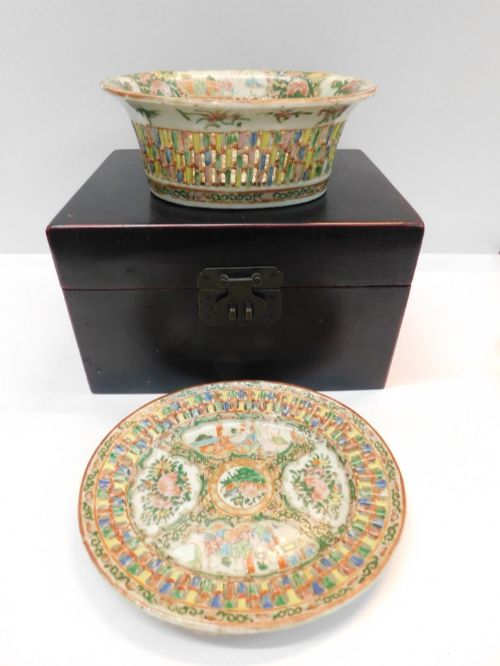
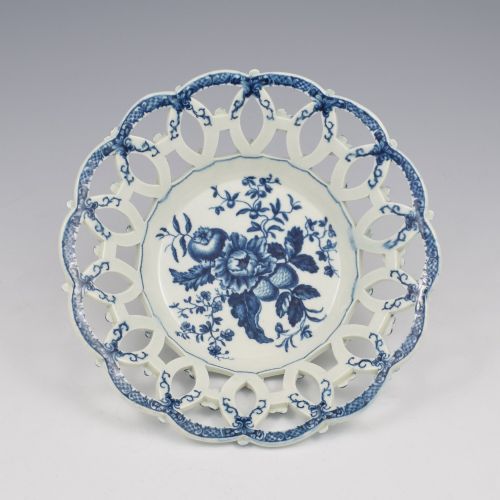


Pierced Porcelain Basket
A pierced porcelain basket brings intricate openwork and classical form to a table, offering a centrepiece of undeniable historic charm.

Pierced Porcelain Basket
A pierced porcelain basket is a decorative vessel defined by openwork cutouts in the ceramic body, often formed as chestnut baskets, centrepieces, or bowls. These items serve primarily as ornamental centrepieces or decorative dishes rather than utilitarian storage.
The pieces on this page span the eighteenth and nineteenth centuries, including Georgian and Victorian eras, alongside Chinese Export and Qing Dynasty wares. English factories such as Worcester and Derby sit alongside continental European makers and Chinese export workshops.
Most examples appear as chestnut baskets complete with matching stands or covers, frequently decorated with floral motifs, cobalt blue glaze, or transfer printing. Forms range from circular pine cone pattern bowls to oval dishes and Meissen style work baskets.
How They Were Made
Potters utilised soft-paste porcelain and standard porcelain bodies, shaping them into decorative baskets through moulding and hand-piercing the wet clay before firing. Artisans applied glazes, cobalt blue pigment, and occasionally gold leaf or gilding to enhance the surface detail.
Transfer printing and hand-painting brought colour and pattern to the ceramic surfaces, seen in styles from Chinese famille rose to English willow pattern pearlware. Makers combined pierced lattice walls with solid glazed interiors and fitted stands or covers.
Pierced Porcelain Basket Retail Price Guide 2026
Typical asking prices for pierced porcelain basket among the pieces listed under this phrase on Sellingantiques today, from the lower quarter to the upper quarter. They describe what is for sale here now, not the wider market.
Listings feature pieces spanning the 18th and 19th centuries, utilising soft-paste porcelain, pearlware, and creamware across English, German, French, and Chinese origins.
What Varies in Quality
Quality rests in the precision of the ceramic piercing and the crispness of the moulded or painted detail, separating standard production wares from finer factory outputs. The delicacy of the openwork lattice and the stability of the fired porcelain dictate the overall standard of each piece.
The refinement of the hand-painted motifs, cobalt blue glaze application, and the presence of matching stands or covers elevate certain items above simpler single bowls. Preservation of the gilding and the crispness of transfer printed patterns further distinguish superior examples.
Derby Porcelain·Sevres·Mason·Wedgwood
The Pierced Porcelain Basket Glossary
- Soft-paste porcelain
- A glassy ceramic material fired at lower temperatures than hard-paste, common in eighteenth-century English factories. It produces a warm, slightly translucent body well suited to detailed moulding and piercing.
- Chestnut basket
- A specialised vessel designed for serving chestnuts at the table, typically featuring a pierced body, matching stand, and lid. These pieces often double as decorative centrepieces.
- Reticulated
- Decorated with an open network or net-like pattern of pierced holes. This technique creates the delicate lattice walls characteristic of these baskets.
- Cobalt blue glaze
- A rich blue pigment applied under the glaze before firing, stable at high temperatures. It defines classic blue and white patterns on porcelain wares.
- Pearlware
- An earthenware body developed in the late eighteenth century with a bluish glaze that pooled in recesses. It bridges creamware and later white ironstone ceramics.
Pierced Porcelain Basket: Frequently Asked Questions
What were pierced porcelain baskets used for?
These vessels functioned primarily as table centrepieces or serving dishes for chestnuts, fruit, or sweetmeats during formal dining. Their pierced walls allowed air circulation while presenting food attractively.
Over time, many transitioned into pure decorative objects, displayed on sideboards, tables, or within cabinets as works of ceramic art.
How do I date a porcelain basket?
Dating relies on identifying factory marks, stylistic periods such as Georgian or Qing Dynasty, and material characteristics like soft-paste porcelain or pearlware. Details in the hand-painting and transfer printing methods also point to specific decades.
Comparing the form and glaze to documented factory outputs helps narrow the production era, particularly for eighteenth and nineteenth-century pieces.
How should I display a chestnut basket?
Display these baskets on sturdy tables, sideboards, or open shelves where their pierced lattice work is clearly visible. Placing them away from high-traffic areas protects the delicate openwork from accidental knocks.
Keeping matching stands and covers paired with their respective baskets maintains the historical integrity of the display.
What is the difference between Chinese export and English baskets?
Chinese export pieces, often dating from the Qing Dynasty, frequently feature famille rose palettes and specific hand-painted oriental motifs. English examples, such as those from Worcester or Derby, typically utilise local ceramic bodies and domestic decorative styles like the willow pattern.
The manufacturing techniques and clay compositions also vary, reflecting the distinct traditions of European and Asian potteries.