

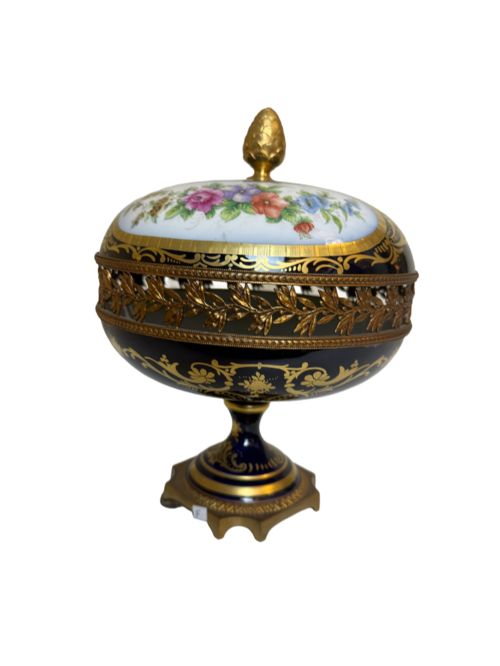
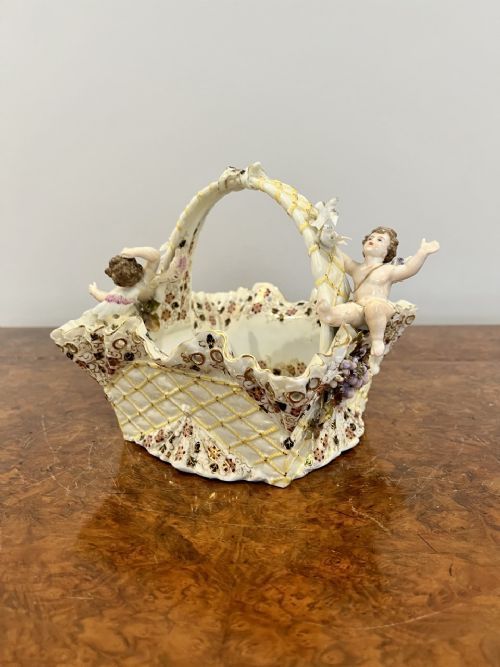
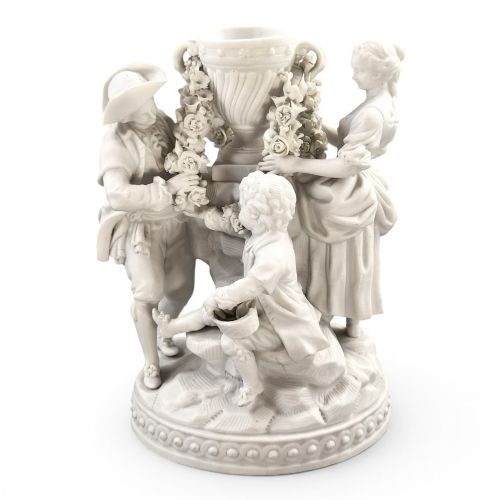
Antique Ceramic Centrepiece
An antique ceramic centrepiece sits on the dining table to anchor the room with porcelain, ironstone or earthenware brought down from the Georgian, Victorian and Meiji eras.

Antique Ceramic Centrepiece
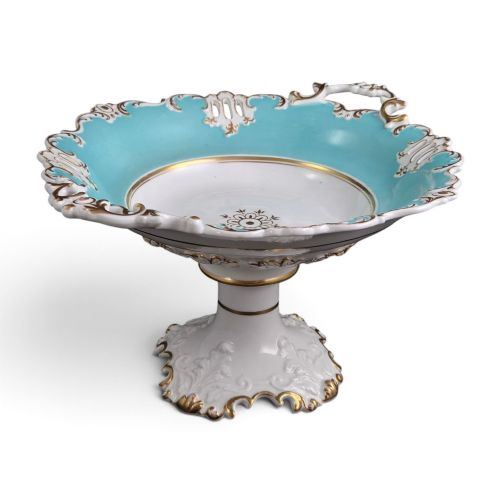
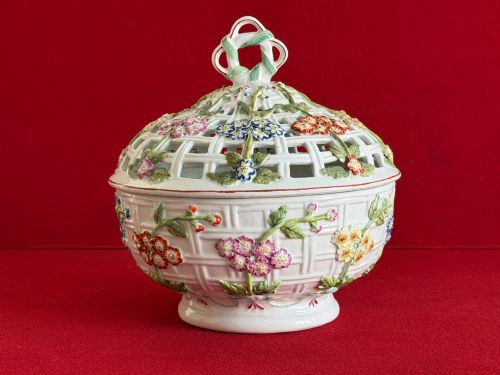
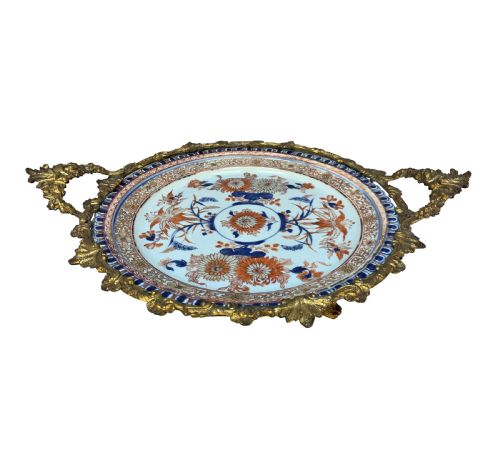
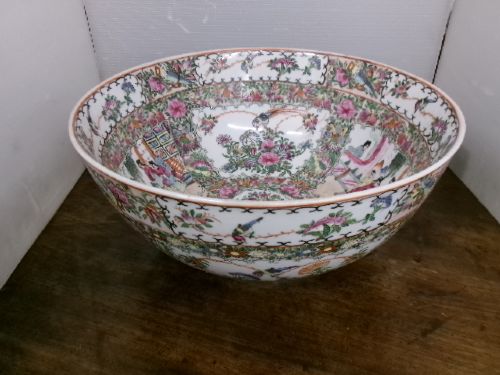
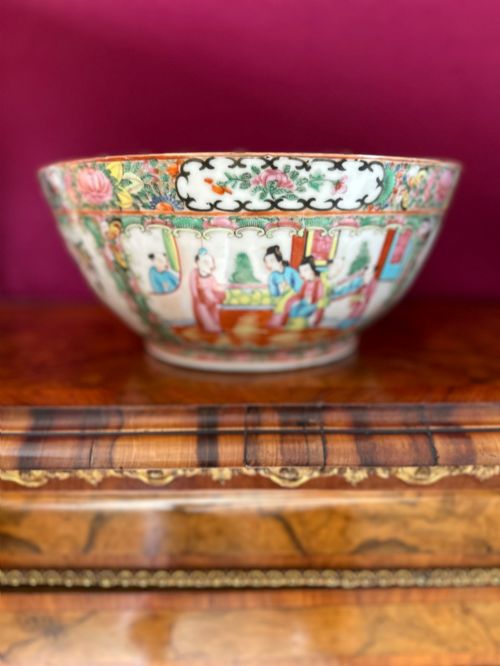
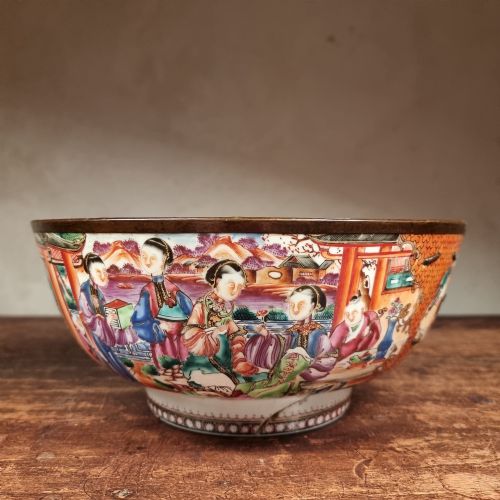
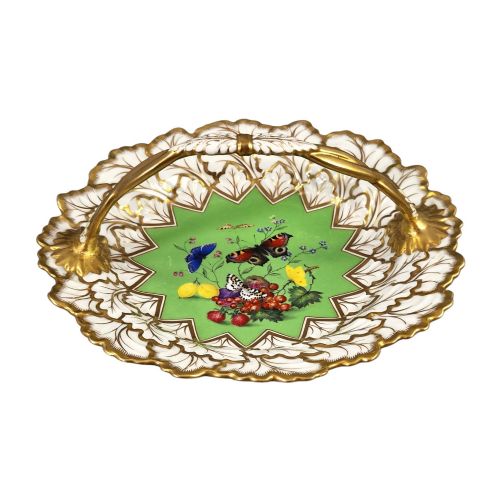
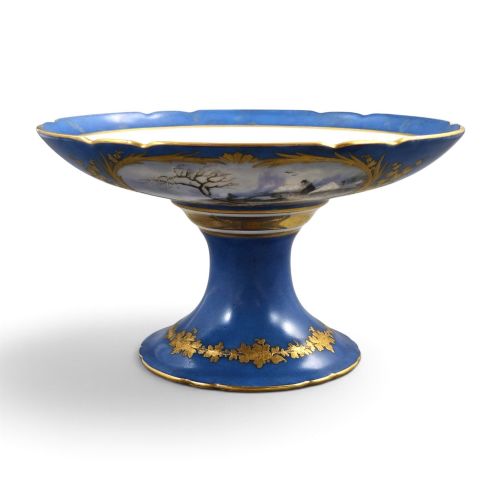
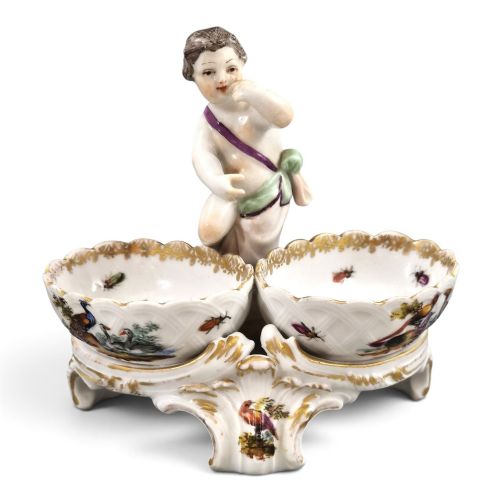
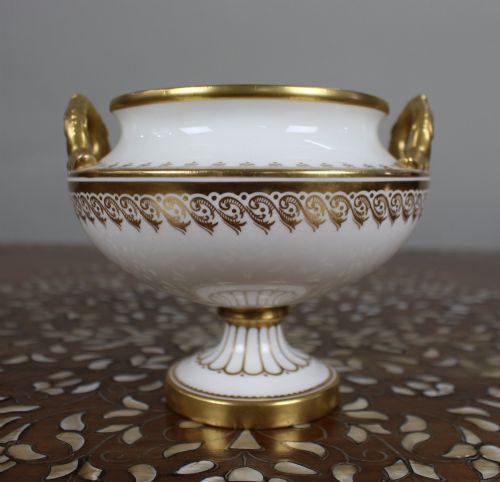
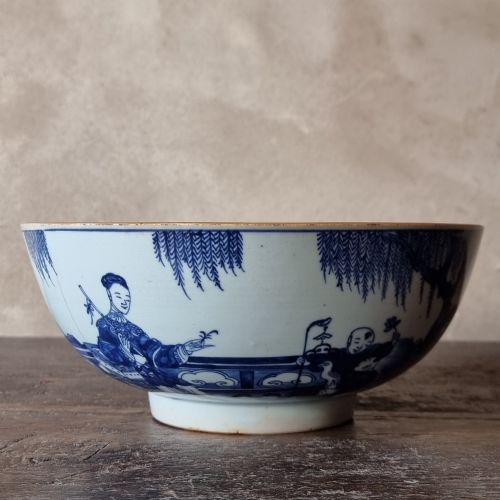
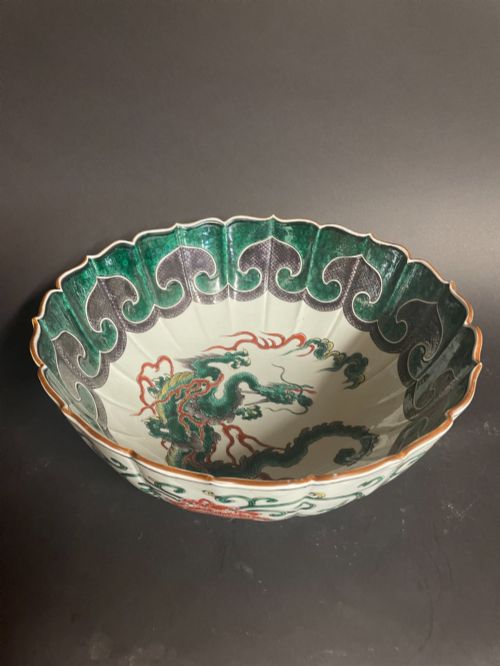
An antique ceramic centrepiece encompasses decorative bowls, baskets, comports, tureens and tazzas designed to command the middle of a table or sideboard. You will most frequently encounter porcelain baskets and bowls from English factories like Coalport and Worcester, alongside larger Chinese export and Japanese Imari vessels.
The form spans straightforward serving dishes to elaborate sculptural groups, footed comports and lidded tureens mounted in ormolu or paired with figural supports. Eighteenth-century pieces tend toward delicate floral sweet baskets, while nineteenth-century examples often adopt bold Rococo Revival curves or Majolica glazes.
How they were made
Potters shaped these pieces from soft-paste or hard-paste porcelain, ironstone and earthenware, frequently forming intricate openwork baskets by hand or pressing clay into detailed moulds. Artisans applied underglaze blue, polychrome enamels and metallic highlights such as gold leaf and heavy gilding before firing the ceramics in kilns.
Many works combine ceramic bodies with cast metal mounts or incorporate applied porcelain flowers, fruit and figural groups that required separate firing and careful assembly. Majolica pieces utilised richly coloured lead glazes poured over moulded earthenware to achieve deep greens, blues and ochres.
Antique Ceramic Centrepiece Retail Price Guide 2026
Typical asking prices for ceramic centrepiece among the pieces listed under this phrase on Sellingantiques today, from the lower quarter to the upper quarter. They describe what is for sale here now, not the wider market.
Materials recorded across the inventory include earthenware, ironstone, soft-paste porcelain, enamel, gold leaf and Majolica glazes.
What varies in quality
The standard of a piece rests upon the crispness of the moulding, the control of the glaze and the precision of the hand-painted details. Superior works display finely rendered brushwork in enamel colours and well-defined relief work without distortion from the kiln.
Excellence is also evident in the ambition of the form, separating standard utilitarian bowls from sculptural tazzas, figural salt cellars and heavily encrusted flower baskets that demanded advanced technical skill from the potter and decorator.
Coalport·Derby Porcelain·Flight Barr And Barr·KPM Berlin·Limoges·Vieux Paris·Meissen·Royal Vienna·Mason's Ironstone·Wedgwood·Minton·Worcester·Doulton Burslem·Royal Dux Bohemia
The Antique Ceramic Centrepiece Glossary
- Tazza
- A shallow ornamental bowl raised on a slender stem and foot, often utilised for serving fruit or sweets.
- Comport
- A large footed dish or bowl placed centrally on a dining table for display or service.
- Majolica
- A type of earthenware coated in an opaque tin glaze and painted with vibrant metallic oxide colours, popular during the Victorian era.
- Ironstone
- A dense, durable ceramic perfected in the nineteenth century to imitate fine porcelain while offering everyday utility.
- Imari
- A style of Japanese porcelain decorated in underglaze blue, iron red and gilt, widely exported to Europe.
Antique Ceramic Centrepiece: Frequently Asked Questions
What was a centrepiece used for?
These large vessels held fruit, flowers, sweetmeats or punches to anchor the dining table during formal meals.
They served as decorative focal points that demonstrated the host's taste and wealth through elaborate ceramic artistry.
How do I style an antique bowl?
Place the piece in the middle of a dining table, sideboard or large console where its profile and colours can be appreciated from all sides.
Keep the interior empty to showcase painted interior scenes or fill it simply with seasonal fruit or dried botanicals.
How do I date an antique ceramic?
Examine the paste, glaze characteristics, factory marks on the base and stylistic clues such as Regency or Rococo Revival moulding.
Comparing the painting style and hand-finished details against known period examples helps narrow down the decade of manufacture.
What is the difference between porcelain and ironstone?
Porcelain is a vitrified, translucent ceramic fired at high temperatures to achieve a fine, glassy body.
Ironstone is an opaque, heavy earthenware developed for strength and mass production while maintaining a refined glazed surface.