
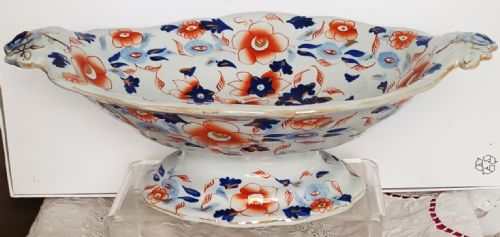


Antique Porcelain Compote
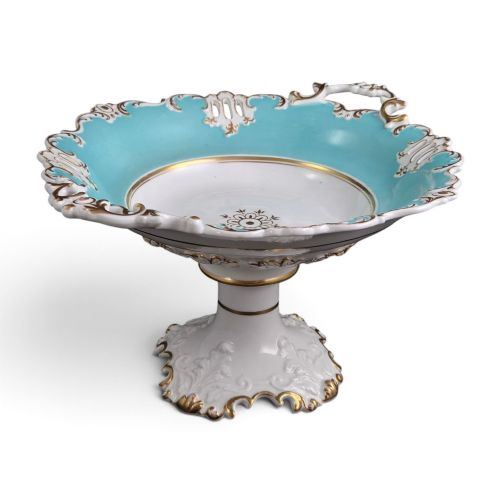
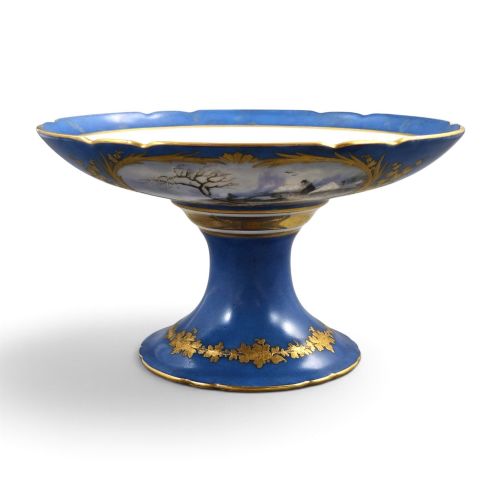
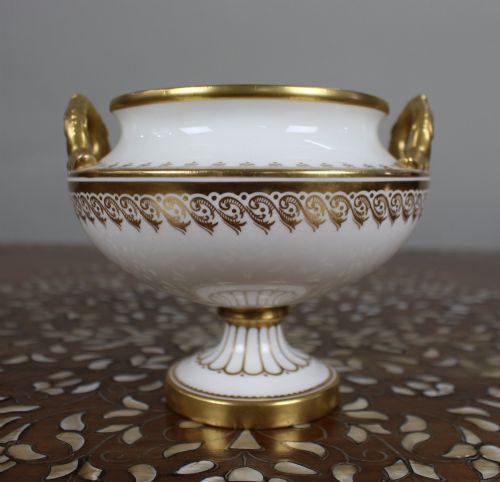
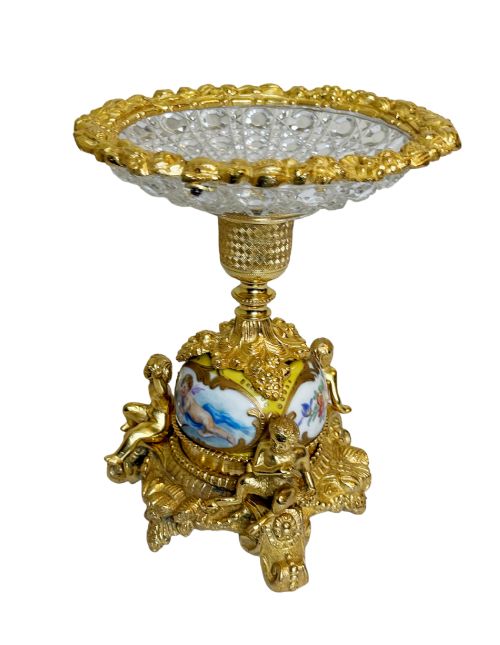
These antique porcelain compote pieces bring grandeur to a table, combining glazed ceramic bowls with gilt bronze, enamel, and gold leaf.
What these pieces are
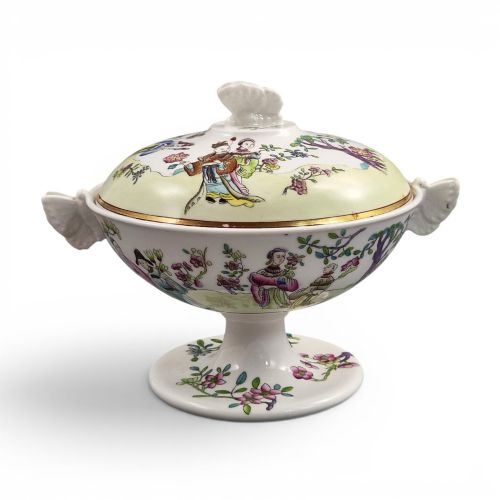
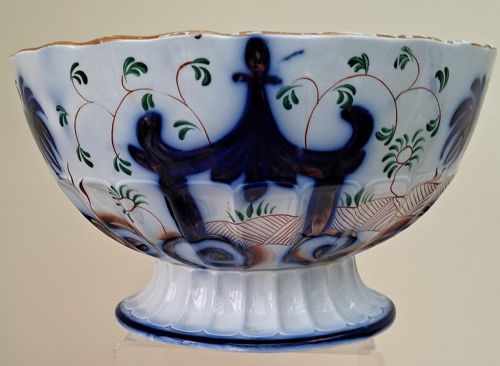
An antique porcelain compote stands as a raised centrepiece bowl or pedestal bowl, designed to display fruit or ornamentation upon a dining surface. Buyers searching for an antique porcelain compote encounter pedestal bowls, decorative baskets, and tazzas dating across the nineteenth century.
The pieces on this page span the Victorian era, eighteen-eighty, nineteen-hundred, and eighteen-sixty. Styles range from French Empire and French Restauration to Rococo Revival and Victorian Rococo Revival.
Origins represented in the evidence include French workshops such as Sèvres and Samson, alongside Austro-Hungarian maker Ernst Wahliss. Forms vary from simple basket bowls to elaborate figural compotes featuring cherubs and nautical scenes.
How they were made
The body of each piece consists of fired ceramic or porcelain, finished with coloured or white glaze. Many examples incorporate hand-painted enamel decoration alongside moulded structural elements.
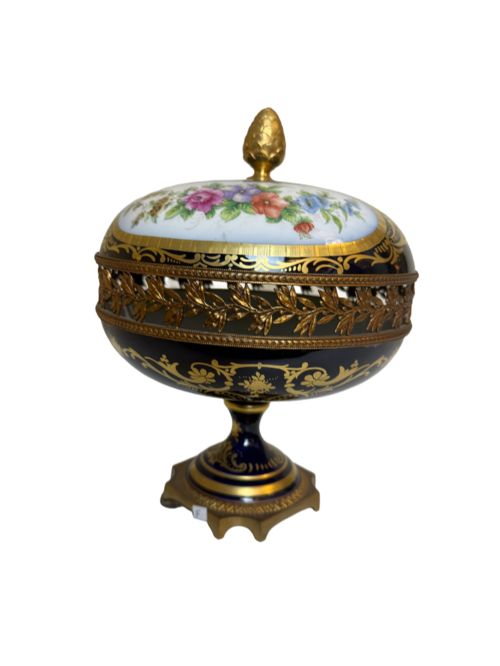
Metal mounts in gilt bronze frequently support or frame the ceramic bowls. Artisans applied gold leaf and gilding to highlight raised relief details and edges.
Retail Price Guide 2026
Typical UK retail prices for porcelain compote, calculated from the Sellingantiques database of over a million retail prices indexed since 2003. This retail price guide relies exclusively on Sellingantiques data; no external sources or auction records are used, so the figures do not describe the wider market.
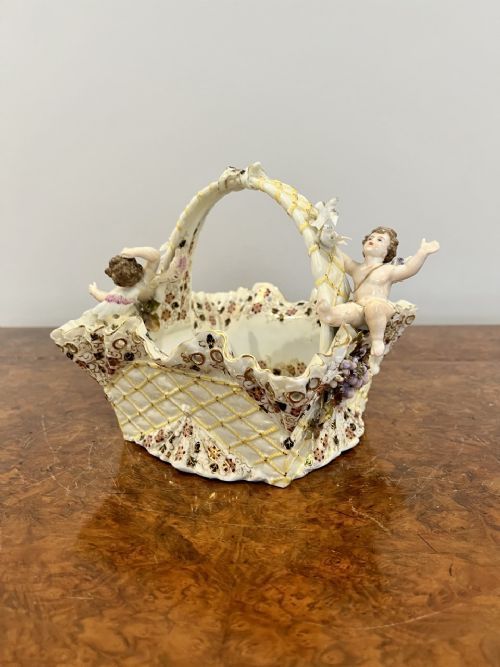
Several compotes feature cheeky porcelain cherubs clinging to the rims, apparently supervising the fruit.
What varies in quality
Quality rests in the crispness of the porcelain moulding and the delicacy of the hand-painted enamel work. Pieces featuring sculptural elements like cherubs or figures demand superior modelling skill.
The integration of secondary materials defines the tier of a piece. Heavy, finely chased gilt bronze mounts and rich application of gold leaf elevate an object above standard production.
Sèvres·Samson·Ernst Wahliss
The Antique Porcelain Compote Glossary
- Compote
- A raised bowl on a pedestal, traditionally used for serving fruit or sweets at the table. It shares common ground with the tazza and centrepiece bowl.
- Tazza
- A shallow saucer-like dish mounted upon a stem and foot, originating in Renaissance Italy. In nineteenth-century ceramics, it functions similarly to a compote.
- Gilt Bronze
- An alloy of copper and zinc finished with a fine layer of gold amalgam. It provides structural support and decorative mounts for porcelain bowls.
- Rococo Revival
- A nineteenth-century design style reviving the asymmetrical scrolls, naturalistic foliage, and shell motifs of the eighteenth century. It appears frequently on Victorian compotes.
- Enamel
- Vitrified glass powder fused to a surface through firing, used to add permanent colour and detail to porcelain. High-grade enamel work retains sharp outlines and vibrant tones.
Frequently Asked Questions
How were these compotes used?
Originally placed at the centre of a dining table, compotes served fruit, sweetmeats, or confectioneries during formal meals. They acted as decorative focal points that demonstrated the host's taste and wealth.
Over time, many transitioned into purely ornamental objects displayed on sideboards or mantelpieces. Today, they continue to function as dramatic centrepieces or decorative vessels in domestic interiors.
How do I style a compote at home?
Place a compote in the centre of a dining table or upon a prominent sideboard where its height and form can draw the eye. You may leave it empty to showcase the painted porcelain and gilt bronze mounts.
Alternatively, fill the bowl with seasonal fruit, glass balls, or dried botanicals in keeping with its traditional function. Ensure the surrounding space allows the decorative basket or pedestal details to remain visible.
How do I identify Victorian compote styles?
Victorian compotes often display Rococo Revival styling, characterised by asymmetrical scrolls, shell motifs, and naturalistic floral elements. Look for heavy gilding, moulded cherubs, or basket-weave porcelain textures.
Compare the piece against known nineteenth-century manufacturing traits, such as Sèvres-style blue grounds or gilt bronze mounts. Examining the glaze and enamel work helps place the object within the broader nineteenth-century timeline.