
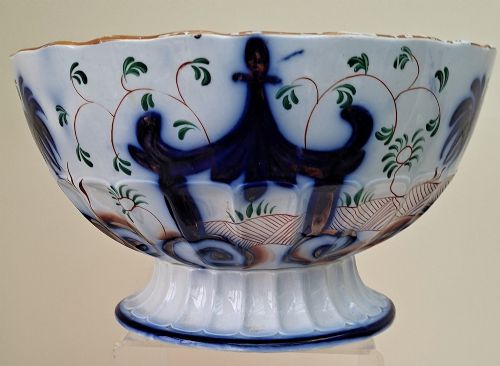
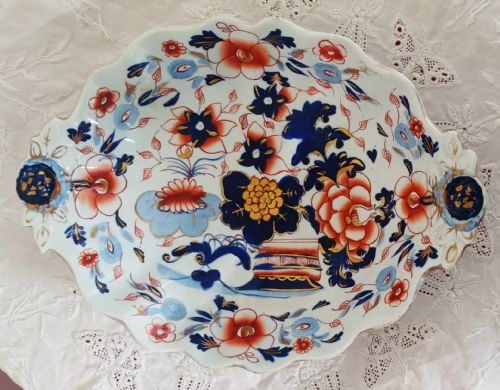
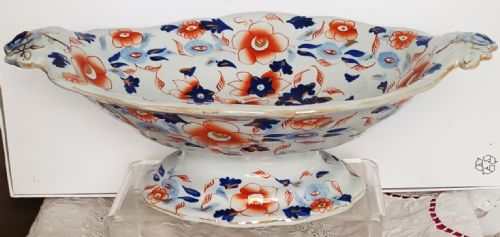
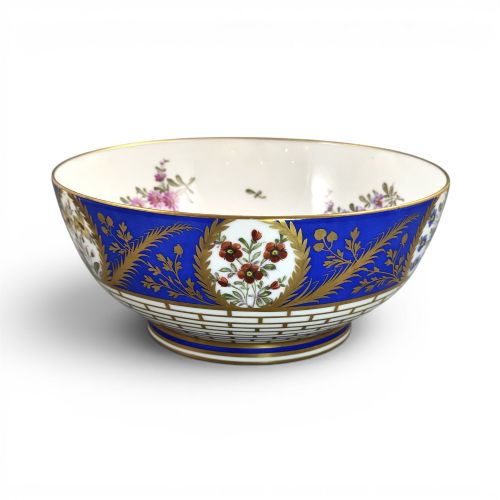
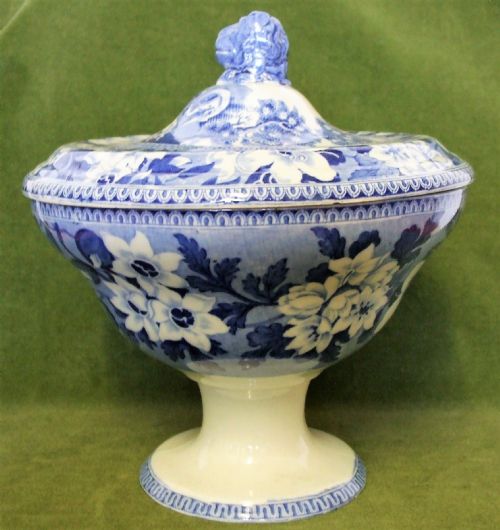


Antique Footed Ceramic Dish
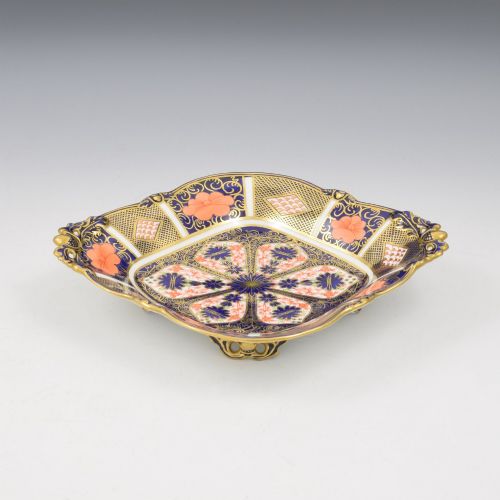
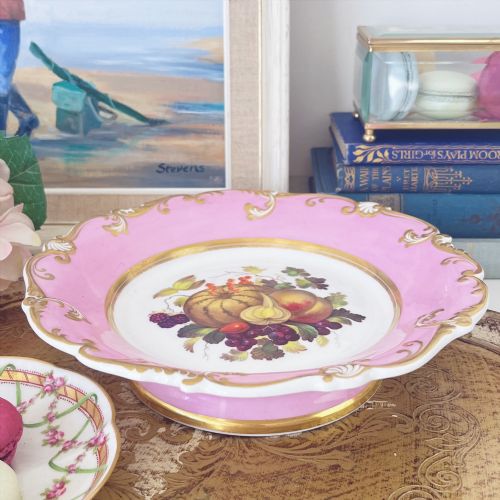
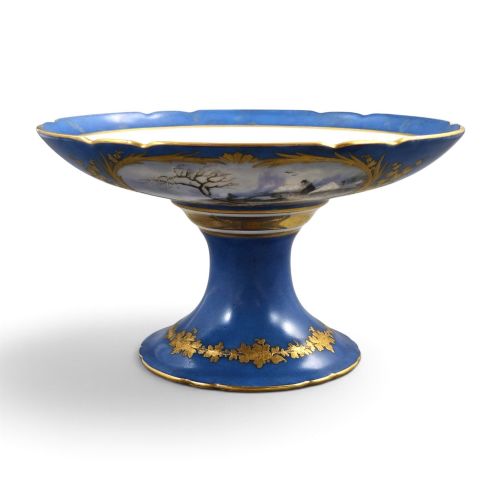
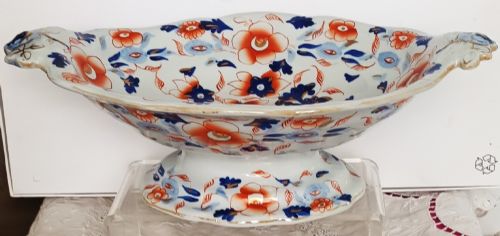
An antique footed ceramic dish elevates fruit and sweetmeats above the table on a pedestal or raised base.
Antique Footed Ceramic Dish
When searching for an antique footed ceramic dish, you encounter pedestal bowls, comports, tazzas, and low centrepieces designed to present dessert or fruit. These vessels elevate table settings across various historical eras, ranging from early earthenware and ironstone to fine porcelain.
The pieces on this page span several centuries, featuring Georgian ironstone, Victorian earthenware, and early twentieth-century porcelain. You meet forms decorated with transfer printing, hand-painted fruits, and rich lustre glazes that reflect the changing tastes of British and continental dining.
Makers utilised specific regional styles, from English Imari and Gaudy Welsh patterns to French soft-paste aesthetics and early Middle Eastern lustre wares. Each raised vessel combines practical utility with decorative ambition, resting firmly on a footed or pedestalled base.
Materials and production methods
Potters shaped these raised vessels using durable ironstone, refined earthenware such as pearlware, and hard-paste porcelain. Bodies were thrown on a wheel or pressed into moulds before receiving intricate handles, pierced rims, or applied sculptural details.
Decoration relied on skilled hand-painting, cobalt blue transfer printing, and polychrome enamel applications. Artisans often added touches of gold leaf, gilt, or rich metallic lustre glazes, which were fired multiple times in kilns to fix the vibrant colours onto the ceramic surface.
Listings feature porcelain, ironstone, and earthenware bodies decorated with transfer printing, gold leaf, and hand-painted enamels.
Assessing craftsmanship and finish
Quality reveals itself in the crispness of the moulding and the weight of the ceramic body. Finer pieces display sharply defined foot rings, balanced proportions, and thin, even walls that show translucency when held to the light.
The finesse of the surface decoration separates standard domestic wares from exhibition pieces. Superior examples exhibit meticulously detailed hand-painting, rich and unblemished gilding, and controlled glaze firings free from excessive kiln smoke or pitting.
Royal Crown Derby·H and R Daniel·John Rogers and Son·John Ridgway·Schierholz Plaue·Masons Ironstone·Minton·Wedgwood·Royal Worcester·Louis Pierre Malpass·Moorcroft
The Antique Footed Ceramic Dish Glossary
- Comport
- A raised pedestal dish used traditionally for serving fruit or sweetmeats at the end of a formal meal. These elevated vessels sit centrally on the dining table.
- Tazza
- A shallow saucer or bowl mounted on a foot and stem, originating from Renaissance dining practices. They showcase decorative motifs across the inner basin.
- Ironstone
- A dense, durable type of earthenware patented in the nineteenth century to imitate Chinese porcelain. It resists chipping and accepts thick transfer-printed patterns.
- Lustre
- A metallic ceramic glaze that produces an iridescent or pearlescent sheen when fired in a reduced-oxygen kiln. Wedgwood and various Middle Eastern potteries utilised this technique.
- Transfer printing
- A mechanical method of applying intricate designs to ceramics by pressing paper tissue inked from an engraved copper plate onto the bisque body.
Antique Footed Ceramic Dish: Frequently Asked Questions
How were these raised dishes used?
Dining traditions placed these elevated dishes in the centre of the table during the dessert course to serve fresh fruit, nuts, or sweetmeats. Their height added architectural variety to table service.
Beyond the dining room, they functioned as ornamental centrepieces on sideboards and consoles, displaying the wealth and taste of the household through fine ceramic art.
How do I care for my ceramic dish?
Wash your piece by hand using lukewarm water and mild soap, avoiding modern dishwashers that can erode delicate gilding and enamels. Place a soft cloth in the basin during washing to protect the foot ring.
Keep the vessel away from direct sunlight and sudden temperature shifts to prevent crazing in the glaze. Handle the dish by its body rather than its handles or delicate pierced edges.
How can I tell different periods apart?
Examine the ceramic body, glaze characteristics, and decorative motifs to determine age. Georgian pieces often feature blue and white transfer printing on heavy ironstone, whilst Regency and Victorian examples lean towards hand-painted botanicals and bright polychrome enamels.
Twentieth-century items frequently display distinctive lustre glazes, stylised floral patterns, or modernist forms that break away from nineteenth-century revival styles.