
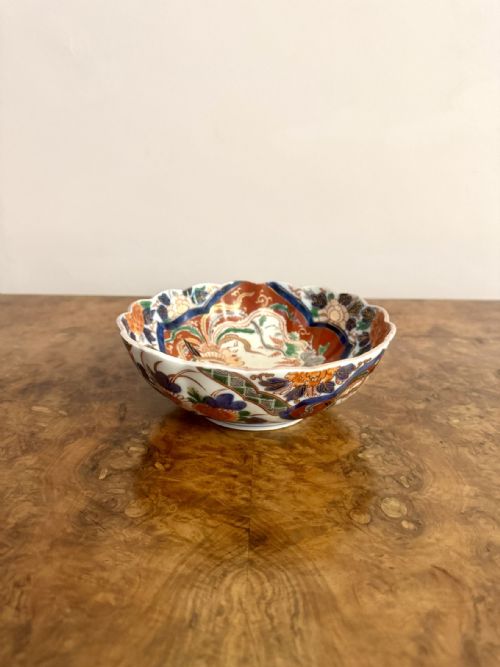


Scalloped Fruit Dish
These scalloped antique fruit dish selections bring Victorian, Edwardian, and Meiji period serving forms into modern rooms.
Scalloped Fruit Dish
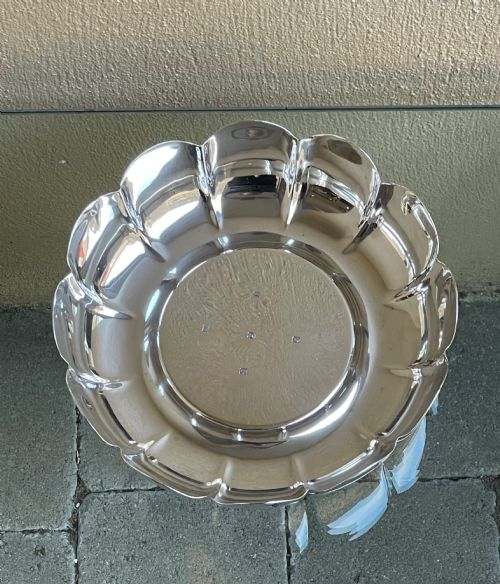
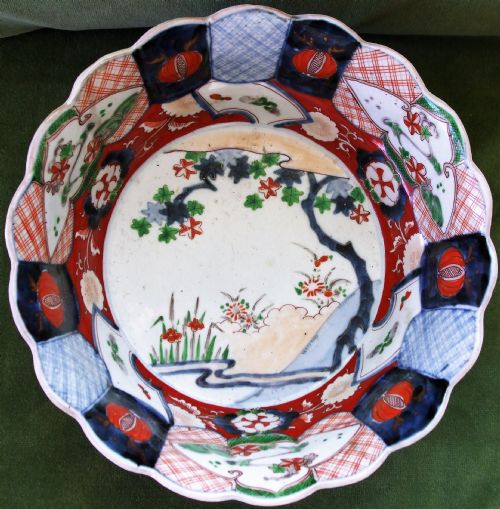
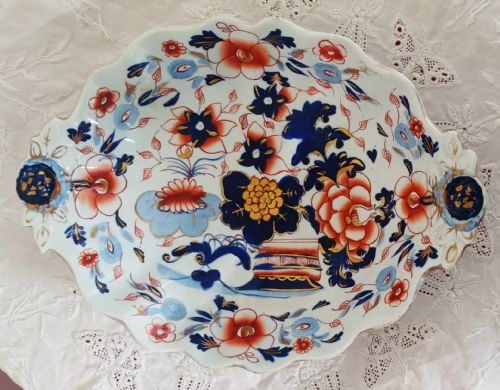
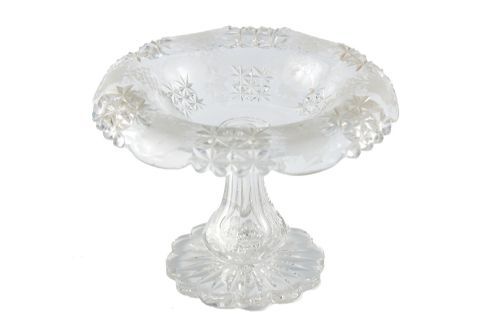
A scalloped antique fruit dish encompasses decorative bowls, centrepieces, comports, serving dishes, trays, and cabinet plates designed for dining tables and sideboards. The selection here ranges from Victorian and Edwardian cut glass to Japanese Meiji period Imari porcelain and English ironstone.
Buyers will find distinct expressions spanning the nineteenth and twentieth centuries, including traditional English porcelain alongside imported Japanese ceramics and solid silver or silver-plated presentation pieces.
How They Were Made
The pieces rely on traditional craft methods including hand-painted porcelain decoration, precision glass cutting, and silver smithing. Materials vary from sterling silver and silver plate to lead crystal, cut glass, enamel, ironstone, and porcelain enhanced with gold leaf and gilt highlights.
Forming the scalloped and fluted edges required skilled moulding and shaping by hand, whether working hot glass or firing ceramic bodies in kilns during the Victorian and Edwardian eras.
Object forms include pedestals, low comports, pencil trays, and cake baskets across various nineteenth and twentieth-century styles.
What Varies in Quality
Quality rests on the crispness of the cutting in crystal and glass pieces, the delicacy and hand-painting precision of ceramic glazes, and the weight and maker reputation of silver and silver plate. Pieces bearing recognizable maker signatures or documented workshop origins show superior execution in material and finish.
The depth of the moulding, the clarity of the lead crystal, and the preservation of gilt and gold leaf details distinguish the finest examples from standard production items.
Royal Worcester·Tiffany and Co·WMF·Garrard London·James Deakin
The Scalloped Fruit Dish Glossary
- Comport
- A raised dish or bowl on a pedestal, traditionally used for serving fruit or sweetmeats at the table.
- Imari
- A style of Japanese porcelain decorated in underglaze blue and overglaze red, gold, and other colours, highly popular in the nineteenth century.
- Ironstone
- A type of heavy, durable earthenware developed in nineteenth-century England as a robust alternative to porcelain.
- Silver Gilt
- Silver object coated with a thin layer of gold on its surface, giving a rich golden appearance while retaining a silver base.
- Fluted
- Having parallel shallow grooves or channels running vertically or radially, often seen on the rims of bowls and dishes.
Scalloped Fruit Dish: Frequently Asked Questions
How are antique fruit dishes best displayed?
These pieces sit well on dining tables, sideboards, or open shelving where their forms and surface details catch the light. They function effectively as standalone decorative objects or as traditional holders for fruit.
Ensure they rest on stable, flat surfaces away from heavy foot traffic to protect delicate glass edges and ceramic glazes.
What periods do these dishes come from?
The available selection primarily spans the nineteenth and twentieth centuries, encompassing Victorian, Edwardian, and Meiji period examples. Materials and decorative styles reflect the prevailing tastes of those eras.
Manufacturing dates range from mid-nineteenth-century silver and ceramics through to mid-twentieth-century designs.
How do I clean silver plated dishes?
Silver plate requires gentle cleaning with specialised silver cloth or mild soapy water to preserve the underlying metal plating. Avoid abrasive pads or harsh chemical dips that strip the surface finish.
Dry thoroughly with a soft cloth immediately after washing to prevent water spotting.
What is the difference between Imari and ironstone?
Imari refers to Japanese porcelain decorated in distinctive blue, red, and gold palettes, whereas ironstone is a heavy English ceramic body known for durability. Imari pieces often feature intricate hand-painted motifs.
Ironstone offers a sturdier structure suited to everyday dining service.