
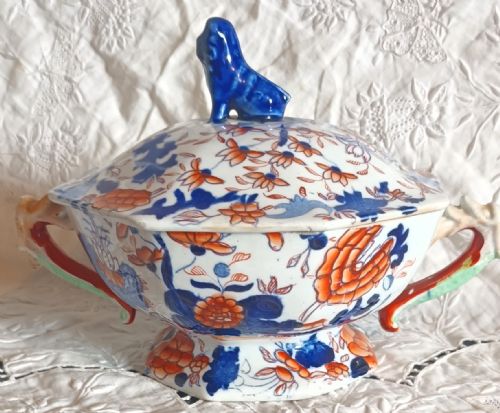


Ironstone Vegetable Tureen
An ironstone vegetable tureen is a heavy, durable serving vessel from the nineteenth century, built for grand dining tables and built to last.
Ironstone Vegetable Tureen
An ironstone vegetable tureen is a sturdy lidded vessel designed to keep vegetables hot at the table, appearing frequently in nineteenth-century forms. These pieces bridge the gap between everyday utility and decorative servingware, combining heavy ceramic bodies with striking patterned decoration.
Most examples found here date from the nineteenth century, spanning Georgian, Regency, and Victorian periods. Buyers encounter large covered bowls, soup tureens, sauce tureens, and dedicated vegetable tureens complete with matching lids.
Makers utilised earthenware and ironstone ceramic bodies, often decorated with transfer prints, enamel, and gold leaf. Common aesthetic directions include English Chinoiserie, Victorian Imari, and blue and white transfer printing.
How they were made
Potters shaped durable ironstone ceramic and earthenware bodies to withstand heavy kitchen and dining room use. These dense bodies provided a robust canvas that resisted chipping far better than traditional porcelain.
Craftsmen applied intricate blue and white transfer prints, hand-poured enamels, and delicate gold leaf details across the surface. Many vessels received a clear glaze sealing the decoration beneath, protecting the patterns from daily wear.
Specialised decorators rendered complex English Chinoiserie motifs, such as Mandarin patterns, bamboo designs, and Japan basket schemes. Firing these heavy pieces required large kilns capable of vitrifying the ironstone body at high temperatures.
Listings feature nineteenth-century ironstone ceramics decorated with enamel, gold leaf, and transfer prints across styles like Chinoiserie and Victorian Imari.
What varies in quality
The sophistication of the painted or transfer-printed decoration dictates much of the visual distinction. Pieces featuring rich enamel colours and applied gold leaf demand greater skill than standard blue and white transferware.
The crispness of the moulded handles, finials, and foot rims separates standard production from finer work. Sharp relief and well-defined ceramic moulding indicate a superior initial pressing and finishing process.
Completeness alters the character of a piece profoundly, with matching lids and original ladles elevating the historic integrity of the tureen. Surviving pairs also command higher interest from collectors seeking matched dining sets.
Mason's Ironstone·Coalbrookdale
The Ironstone Vegetable Tureen Glossary
- Ironstone
- A heavy, durable type of earthenware patented in the nineteenth century. It contains slag of iron or ground stone to increase its strength.
- Transfer print
- A decorative technique where an engraved copper plate transfers a design onto tissue paper, which is then pressed onto the ceramic body before glazing.
- Chinoiserie
- European decorative style reflecting Chinese artistic influences. This aesthetic appears frequently in nineteenth-century ceramic patterns.
- Tureen
- A deep, large bowl with a lid used for serving soups, sauces, or vegetables at the dining table. They often include integrated handles and matching stands.
- Enamel
- Opaque vitreous paint applied over the glaze and fired again at a lower temperature. It provides bright surface colours on ceramic pieces.
Ironstone Vegetable Tureen: Frequently Asked Questions
How do I date a nineteenth century tureen?
Dating these tureens relies on identifying maker marks, decorative styles, and ceramic body types recorded in the listing details. Georgian and Regency pieces often feature specific Chinoiserie motifs, while later Victorian examples display bolder enamel palettes.
Comparing the style of handles, finials, and transfer printing techniques helps narrow down the production period. Consulting archives of known nineteenth-century potteries provides further chronological certainty.
Are these tureens safe for everyday use?
While ironstone ceramic bodies are exceptionally hard and durable, antique tureens require gentle handling due to their age. Hand washing protects the delicate enamel colours and gold leaf highlights from harsh dishwasher detergents.
Many collectors prefer to use them for display, dry storage, or occasional serving rather than heavy daily dining. Sudden temperature changes should be avoided to protect the historic glaze.
What is the difference between soup and vegetable tureens?
Soup tureens are typically larger, deeper vessels designed to hold considerable liquid capacity for sharing at the table. Vegetable tureens tend to be slightly shallower and broader, shaped specifically for solid side dishes.
Both forms frequently feature matching lids and decorative handles, though sauce tureens are smaller still and often accompanied by ladles.