
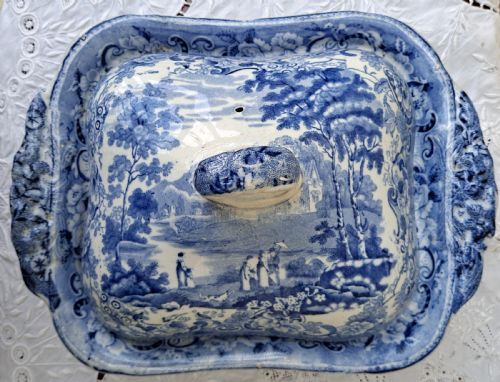


Antique Floral Serving Tureen
An antique floral serving tureen brings the weight of past dining rooms to the table, offering a centrepiece built for practical use and display.
Antique Floral Serving Tureen
An antique floral serving tureen provides a covered vessel for presenting food at table, taking the form of vegetable tureens, soup tureens and entrée dishes. You will most frequently encounter nineteenth century earthenware and porcelain examples decorated with floral motifs.
The objects span periods from the eighteenth century Qianlong period through Regency, Victorian and Edwardian eras, reflecting traditional European and French Rococo revival tastes. Forms range from single vegetable tureens with covers to large dinner services containing servingware.
Makers and origins recorded in the listings include English potteries such as James Wallace and Co., Booths, Masons, Doulton Burslem, Coalbrookdale, Flight Barr and Barr Worcester, and Müller Volkstedt from the continent, alongside Chinese export porcelain.
How they were made
Potters shaped these tureens from ceramic bodies including earthenware, ironstone and porcelain, applying glazes to seal the surfaces. Many pieces incorporate transfer-printed or hand-painted floral decoration beneath or over the glaze.
Makers enhanced select details using gilding, gold leaf and enamel painting to highlight handles, rims and floral cartouches. Ironstone provided a dense, durable alternative to softer earthenware, while porcelain allowed for finer, thinner vessel walls.
Some vegetable tureens retain tiny steam vents hidden inside their floral finials, designed to keep the cabbage from getting soggy.
What varies in quality
Quality rests in the crispness of the moulded form and the precision of the floral painting or transfer printing. Pieces decorated by hand with enamels and gold leaf show greater individual artistry than standard production wares.
The weight and finish of the ceramic body distinguish standard utilitarian ironstone from fine porcelain or heavy eighteenth century Qianlong period export porcelain. Complete matching covers and well-preserved gilding elevate a tureen's standing.
James Wallace and Co.·Booths·Masons·Müller Volkstedt MV Co.·Doulton Burslem·Flight Barr and Barr·Coalbrookdale·Edm'e Samson
The Antique Floral Serving Tureen Glossary
- Tureen
- A deep covered dish used for serving soups, stews or vegetables at the dining table. They typically feature two side handles and a matching lid.
- Ironstone
- A dense, durable type of earthenware patented in the nineteenth century to imitate Chinese porcelain. It resists chipping and bears heavy use.
- Porcelain
- A hard, fine-grained ceramic fired at high temperatures until vitrified. It rings when struck and allows for thin, translucent vessel walls.
- Gilding
- The application of gold leaf or gold paint to ceramic surfaces. It accentuates rims, handles and decorative borders.
- Qianlong Period
- The era of Chinese history from 1736 to 1795 noted for high-quality porcelain export wares. Pieces from this time often feature intricate underglaze blue painting.
Antique Floral Serving Tureen: Frequently Asked Questions
What was a tureen used for?
These covered vessels held soups, broths, vegetables or entrées in the dining room, keeping food warm at the table before serving.
Servants brought the filled tureen from the kitchen to the dining table, where the host served portions directly to guests.
Can I use these for serving food?
Many nineteenth-century earthenware and ironstone tureens remain robust enough for serving dry foods or warmed vegetables at modern meals.
Porcelain and pieces with extensive gold leaf or enamel work are better reserved for display or careful occasional use to preserve their finish.
How do I date an ironstone tureen?
Examine the maker marks stamped or printed on the base, as nineteenth-century British potteries frequently used registration diamonds or specific factory ciphers.
The weight of the ironstone body, the style of the floral transfer print and the colour of the glaze also point toward specific decades.