


Staffordshire Earthenware Tureen
These staffordshire earthenware tureen pieces are heavy, transfer-printed serving vessels and animal egg crocks that bring robust nineteenth-century character to a dining table.
Staffordshire Earthenware Tureen
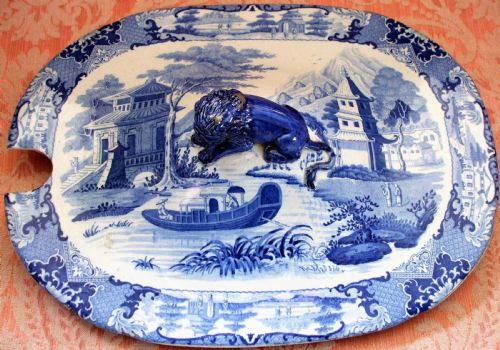
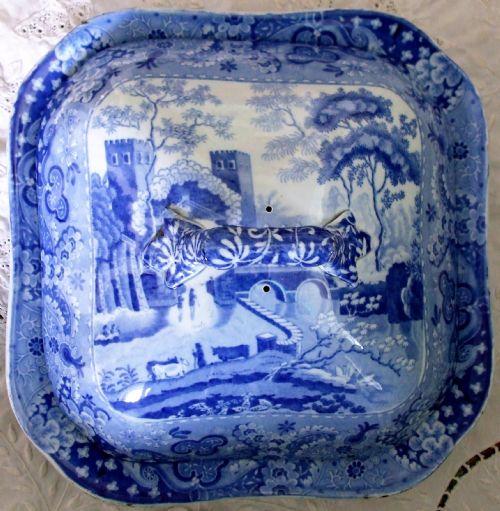
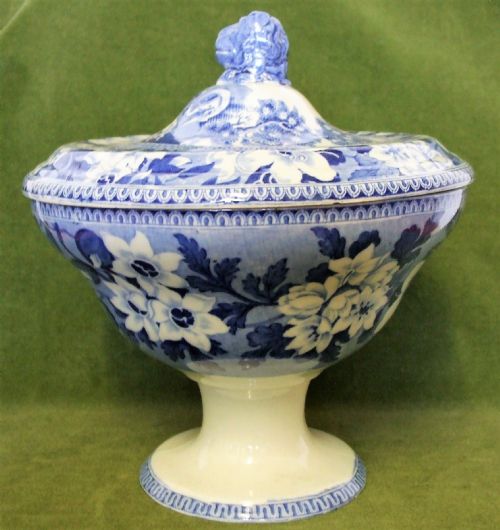
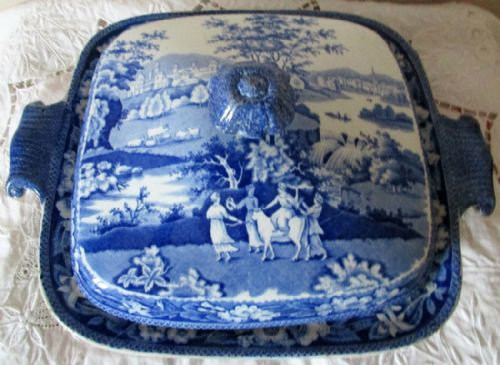
A staffordshire earthenware tureen is a ceramic serving vessel or lidded dish designed for dinner services, vegetable courses, sauce, or eggs. You will most frequently meet blue and white transfer-printed vegetable tureens with matching covers from the Georgian and Victorian periods.
The selection ranges from large soup and vegetable tureens bearing named topographical or classical patterns to whimsical chicken egg tureens and miniature child services. Earthenware forms span utilitarian egg crocks and ladles alongside grander dinner service components.
How they were made
Potters shaped these vessels from local clay bodies, covering the fired earthenware body with clear lead glaze or pearlware glaze to create a smooth, glossy surface. Decoration relied on copper-plate transfer printing in deep blue, which produced crisp topographical scenes and intricate borders.
Many pieces received hand-applied enamel highlights over the transfer print, while specialised vessels like the hen egg crocks required moulded feather details and realistic underglaze painting.
Several chickens guard breakfast tables fiercely disguised as ceramic egg tureens sitting upon moulded wicker baskets.
What varies in quality
Quality rests in the clarity of the transfer print and the crispness of the moulded relief on handles, lion heads, and animal forms. Fine examples maintain registration without smudging across complex patterns like the Elephant or Castle designs.
The presence of matching covers and original underplates elevates a piece above a stray base, while the delicacy of the ceramic body and the depth of the glaze determine the finesse of the maker's output.
Robert Hamilton·J. & R. Clews·John Rogers & Son·John and Richard Riley·Booths·James Wallace & Co.·Copeland and Garrett
The Staffordshire Earthenware Tureen Glossary
- Pearlware
- A refined earthenware developed with a bluish-tinted glaze that pooled slightly blue in crevices, bridging the gap between salt-glazed stoneware and pure white ironstone. It provides the bright canvas for early nineteenth-century blue and white printing.
- Transfer printing
- A method of applying intricate engraved designs to ceramics by pressing paper pulled from a copper plate onto the biscuit or glazed body. It allowed potteries to produce uniform narrative scenes at scale.
- Flow blue
- A style of cobalt decoration where chloride vapour was introduced into the kiln to deliberately blur and bleed the edges of the transfer print into the glaze. This creates a soft, hazy aesthetic highly prized by collectors.
- Earthenware
- A porous, opaque ceramic fired at lower temperatures than stoneware or porcelain, requiring a vitreous glaze to hold liquids. It forms the structural core of nearly all Staffordshire table wares.
- Egg crock
- A lidded vessel shaped as a sitting bird, hen, or animal on a basket, designed to keep breakfast eggs warm on the table. These figural pieces combine utility with lively sculptural modelling.
Staffordshire Earthenware Tureen: Frequently Asked Questions
What is a staffordshire earthenware tureen?
A staffordshire earthenware tureen is a glazed ceramic vessel made in the English potteries to hold soup, vegetables, or sauce during formal nineteenth-century meals. They frequently feature blue and white transfer-printed scenes depicting rivers, castles, or classical ruins.
Alongside standard vegetable dishes, the category includes figural animal egg crocks and miniature child services modelled in earthenware. Each piece reflects the industrial scale and artistic skill of regional Staffordshire potteries.
How are different periods identified?
Georgian pieces often display pearlware glazes and crisp blue and white transfer prints with named romantic patterns. Victorian examples shift towards heavier earthenware bodies, flow blue coloration, and more robust utilitarian forms.
Maker marks impressed or printed on the base provide definitive dates, while stylistic clues like lion-head handles and animal finials help narrow down the decade of production.
Were these tureens used daily?
Most of these tureens served practical roles on middle and upper-class dining tables for holding communal portions of meat, vegetables, or soup. Smaller egg tureens and crocks saw regular morning use in the dining room.
Despite their functional origins, many survived intact because families reserved them for special meals or kept them safely stored within larger dinner services.