
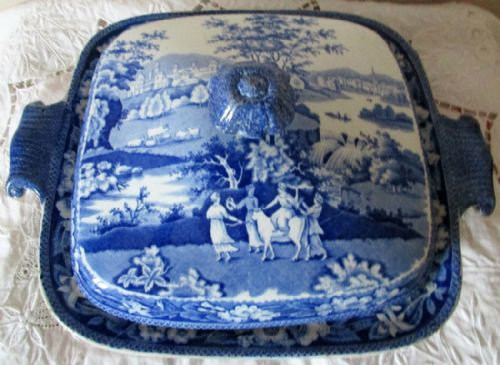


Vintage Blue Vegetable Tureen
These vintage blue vegetable tureen pieces bring transfer-printed patterns and lidded earthenware forms directly to your table, offering both utility and historic charm.
Vintage Blue Vegetable Tureen
A vintage blue vegetable tureen serves as a lidded vessel designed for table service, often accompanied by matching covers or stands. The selection spans 19th Century and Georgian examples, alongside Chinese export items and Victorian tableware.
Most items you encounter on this page combine traditional earthenware or ironstone bodies with blue and white transfer printing. You will also find porcelain pieces and related sauce tureens alongside larger vegetable vessels.
How they were made
Potters shaped these vessels using ceramic, earthenware, and ironstone, often finishing them with a clear glaze to protect the underlying body. Ironstone provided a heavier, more durable alternative to standard earthenware for daily dining use.
Decoration relied primarily on blue and white transfer printing to apply intricate patterns onto the ceramic surface before glazing and firing. Selected pieces also incorporate hand-applied gilding or gold leaf highlights around the handles and rims.
What varies in quality
Quality rests in the crispness of the transfer-printed design and the crisp definition moulded into the ceramic handles and finials. Superior examples maintain clear details without blurring across the transfer lines.
The sophistication of the pattern and the prestige of the maker shape the standing of each piece within the market. Well-preserved gilding and intact matching covers elevate the desirability of the vessel.
John and Richard Riley·Masons·Ridgways·Copeland and Garrett
The Vintage Blue Vegetable Tureen Glossary
- Transfer print
- A decorative technique where an engraved metal plate transfers a design onto tissue paper, which is then pressed onto the ceramic body before glazing. This method allowed consistent, detailed patterns across mass-produced tableware.
- Ironstone
- A dense, heavy type of earthenware patented in the 19th century for its durability and resistance to chipping. It served as a robust material for kitchen and dining vessels.
- Tureen
- A deep covered bowl used for serving soups, sauces, or vegetables at the dining table. They frequently include matching stands or ladles.
- Gilding
- The application of gold leaf or gold paint to ceramic surfaces, usually highlighting rims, handles, or decorative borders.
Vintage Blue Vegetable Tureen: Frequently Asked Questions
How do I date a vintage blue vegetable tureen?
Dating relies on maker marks, ceramic bodies, and stylistic clues within the transfer print. Ironstone and specific transfer patterns often point towards 19th Century production.
Examining the base for impressed stamps or maker names helps narrow down the manufacturing decade. Stylistic influences, such as English Chinoiserie or Victorian motifs, provide further chronological context.
Can I use these tureens for serving food?
Many of these ceramic and ironstone tureens remain structurally sound for serving dry or moist foods at the table. However, age, historic glazes, and hairline fractures require careful consideration before daily use.
Hand washing is essential to preserve the glaze, transfer print, and any delicate gilding. Avoid sudden temperature changes to protect the historic ceramic body.
What is the difference between an earthenware and ironstone tureen?
Standard earthenware provides a porous, lighter body that was common in early 19th-century domestic pottery. It offers a traditional ceramic feel with classic transfer-printed decoration.
Ironstone contains slag and feldspar, creating a much heavier, vitrified material designed to withstand heavy use. Ironstone pieces generally feel denser and show greater resistance to cracking.
How should I display a lidded tureen?
Displaying a tureen involves placing it on a sideboard, dresser, or open shelving where the blue and white pattern remains visible. Keeping the cover in place completes the intended silhouette of the vessel.
Ensure the display surface is stable and capable of supporting the weight of ironstone or ceramic vessels. Position pieces away from direct, harsh sunlight to protect the glaze over time.