


Blue Transferware Soup Tureen
These blue transferware soup tureen examples bring bold cobalt decoration and substantial earthenware presence to the dining table.
Blue Transferware Soup Tureen
A blue transferware soup tureen is a lidded ceramic vessel designed for serving broth and soup at the formal dining table. The selection centres on nineteenth-century English earthenware examples featuring scenic and figural transfer-printed decoration.
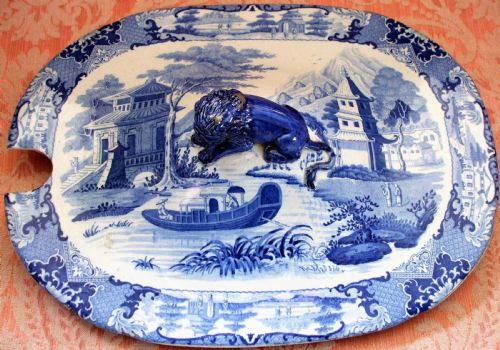
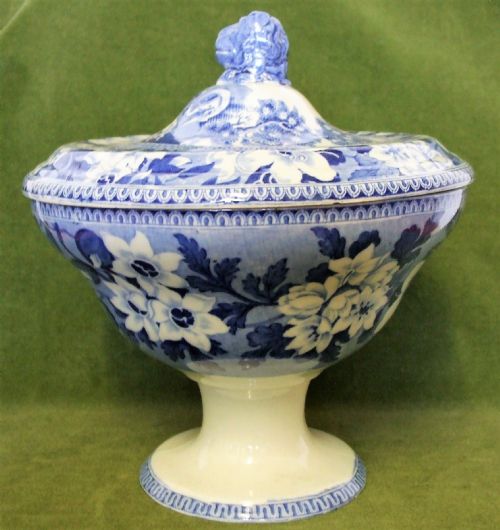
Most pieces date from the Victorian and Georgian eras, taking the form of large lidded tureens, sometimes accompanied by matching covers and ladles. Forms range from botanical vegetable vessels to grand soup tureens adorned with scenes such as the Canton River and Castle patterns.
How they were made
Potters shaped these vessels from earthenware clay before applying detailed designs via cobalt oxide transfer printing beneath a clear glaze. Artisans engraved copper plates with pictorial scenes, transferred the ink onto tissue paper, and pressed the paper onto the ceramic body.
The printed pieces were then fired at high temperatures to fuse the cobalt oxide decoration permanently into the glaze. Many items include matching ceramic soup ladles and fitted lidded covers produced through the same earthenware and transfer printing techniques.
Listings span the nineteenth century, including Georgian and Victorian periods with earthenware bodies and cobalt oxide decoration.
What varies in quality
Quality rests upon the crispness of the cobalt transfer print and the artistry of the pictorial scene upon the ceramic surface. Sharp lines in complex patterns like the Elephant or Canton River motifs distinguish superior examples from simpler wares.
The presence of matching covers and original ceramic soup ladles elevates the completeness of a set. Maker attribution also influences standing, with pieces bearing marks from established potters commanding distinct attention.
Robert Hamilton·John Rogers & Son·J. & R. Clews·Ridgways·Copeland & Garrett·Doulton Burslem
The Blue Transferware Soup Tureen Glossary
- Transferware
- Earthenware decorated by printing a design from an engraved copper plate onto paper and transferring it to the ceramic body before glazing. This technique allowed intricate pictorial scenes to be produced consistently on domestic pottery.
- Cobalt Oxide
- A metallic oxide pigment used to achieve the deep blue colour characteristic of these transfer-printed patterns. It withstands high kiln temperatures without losing its rich hue.
- Earthenware
- A porous ceramic fired at lower temperatures than porcelain and stoneware. It forms the standard body for nineteenth-century English tableware.
- Soup Ladle
- A large spoon with a long handle and a deep bowl designed for serving soup from a tureen. These ceramic implements match the glaze and transfer pattern of the main vessel.
Blue Transferware Soup Tureen: Frequently Asked Questions
What is a blue transferware soup tureen?
It is a ceramic serving vessel used for soup at the nineteenth-century dining table, decorated with printed blue designs.
These pieces typically include a matching lid and sometimes an accompanying ladle for serving.
How do I date these tureens?
Dating relies on maker marks, stylistic details, and the characteristics of the earthenware and transfer print.
Georgian and Victorian examples span the nineteenth century, often showing specific pictorial styles from periods like the 1830s to the 1890s.
How were these vessels used?
They were placed at the centre of the dining table to hold and serve hot soup during formal meals.
The matching cover kept the contents warm until serving time arrived.
Are ladles commonly included?
Some surviving sets retain their original ceramic soup ladles, though many tureens are found separately.
Matching ladles feature the same blue transfer-printed decoration as the main body.