
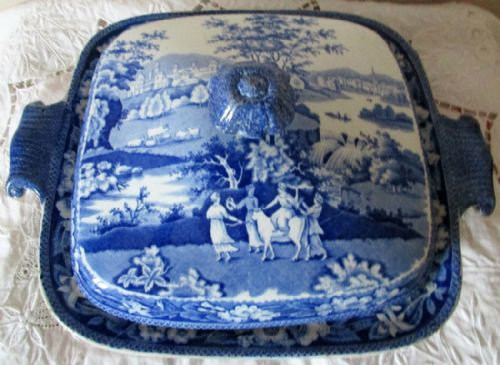


Georgian Ceramic Tureen Lid
A georgian ceramic tureen lid brings the refined craftsmanship of the eighteenth and early nineteenth centuries straight to the dining table.
Georgian Ceramic Tureen Lid
When you search for a georgian ceramic tureen lid, you encounter individual covers and complete serving vessels originating from the Georgian and Regency periods. These covers belong to sauce tureens, vegetable dishes, and larger covered bowls designed for formal dining tables.
The pieces on this page span the eighteenth and nineteenth centuries, featuring forms intended to cap earthenware, ironstone, and porcelain containers. Most examples connect to prominent English factories and potteries of the era.
Buyers meet both standalone lids and covers united with their original bases. They represent the practical survival of dining services that once graced British country houses and town residences.
Materials and methods
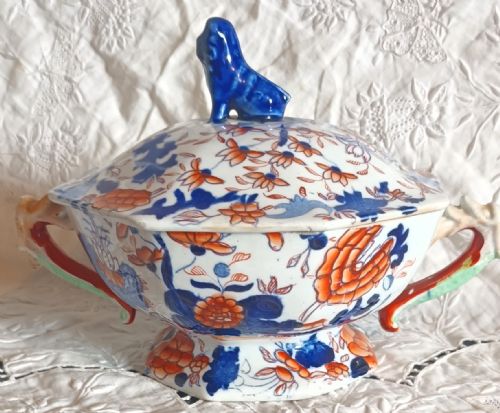
Potters of the period utilised earthenware, soft-paste porcelain, and ironstone ceramic bodies to shape these covers. Ironstone offered robust durability, while porcelain allowed for delicate, thin-walled forms with refined contours.
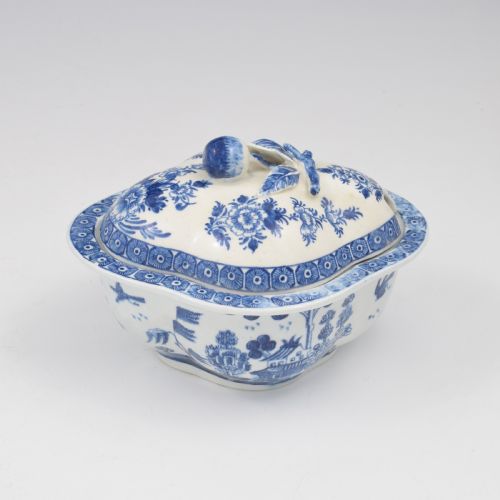
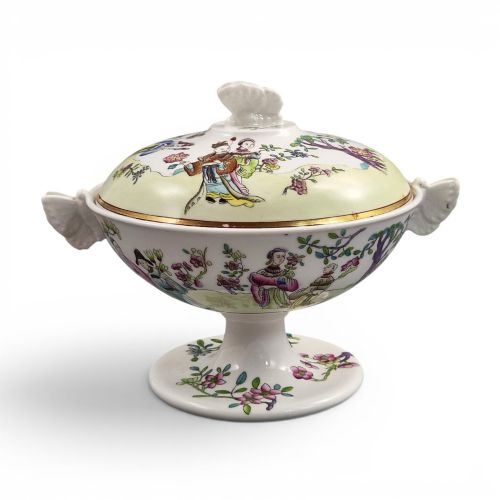
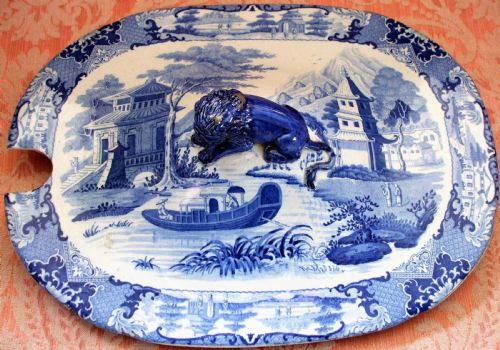
Decoration relied heavily on underglaze blue and white transfer printing, depicting scenes such as the Canton River subject or classical motifs. Hand-painted enamels, gilt highlights, and botanical studies completed the surface before high-temperature glazing.
Moulds formed the characteristic shapes, including quatrefoil profiles and pedestal elements. Skilled artisans then applied hand-modelled details like butterfly handles to the wet clay bodies prior to firing.
Some covers feature butterfly handles, offering a delicate touch of nature to heavy nineteenth-century ironstone dining vessels.
Assessing quality and distinction
Quality rests in the crispness of the transfer print and the precision of the hand-applied enamel work. Finer specimens display deep, even cobalt tones and meticulously rendered botanical details without blurring.
The sophistication of the ceramic body itself separates ordinary utility wares from premier factory productions. Soft-paste porcelain and early felspar porcelain exhibit a finer translucency and lighter weight than standard earthenware.
Artistic ambition in the modelling dictates desirability, visible in sculptural handle forms and complex moulded contours. Pieces bearing recognisable factory marks command greater attention from collectors.
Robert Hamilton·John and Richard Riley·Flight Barr and Barr·Derby Porcelain·Spode·Mason
The Georgian Ceramic Tureen Lid Glossary
- Ironstone
- A dense, durable ceramic body patented in the nineteenth century to withstand heavy dining use. It bridges the gap between earthenware and true porcelain.
- Transfer printing
- A decoration technique where an engraved copper plate transfers a design onto tissue paper, which is then stamped onto the ceramic surface. This allowed for intricate, repeating patterns like blue and white landscapes.
- Soft-paste porcelain
- An artificial porcelain composition fired at lower temperatures than hard paste, prized for its warm glaze texture and slight translucency. Eighteenth-century factories relied on this formula before true hard paste became common.
- Quatrefoil
- A symmetrical four-lobed shape resembling a four-leaf clover, frequently utilised for serving dish profiles during the Georgian period.
- Pearlware
- A fine earthenware developed to emulate Chinese porcelain by incorporating a bluish glaze that pooled in recesses. It became the dominant body for painted and transfer-printed tableware.
Georgian Ceramic Tureen Lid: Frequently Asked Questions
How were these lids used?
These lids served to keep sauces, vegetables, and soups warm during formal dining service on Georgian and Regency tables. They lifted via moulded handles, often shaped as fruit, animals, or abstract forms.
In daily estate life, servants transported the covered dishes from kitchens to dining rooms. The lids protected the contents from cooling drafts and dust in large houses.
How do I display a tureen lid?
Collectors often display standalone tureen lids on plate stands or wall mounts to highlight their transfer-printed scenes and moulded shapes. Their symmetrical forms and botanical designs make them striking decorative objects.
Placing them on open shelving allows the blue and white patterns or gilt enamels to catch the light. They pair naturally with other Georgian ceramics in traditional or eclectic interiors.
How can I tell the period?
Dating relies on identifying the ceramic body, glaze characteristics, and decorative motifs specific to the Georgian and Regency eras. Ironstone points to the nineteenth century, while early soft-paste porcelain often suggests eighteenth-century production.
Maker marks, impressed ciphers, and pattern names provide further chronological evidence. Transfer-printed subjects like botanical studies or specific landscape titles also help anchor pieces to particular decades.