
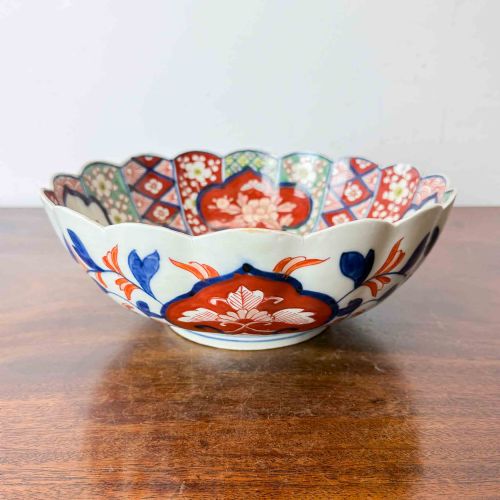


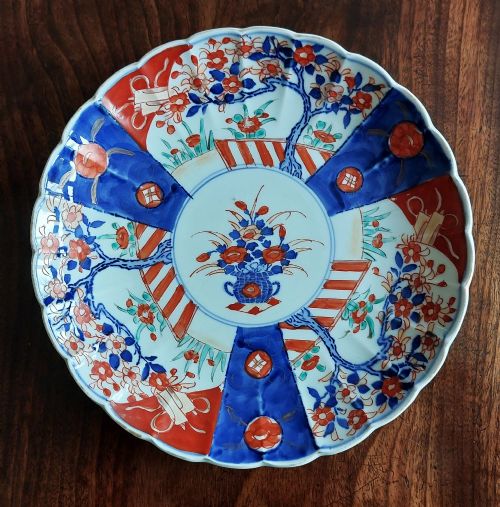


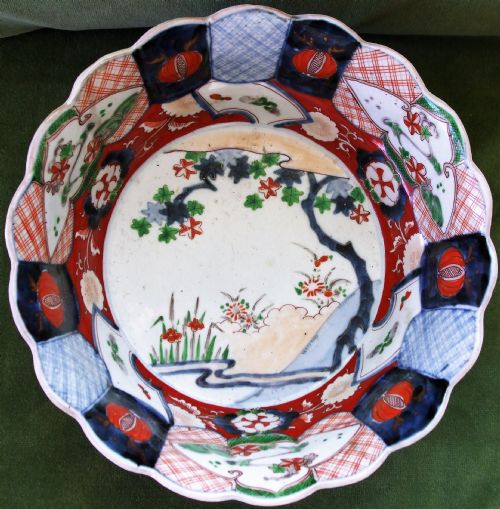
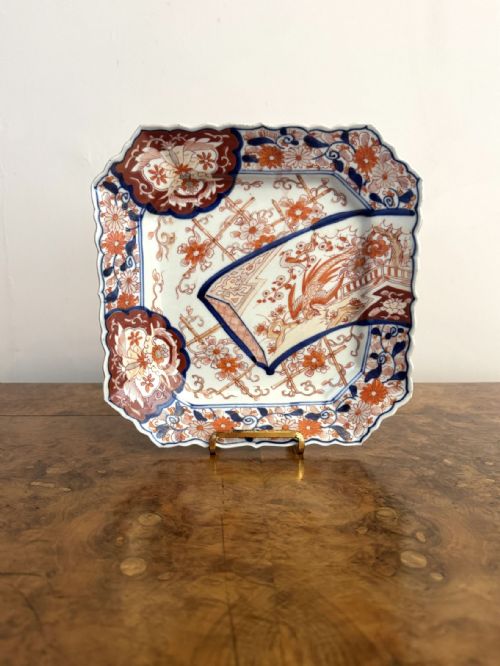


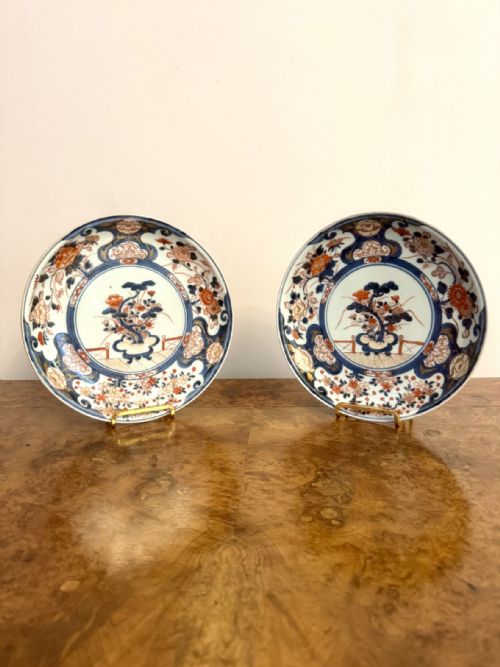
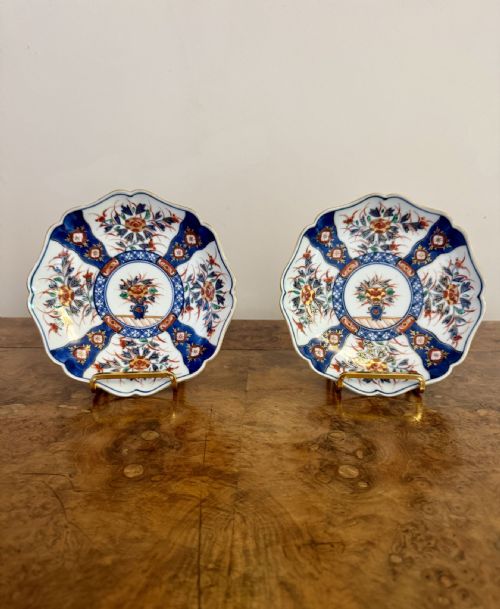
Meiji Period Imari Charger
These large Meiji period imari charger pieces bring vibrant historic palettes and bold decorative forms straight to a room.

What a Meiji Period Imari Charger Is
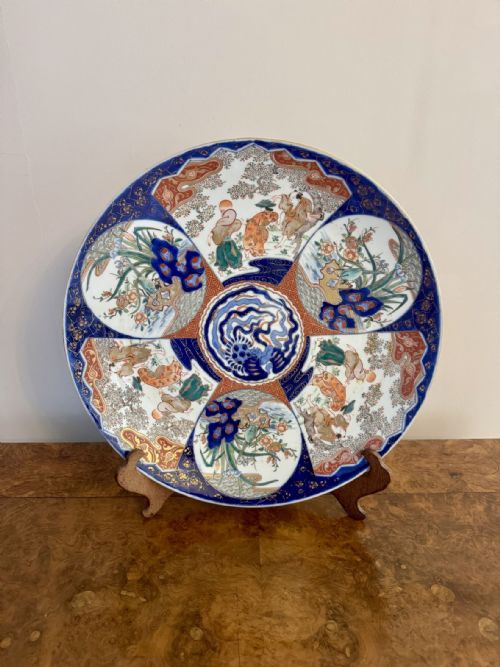
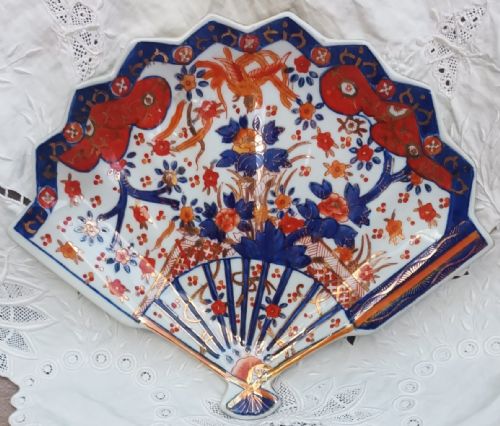
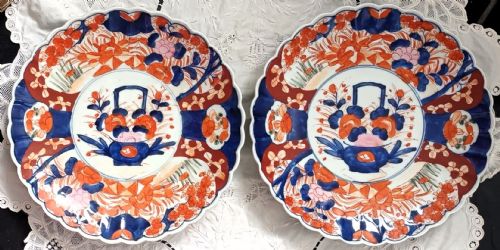
A meiji period imari charger is a substantial ceramic display piece originating from late nineteenth and early twentieth century Japan. These large plates and platters feature traditional decorative motifs including exotic birds and flower baskets.
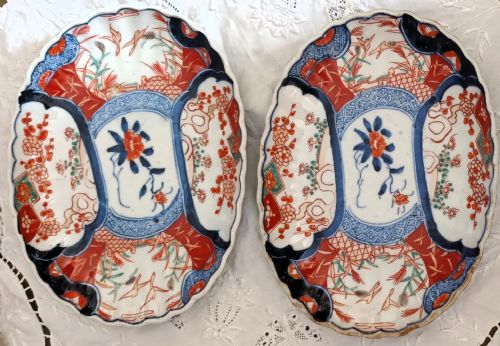
Buyers will encounter various formats on this page ranging from individual chargers to matched pairs. Most examples date from the nineteenth century, the Meiji period, and the Edwardian era.
The objects serve primarily as decorative wall or surface displays rather than functional tableware. Their generous diameters provide a broad canvas for intricate patterns.

Materials and Techniques
These items are formed from white porcelain and ceramic bodies suited to large-scale potting. Artisans applied cobalt underglaze to establish the foundational blue tones of the design.
Enamel colours and gold leaf or gilding were added over the initial glaze layer to enrich the visual depth. Firing these heavy chargers required precise kiln temperature control to stabilise the delicate metallic and mineral pigments.
Retail Price Guide 2026
Typical UK retail prices for meiji period imari charger, calculated from the Sellingantiques database of over a million retail prices indexed since 2003. This retail price guide relies exclusively on Sellingantiques data; no external sources or auction records are used, so the figures do not describe the wider market.
Exotic birds peer from porcelain branches across these chargers, quietly judging your interior design choices.
Judging Quality in Imari Chargers
Superior examples display crisp cobalt underglaze painting paired with richly saturated enamel colours and well-preserved gold leaf detail. The complexity of the composition, such as fluted edges or octagonal shaping, also elevates the piece.
Scale and proportion distinguish exhibition quality chargers from standard decorative plates. Pieces featuring specific pictorial subjects like exotic birds demonstrate superior artistic execution.
Fukugawa
The Meiji Period Imari Charger Glossary
- Charger
- A large decorative plate or platter traditionally utilised for display rather than dining. These pieces command attention through their impressive diameter and bold surface patterns.
- Imari palette
- A traditional decorative colour scheme typically combining cobalt blue underglaze with iron red and gilt highlights. This distinctive combination creates a high-contrast visual impact.
- Meiji period
- The era of Japanese history spanning from eighteen sixty-eight to nineteen twelve, noted for the export of fine porcelain to Western markets. Pieces from this time show exceptional technical skill in ceramic production.
- Cobalt underglaze
- A blue pigment applied to the raw ceramic body before glazing and firing. This technique ensures the blue colour remains permanent and protected beneath the glassy surface.
Frequently Asked Questions
What is a meiji period imari charger?
A meiji period imari charger is a large decorative porcelain plate made in Japan during the late nineteenth or early twentieth century. These pieces are recognised by their distinct blue, red, and gilt colour palettes.
They were produced for both domestic use and international export, functioning primarily as ornamental display items rather than functional tableware.
How were these chargers displayed historically?
Historically, large chargers were positioned on sideboards, mounted on walls, or set into specialised display stands. Their generous scale allowed the intricate motifs to be appreciated from a distance.
Today, they serve a similar decorative purpose in interiors, often anchoring a wall grouping or focal table.
How do I date an imari charger?
Dating relies on examining the ceramic body weight, the specific hues of the cobalt underglaze, and the application style of the enamel and gilding. Nineteenth-century examples often exhibit characteristic hand-finished details.
Reference points include the Meiji period spanning from eighteen sixty-eight to nineteen twelve, alongside related Edwardian production dates.
Are pairs common for large chargers?
Matched pairs of large chargers do occur but are less common than single pieces due to the high breakage rate during transport and long-term display. Finding two matching plates with identical motifs and scale is notable.
Pairs often feature mirrored compositions designed for balanced placement on either side of a room feature.