





Hand Painted Imari Platter
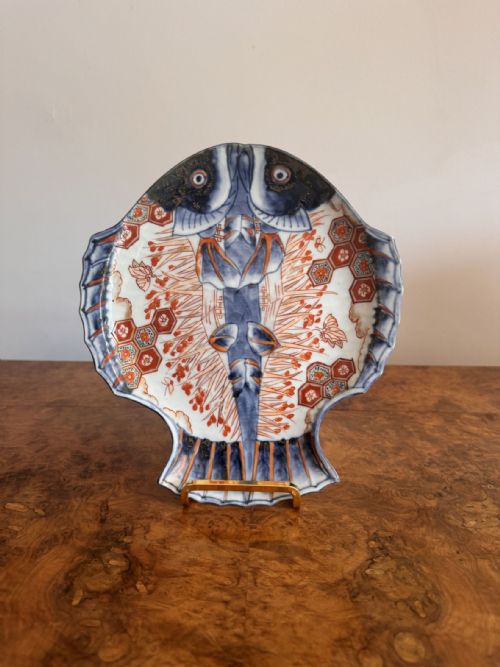
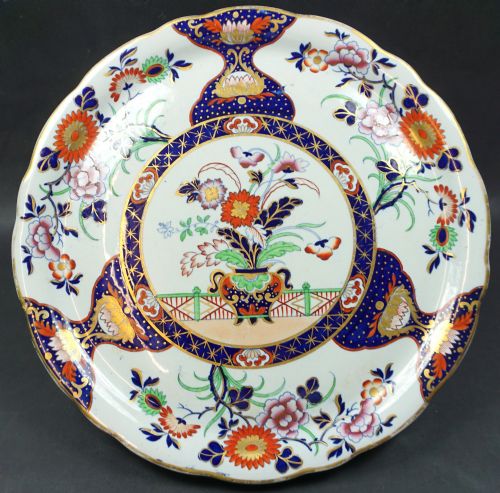
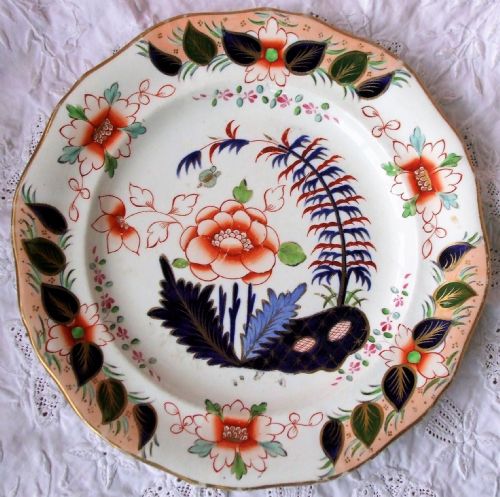
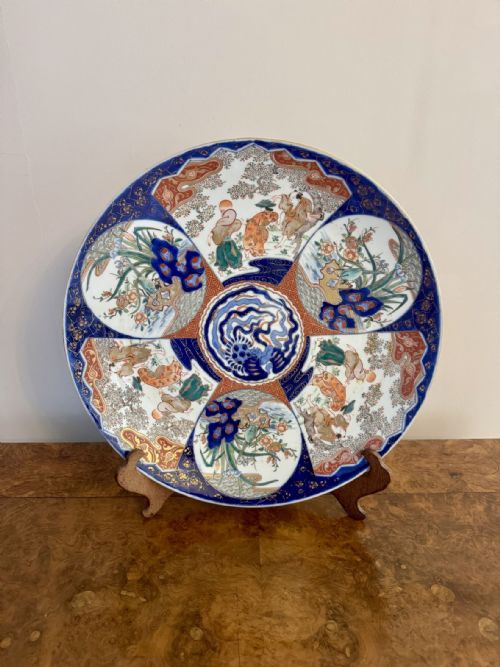
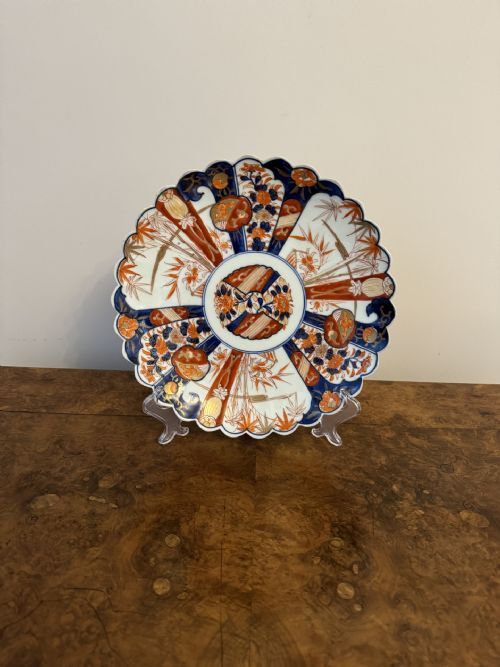
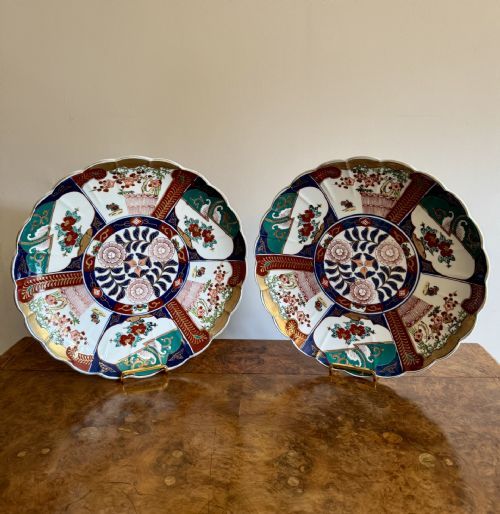
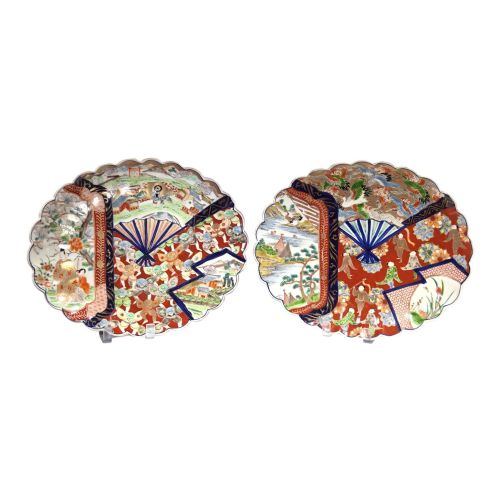
These hand painted imari platter examples combine rich iron-red and cobalt blue underglazes with gold gilt highlights.
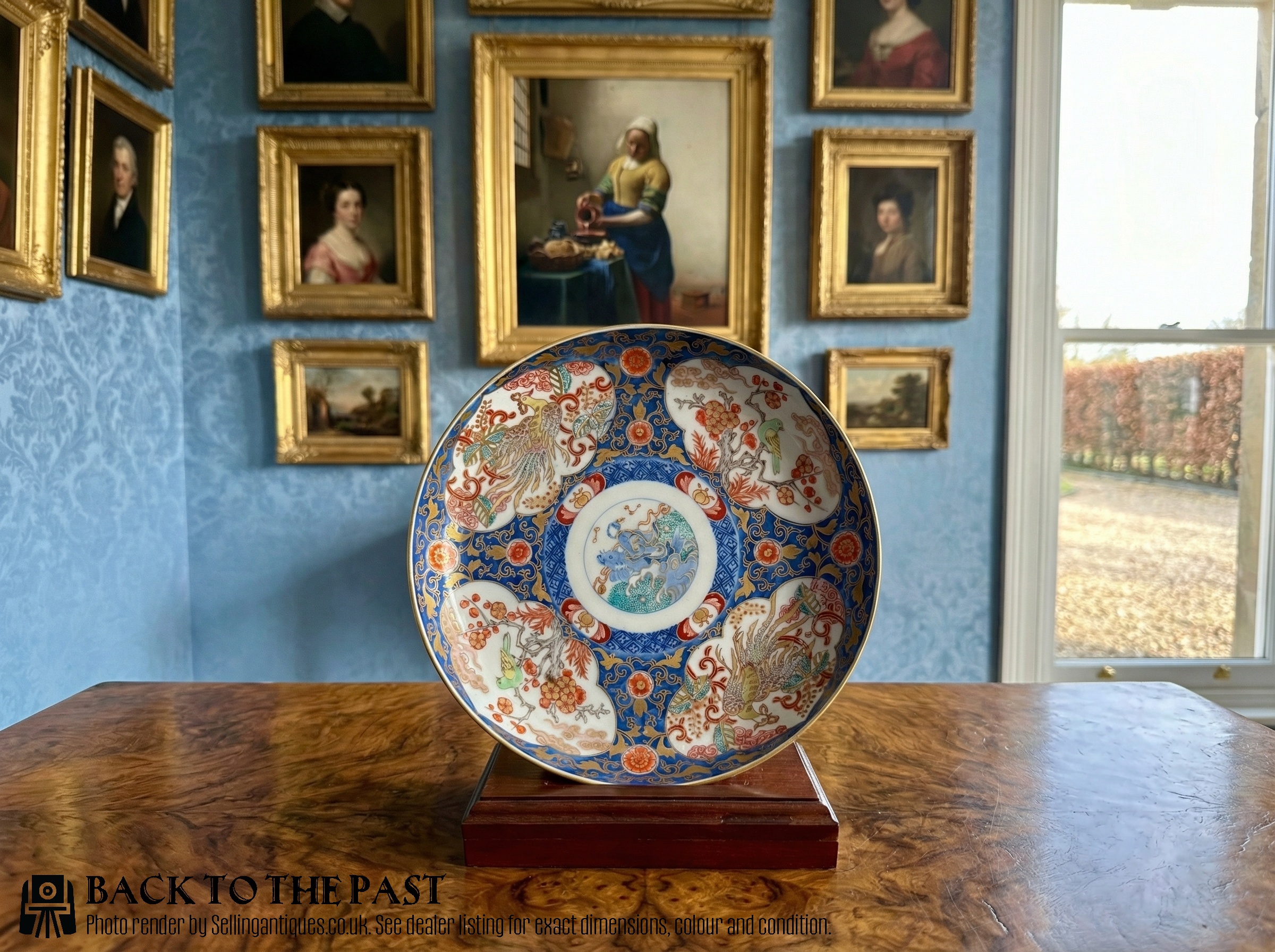
What a hand painted imari platter is
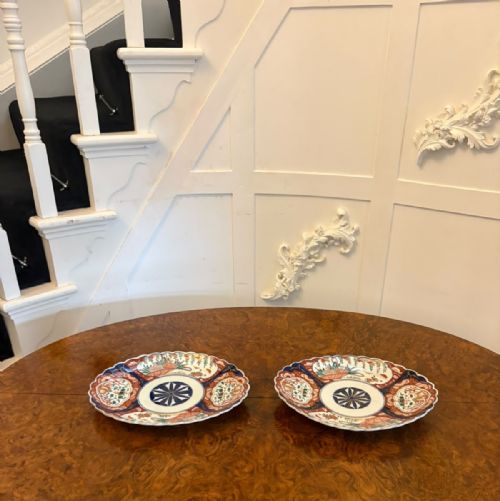
A hand painted imari platter brings together traditional Japanese decorative arts from the Meiji period and the later Victorian era. When you search for this phrase, you encounter large plates, chargers, and scalloped wall plates designed for display.
The pieces on this page span the late nineteenth century around eighteen ninety, nineteen hundred, and the broader nineteenth century. They showcase distinctive forms ranging from square plates to large scalloped shapes.
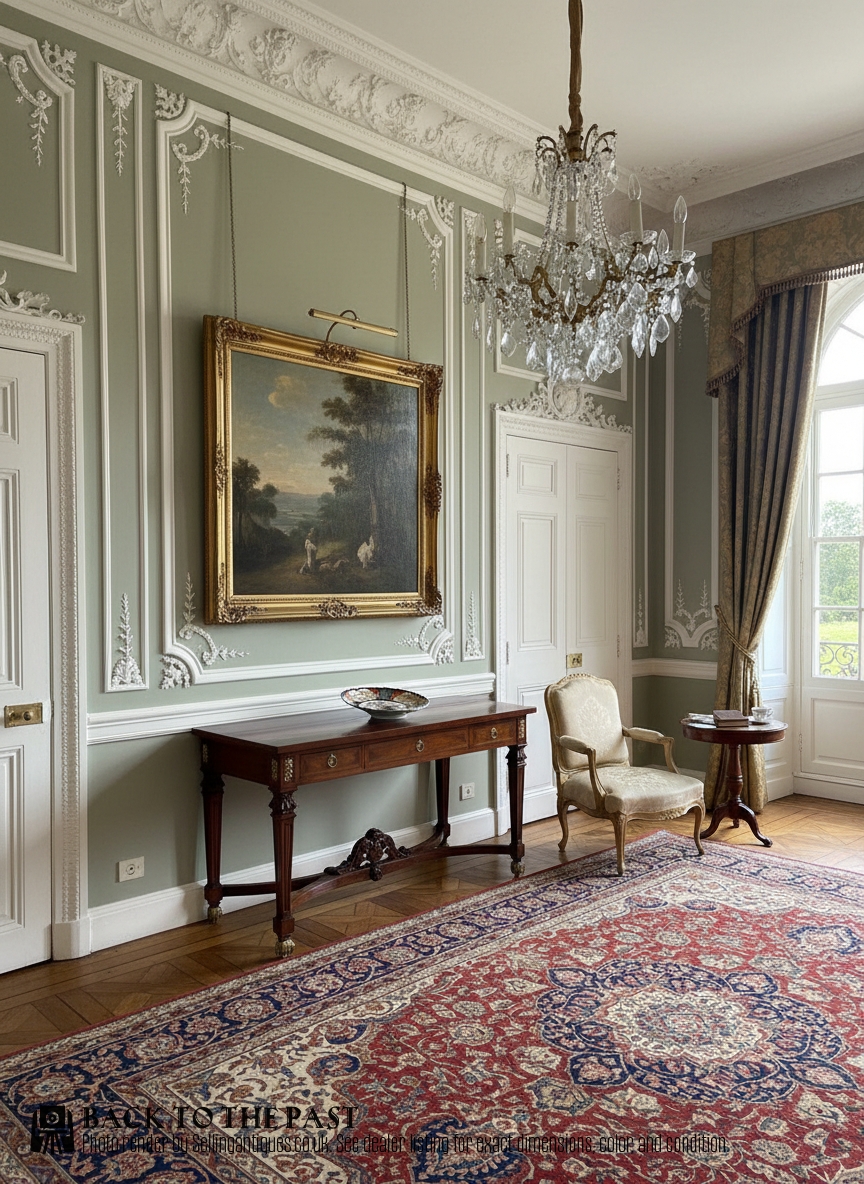
How they were made
These items rely on white porcelain bodies shaped into circular, square, or scalloped profiles. Artisans applied cobalt blue underglazes and enamel colours directly onto the surface before firing.
Gold leaf and gold gilt details were meticulously added over the glaze to catch the light. This layered method creates the characteristic rich palette associated with Japanese imari production.
Retail Price Guide 2026
Typical UK retail prices for hand painted imari platter, calculated from the Sellingantiques database of over a million retail prices indexed since 2003. This retail price guide relies exclusively on Sellingantiques data; no external sources or auction records are used, so the figures do not describe the wider market.
Scalloped edges give porcelain chargers the delightful appearance of giant ruffled flower heads ready to catch the light.
What varies in quality
The distinction between standard examples and top-tier pieces lies in the precision of the hand painted brushwork and the generosity of the gold leaf application. Finer chargers exhibit sharper cobalt definition and more complex panel designs.
The structural potting of the porcelain also separates the grades, with superior vessels showing balanced weight, clean scalloped edges, and even glaze distribution across the entire surface.
The Hand Painted Imari Platter Glossary
- Imari
- A style of Japanese porcelain originally exported from the port of Imari, known for its distinctive palette of cobalt blue, iron red, and gold.
- Charger
- A large decorative plate traditionally used for ceremonial display rather than dining.
- Meiji
- The period in Japanese history spanning from eighteen sixty-eight to nineteen twelve, which produced many of the export ceramics found today.
- Scalloped
- A curved, shell-like edge finish applied to the perimeter of plates and platters for ornamental effect.
- Enamel
- Opaque glass-like material fused to the porcelain surface during secondary firing to add supplementary colours.
Frequently Asked Questions
What is an imari platter?
An imari platter is a decorative ceramic plate produced in Japan featuring a distinct palette of cobalt blue, iron red, and gold.
These pieces were made for export during the nineteenth century and the Meiji period.
How do I date a platter?
Dating relies on stylistic markers, potting techniques, and historical periods such as the Victorian era or Meiji period.
Listings often point to specific decades around eighteen ninety or nineteen hundred based on these characteristics.
Where were they made?
These items originated in Japan, specifically through kilns associated with Arita porcelain production.
They were shipped out through the port of Imari to satisfy international demand.
How should I display a charger?
Large chargers and platters are typically shown on wall mounts or sturdy plate stands.
Their substantial size and vibrant gilding make them strong focal points in a room.