

A 2026 Guide by Sellingantiques
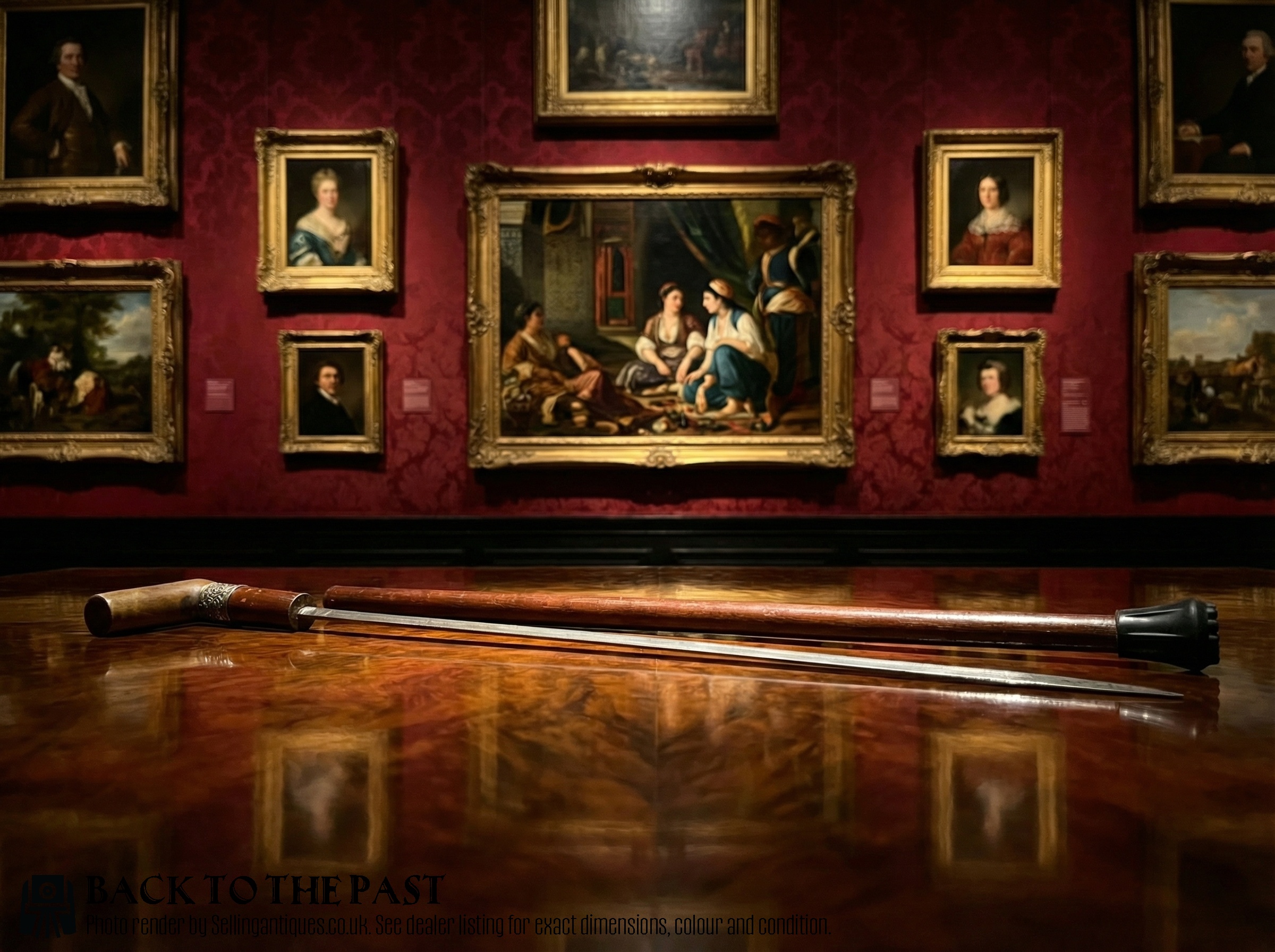
Horned Handle Gentlemans Walking Stick Sword Stick, 1900
Priced at £395 from Sovereign Antiques Of Nuneaton
Armies issued standard regulation patterns from the late eighteenth century onwards.
Officers often bought their weapons from private outfitters, choosing ornate grips that adhered loosely to military rules.
Look at the transition to lighter blades. Gunpowder made heavy armour obsolete, so thrusting speed became more important than chopping power.
Dress variants eventually replaced fighting blades when attending formal court functions.
Antique swords span heavy cavalry types meant for horseback charges to short naval cutlasses built for confined wooden decks.
Andrea Ferrara blades turn up frequently. He worked in sixteenth-century Italy, but Scottish makers imported and copied his famous name for centuries.
Wilkinson Sword began operating in London in 1772. They produced thousands of regulation patterns for British officers.
Search the ricasso for Weyersberg, Kirschbaum & Cie. This Solingen firm exported mass-produced blades across Europe from 1883 onwards.
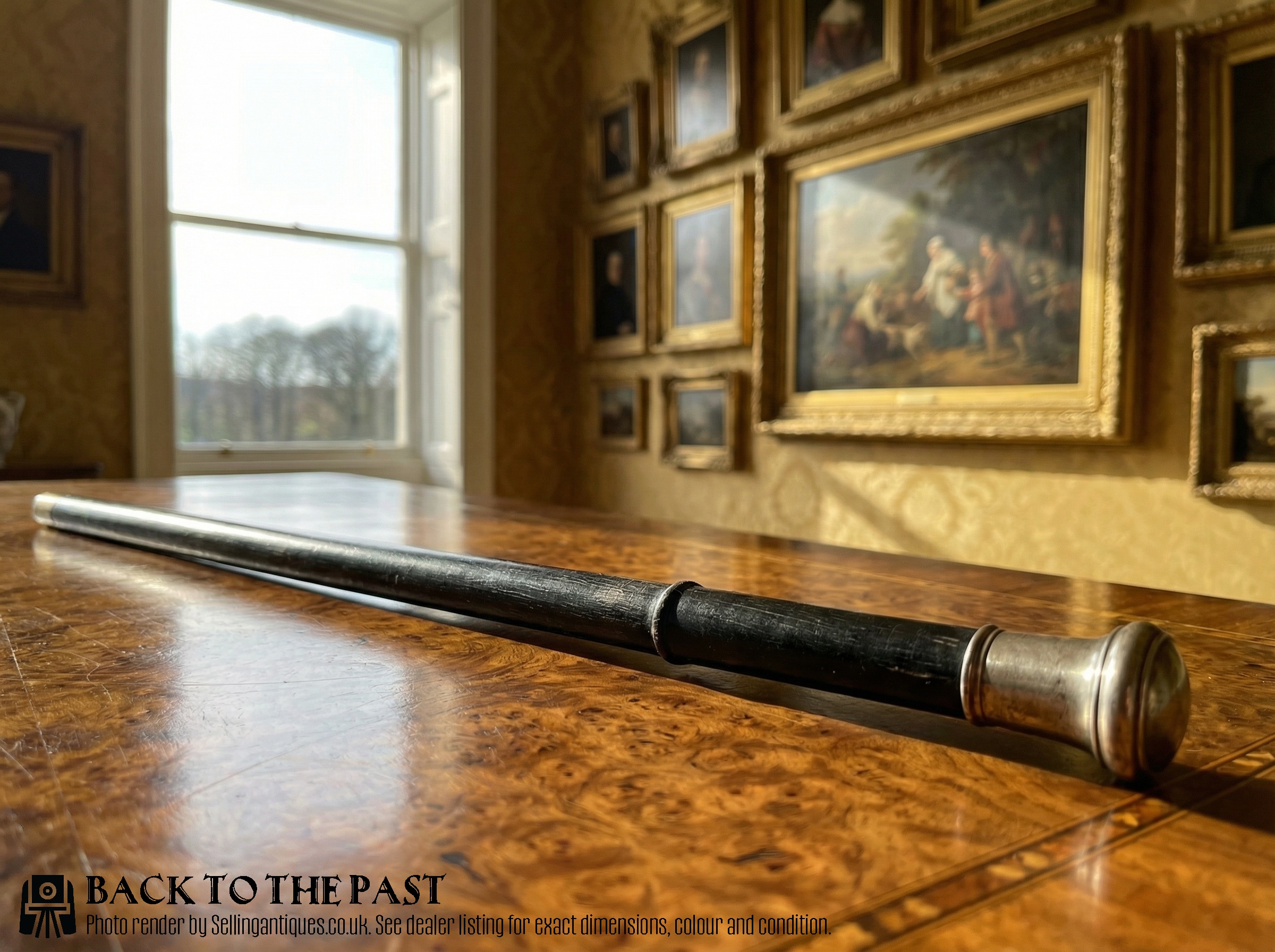
Silver Top Gent's Walking Stick Sword Stick, 1920
Priced at £695 from Sovereign Antiques Of Nuneaton
The 2026 retail price guide for Antique Swords is drawn from a proprietary archive of over 1.1 million retail prices indexed by Sellingantiques since 2003. This guide relies exclusively on their own internal data; no external sources or auction records are used.
Analysing nearly 25 years of UK antique market history alongside current retail values, the data indicates that typical UK retail prices for Antique Swords range between £200 and £1,500. Entry-level prices generally fall under £200 and premium examples upwards of £1,500.
The tang extends through the grip to secure the whole hilt assembly together.
Fuller grooves run down the blade centre. They reduce the overall weight without compromising structural strength.
Guard shapes define the type, from simple cruciform crossguards to complex pierced steel baskets protecting the hand.
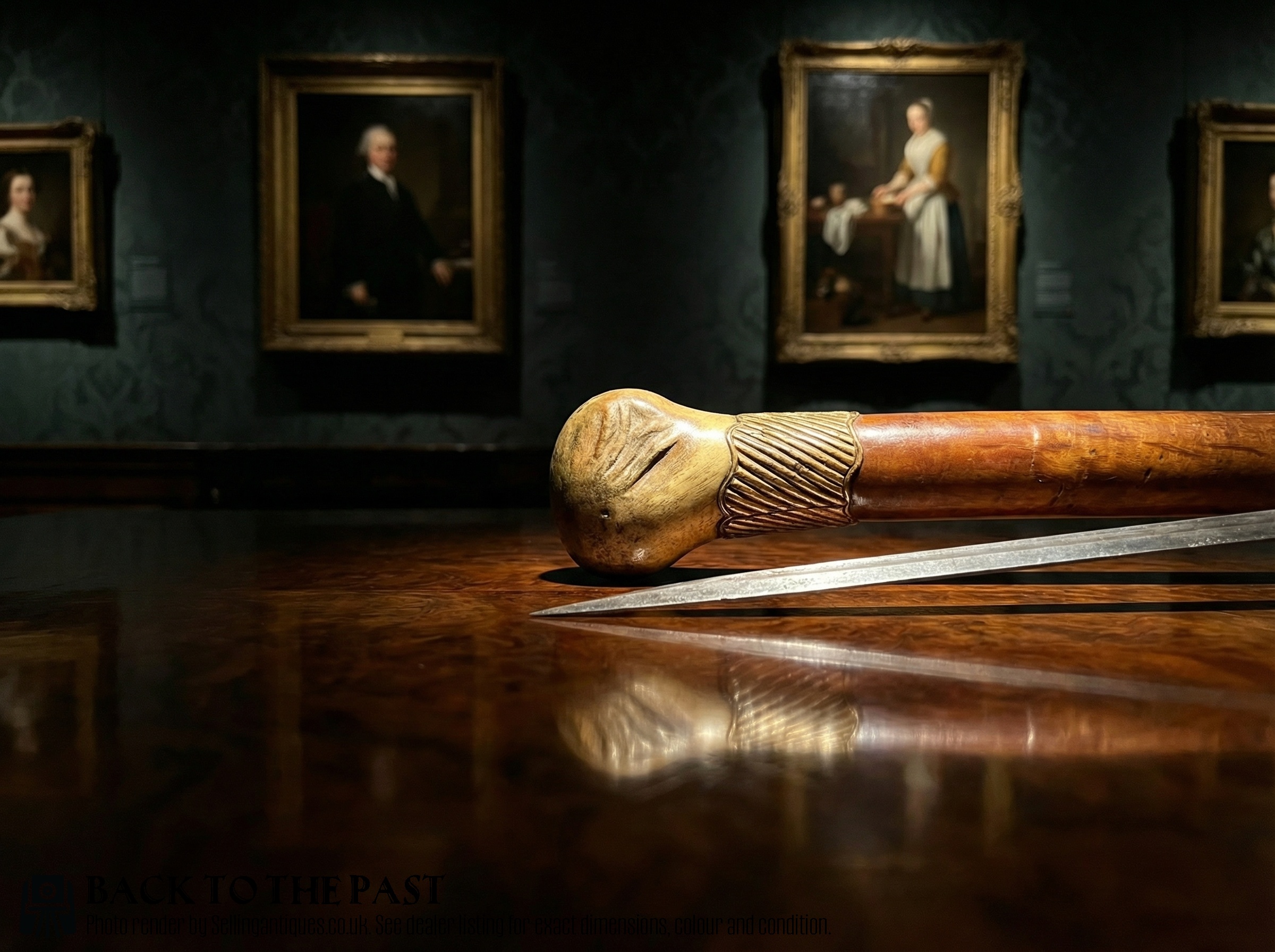
Superb Gent’s Walking Stick Sword Stick, Edwardian
Priced at £695 from Sovereign Antiques Of Nuneaton
Early blades were hand-forged over charcoal fires and repeatedly folded to remove impurities from the steel.
Trip hammers powered by waterwheels eventually sped up the shaping process in major blade-making centres like Solingen.
Hilt assembly required different trades. A founder cast the brass guard while a cutler fitted the final pieces together.
"Many officers sent standard issue blades back to cutlers for custom etching with their family crests."
"Some ceremonial types have blunt edges straight from the factory, as they were only meant to catch the light at formal events."
"Naval patterns often feature slightly shorter blades. This allowed sailors to draw them quickly below decks without hitting the low ceiling beams."
Based on almost 25 years of Sellingantiques UK antique market data, Antique Swords appeared 1902 times (out of 1,100,000 antiques) which gives it a rarity score of 68/100.
This score measures scarcity within the Sellingantiques archive only and is not a survey of the entire antiques market, so these statistics may not be indicative of the general availability of Antique Swords elsewhere.
Light surface rust responds well to a soft cloth and a little mineral oil. You want to stabilise the metal rather than polish it back to a bright shine.
Heavy, flaking rust is another matter. A conservator can remove active corrosion using brass wool and specific oils without damaging the surviving grey patina beneath.
That groove is the fuller. It removes material from the thickest part of the blade to make the weapon lighter in the hand.
Stopping the fuller before the tip keeps the end of the blade rigid. A cavalry trooper needed a strong point for thrusting, which a continuous groove would weaken.
You are looking at the buff leather washer. It sits at the base of the blade right against the guard.
This pad acts as a bumper. It stops the metal hilt from clashing loudly against the throat of the scabbard when sheathed.
Dents near the base of a metal scabbard are very common. They usually result from daily wear rather than battlefield action.
Officers wore these suspended from a belt. As they walked or rode, the heavy steel scabbard swung freely and struck doorways or stone steps.
Most dents tell a story of routine military service. Some scabbards were even intentionally pinched to grip the blade more tightly, though a sharp dent at the very end is almost always accidental impact damage.
Please note: This Antique Swords guide and its associated pricing data are provided for general informational purposes only. It does not constitute formal financial, investment, or appraisal advice and should not be relied upon as the sole basis for any commercial activity, purchasing, or sales decisions. Sellingantiques.co.uk accepts no liability for any actions taken in reliance on this information. Always consult with a qualified professional or independent appraiser.
