


A 2026 Guide by Sellingantiques
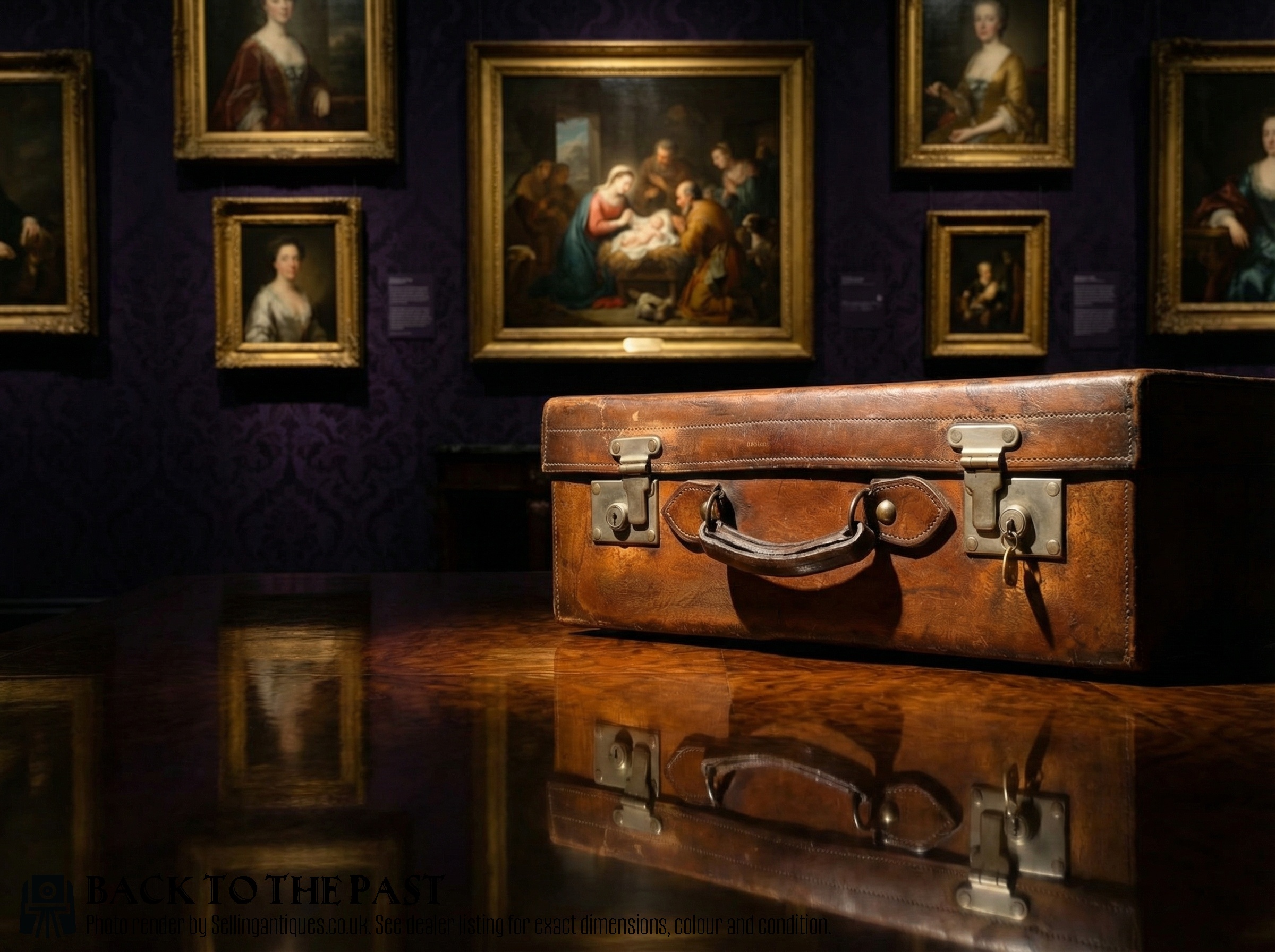
Vintage Leather Fitted Gentleman’s Suitcase C.antrobus Attributed to Finnegans of Bond Street London Victorian C1880, Victorian
Priced at £315 from Lincoln Restorations
Railway expansion shifted travel luggage from massive coaching trunks to smaller formats. Passengers needed something they could carry themselves onto trains.
Early cases from the late nineteenth century were often called portmanteaus. They hinged in the middle to keep clothes flat.
Motor cars changed the shape again. Flat-sided suitcases stacked better on running boards and early luggage racks.
Turn of the century catalogues show a shift away from heavy timber frames. Makers favoured lighter boards to keep the carrying weight down.
Louis Vuitton dominated the luxury end. They established their name in Paris making stackable canvas cases with their patented tumbler locks.
Goyard also built a strong reputation in the early twentieth century. Their chevron-painted canvas suitcases remain distinct.
British makers like Swaine Adeney Brigg supplied high-quality leather goods. They catered heavily to the domestic coaching and railway markets.
The 2026 retail price guide for Antique Suitcases is drawn from a proprietary archive of over 1.1 million retail prices indexed by Sellingantiques since 2003. This guide relies exclusively on their own internal data; no external sources or auction records are used.
Analysing nearly 25 years of UK antique market history alongside current retail values, the data indicates that typical UK retail prices for Antique Suitcases range between £200 and £1,000. Entry-level prices generally fall under £200 and premium examples upwards of £1,000.
Brass locks and catches secure the lid. Quality cases have heavy cast brass rather than stamped metal fittings.
Handles are critical. Most feature thick leather wrapped around a rope or metal core to distribute the weight in the hand.
Check the internal straps. Webbing or leather belts held clothing tight against the frame to stop items moving during transit.
Saddle stitching was the preferred method for heavy leather suitcases. Craftsmen used two needles passing through a single awl hole to create a tough bond.
Corner blocks took the brunt of travel damage. Early makers capped these with thick hide, riveted straight through the main boards.
Feel the frame. Traditional construction relied on steaming and bending wood into shape before covering it.
"Hotel labels plastered on the sides act as travel diaries. They record exact passenger routes across ocean liners and grand European hotels."
"Hidden compartments feature in some late nineteenth-century cases. These false bottoms kept travel documents and currency out of sight."
"Certain makers offered bespoke fitting services. You could take your silver brushes and glass bottles to have a case built specifically to hold them."
Based on almost 25 years of Sellingantiques UK antique market data, Antique Suitcases appeared 379 times (out of 1,100,000 antiques) which gives it a rarity score of 93/100.
This score measures scarcity within the Sellingantiques archive only and is not a survey of the entire antiques market, so these statistics may not be indicative of the general availability of Antique Suitcases elsewhere.
Use a damp cloth first. Most antique canvas has a waterproof coating that traps surface dirt. Wipe gently to avoid lifting the paint or original finish.
Leave it to dry naturally in a well-ventilated room. Avoid harsh chemical cleaners, as they strip the protective layers and leave the fabric vulnerable to damp.
Fresh air is your best tool. Open the case and leave it in a dry, covered spot outside for a few days. Sunlight and breeze draw out the trapped moisture that causes the smell.
If the odour persists, try placing a bowl of dry bicarbonate of soda inside and closing the lid for a week. The powder absorbs ambient smells without touching the old paper or silk lining. Sweep it out afterwards.
Yes, a good saddler or luggage restorer can replace a broken handle. They replicate the thick leather and stitch it around the original metal hardware.
It is common maintenance for antique suitcases.
Try pressing the hasps down firmly while sliding the release catches. Sometimes the internal springs seize up from disuse and the mechanism just needs a little mechanical pressure to pop open.
If that fails, take it to a locksmith who works with older furniture locks. They can usually pick the simple mechanisms without damaging the brass plates or the surrounding leather.
Please note: This Antique Suitcases guide and its associated pricing data are provided for general informational purposes only. It does not constitute formal financial, investment, or appraisal advice and should not be relied upon as the sole basis for any commercial activity, purchasing, or sales decisions. Sellingantiques.co.uk accepts no liability for any actions taken in reliance on this information. Always consult with a qualified professional or independent appraiser.
