
There are no results to show on this page for that combination of filters:
Gothic Pianos
A 2026 Guide by Sellingantiques
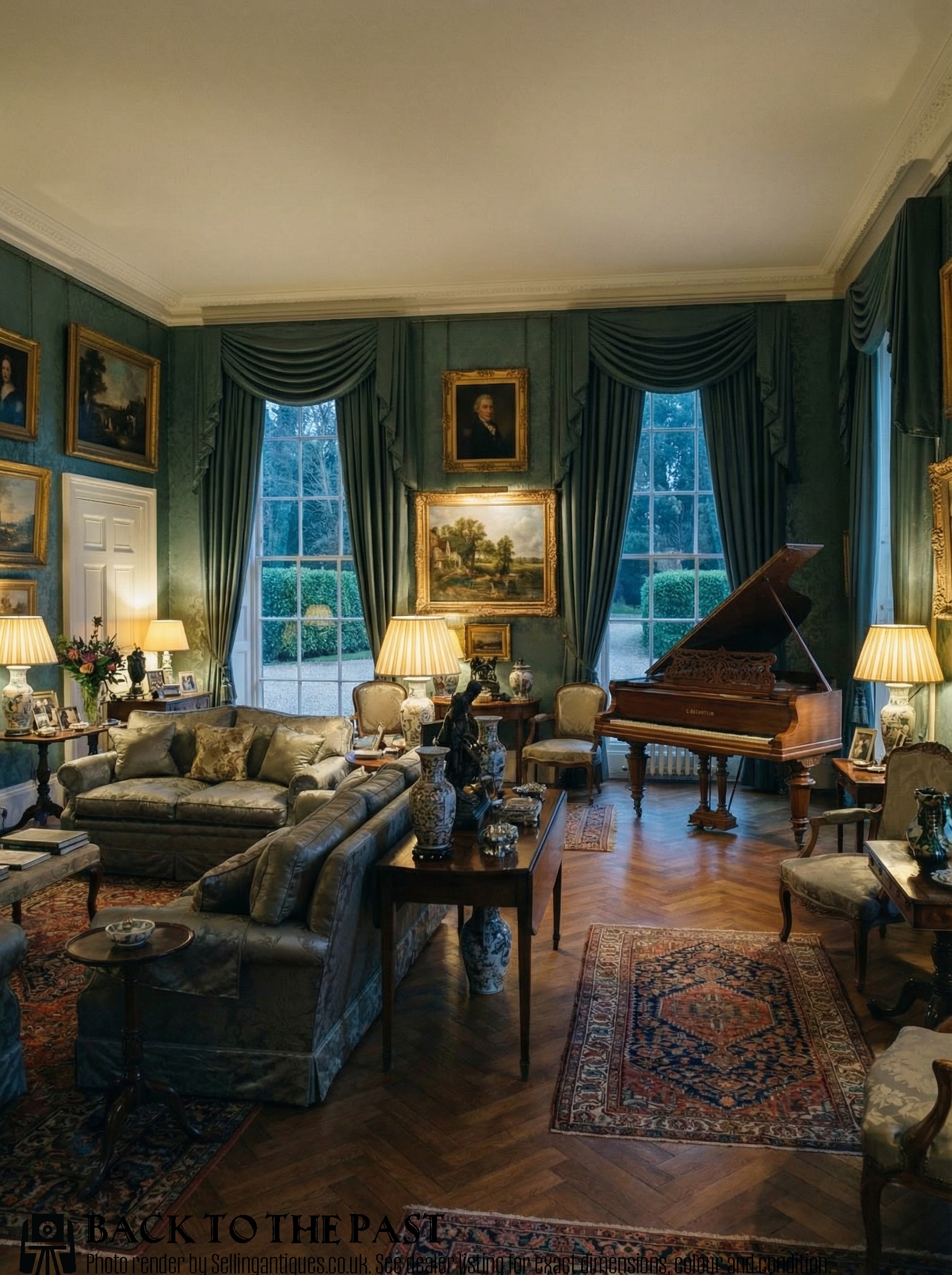
Exceptional Quality Antique C.bechstein Victorian Rosewood Boudoir Grand Piano Model V (1898), 19th Century
Priced at £16,850 from London City Antiques
Invented in Italy during the early eighteenth century. Cristofori replaced the harpsichord's plucking mechanism with hammers.
The earliest antique pianos were built on wooden frames. Iron frames appeared later to handle higher string tension.
Square models dominated early domestic spaces. Grand and upright forms eventually replaced them as casting techniques improved.
Look at the transition from classical period instruments to heavier Victorian designs. The internal stringing changed to cross-stringing for better resonance.
European cities like Vienna and London drove early design shifts. Different regional actions changed how the keys felt under the fingers.
John Broadwood & Sons operated in London from the late eighteenth century. They pushed heavy, robust case designs and deeper key falls.
Pleyel worked in Paris during the nineteenth century. Their instruments often feature lighter actions suited to quick playing.
Steinway & Sons emerged in New York and Hamburg. They drove the shift towards overstrung iron frames in the mid-nineteenth century.
The 2026 retail price guide for Antique Pianos is drawn from a proprietary archive of over 1.1 million retail prices indexed by Sellingantiques since 2003. This guide relies exclusively on their own internal data; no external sources or auction records are used.
Analysing nearly 25 years of UK antique market history alongside current retail values, the data indicates that typical UK retail prices for Antique Pianos range between £300 and £1,800. Entry-level prices generally fall under £300 and premium examples upwards of £1,800.
Cast iron frames sit inside the wooden case. These gold-painted plates anchor the strings and resist massive tension.
The action mechanism hides behind the fallboard. It contains hundreds of tiny wooden levers, springs and felt hammers.
Pedals project from the lower case. Most antique pianos have two, controlling the dampers and shifting the keyboard.
Hand-cut veneers cover flat surfaces on early models. Later factories used machinery to slice and press exotic woods over curved profiles.
Makers shifted from parallel stringing to cross-stringing. Angling the bass strings over the treble allowed a longer string in a shorter case.
Notice the casters. Heavy brass wheels were screwed deep into the legs as cast iron plates made the whole instrument much heavier.
"The earliest square models double as side tables. Their flat tops and compact cases let them blend into Georgian parlour furniture."
"Certain Viennese actions from the nineteenth century are famously light. Players can execute rapid trills with barely any finger pressure."
"Ornate candelabras often attach to the front panels of uprights. These brass sconces light the sheet music for evening playing."
Based on almost 25 years of Sellingantiques UK antique market data, Antique Pianos appeared 2185 times (out of 1,100,000 antiques) which gives it a rarity score of 65/100.
This score measures scarcity within the Sellingantiques archive only and is not a survey of the entire antiques market, so these statistics may not be indicative of the general availability of Antique Pianos elsewhere.
Most tuners suggest two visits a year to keep the pitch stable. Changes in humidity pull the wooden soundboard out of shape, which drags the strings out of tune as the seasons shift.
If the instrument has sat unused for decades, it might need several passes over a few weeks. The pinblock has to settle into holding the new tension.
Sticking keys usually mean swollen wood or damp felts rather than a broken mechanism. The action relies on tight tolerances, so high humidity easily grips the moving pins and levers.
A technician can ease the key bushings or replace the centre pins in the action. It is routine maintenance for old keyboard instruments.
You will usually find it stamped onto the cast iron frame near the tuning pins. Some makers painted it onto the wooden soundboard or pressed it into the top edge of the carcase.
Check the fallboard or the back of the action cavity if the main plate is blank.
Constant dry heat from below can dry out the spruce soundboard and loosen the tuning pins. Antique pianos were built for cooler, draughtier rooms.
Using a humidifier inside the room helps stabilise the moisture levels. Some owners fit dedicated climate control systems directly inside the case to protect the timber.
Keep it away from direct sunlight and radiators to reduce the risk of structural cracks.
Please note: This Antique Pianos guide and its associated pricing data are provided for general informational purposes only. It does not constitute formal financial, investment, or appraisal advice and should not be relied upon as the sole basis for any commercial activity, purchasing, or sales decisions. Sellingantiques.co.uk accepts no liability for any actions taken in reliance on this information. Always consult with a qualified professional or independent appraiser.
