
There are no results to show on this page for that combination of filters:
Antique Needlework from the Pre 16th Century
A 2026 Guide by Sellingantiques
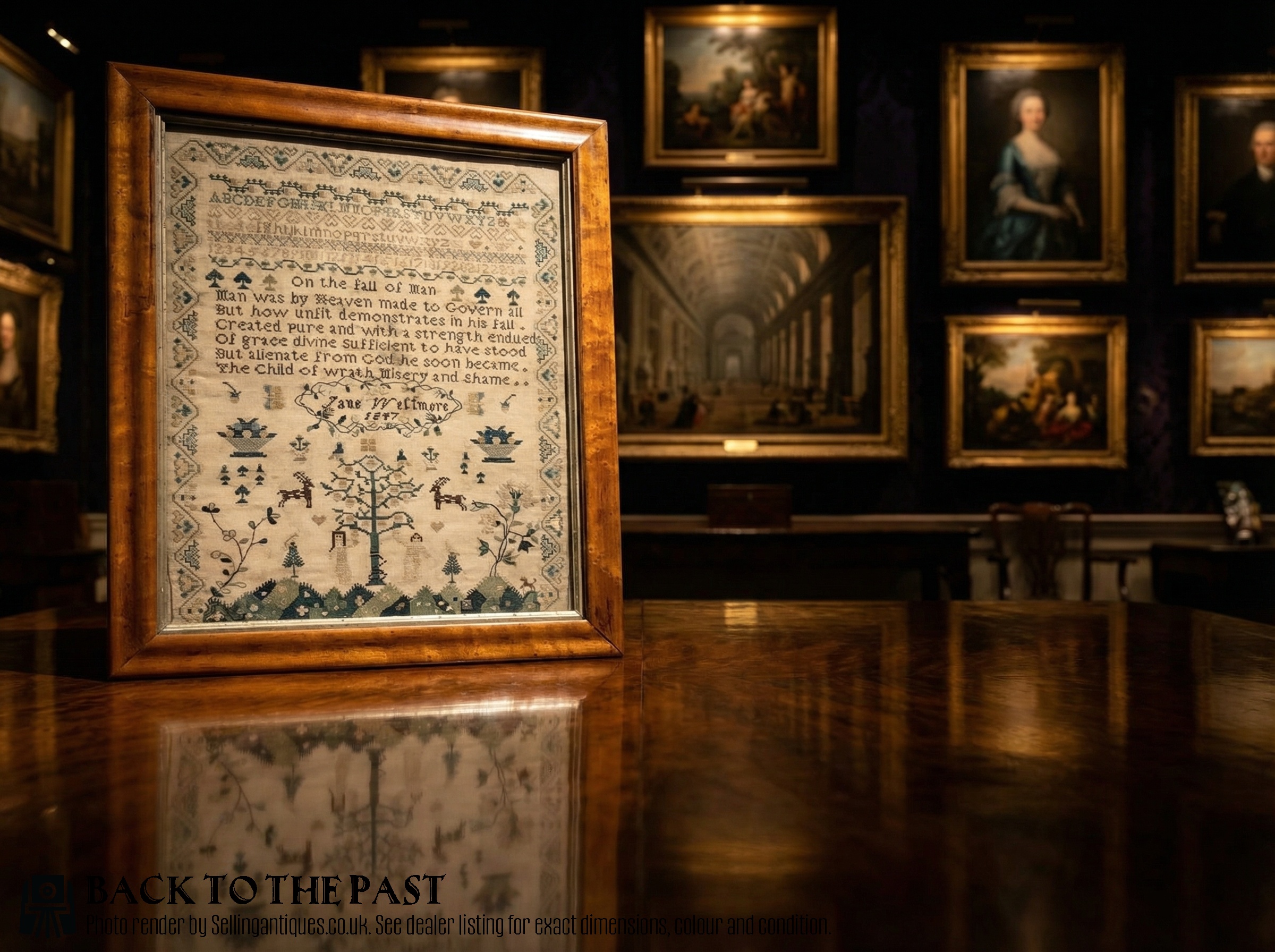
A Needlework Sampler by Jane Wettmore 1847, 19th Century
Priced at £295 from Wickersley Antiques
Girls stitched samplers as a core part of their education. These pieces acted as reference works for alphabets and border patterns.
Look for religious verses. They're common on seventeenth-century examples, while later pieces often feature secular pastoral scenes.
Mourning pictures gained traction following the death of George Washington. Depicting weeping willows and urns, they became a standard motif in early nineteenth-century antique needlework.
Berlin wool work shifted the craft during the Victorian era. Printed grids told the stitcher exactly where to place each coloured thread.
Naming a professional maker is rare. Most surviving pieces originate from young girls at home or in boarding schools.
Quaker schools produced highly distinct work. Ackworth School samplers feature half-medallion borders and specific swan motifs worked in sober colours.
Identifying regional characteristics helps place unmarked pieces. Scottish samplers frequently employ red and green palettes alongside prominent family initials.

Unusual Map Sampler., 18th Century
Priced at £580 from Stalham Antique Gallery
The 2026 retail price guide for Antique Needlework is drawn from a proprietary archive of over 1.1 million retail prices indexed by Sellingantiques since 2003. This guide relies exclusively on their own internal data; no external sources or auction records are used.
Analysing nearly 25 years of UK antique market history alongside current retail values, the data indicates that typical UK retail prices for Antique Needlework range between £300 and £1,700. Entry-level prices generally fall under £300 and premium examples upwards of £1,700.
Alphabets and numerals dominate the top section of most schoolroom samplers. They served a practical purpose for marking household linen.
Borders enclose the main design. Strawberry vines and stylized floral bands appear frequently across different centuries.
Spot motifs fill empty canvas space. Detached flowers and small animals sit independently around a central verse or house.
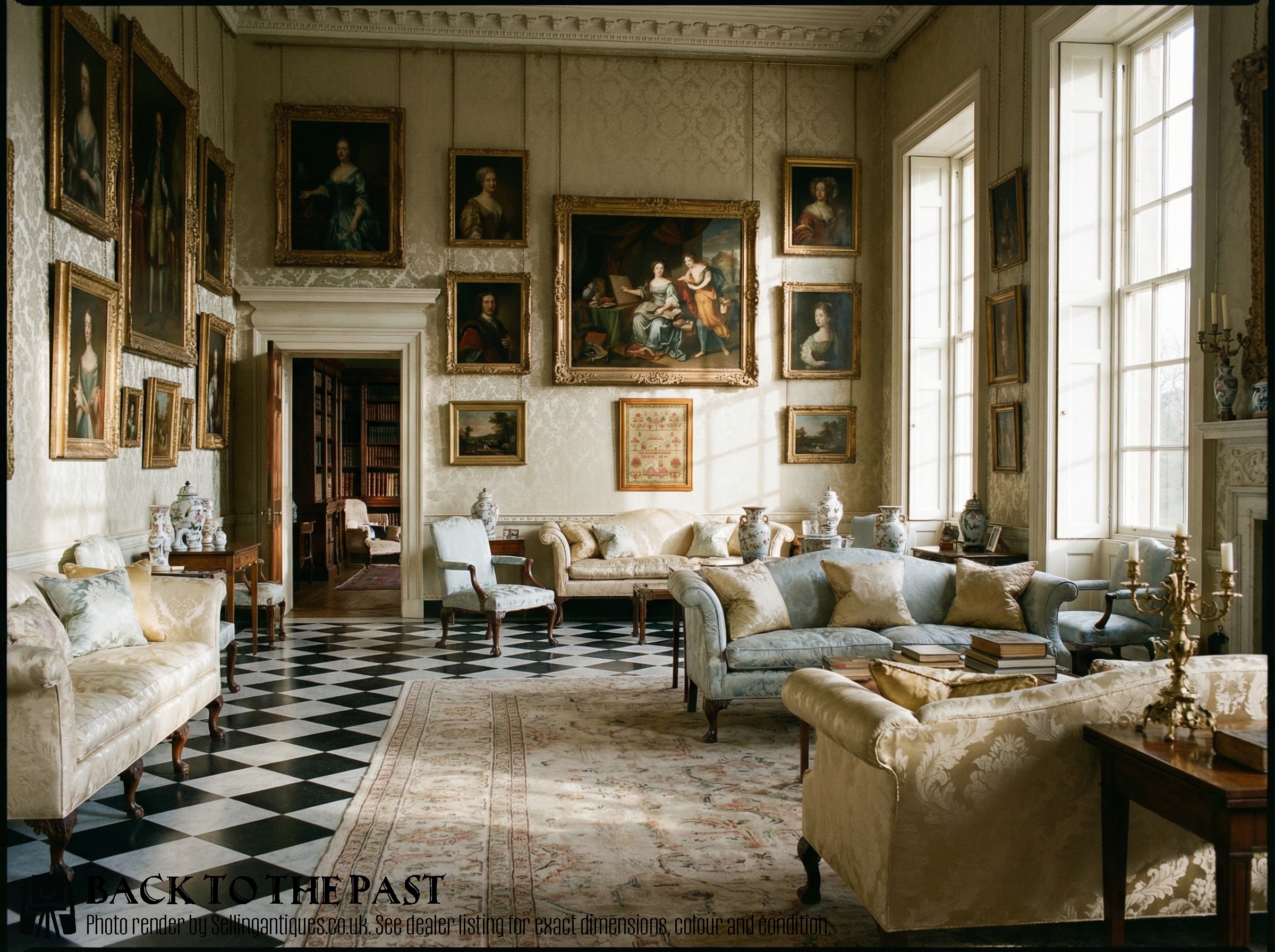
Sampler Sarah Anne Hudson 1855, Victorian
Priced at £395 from Millers Antiques
Early work relies on freehand drawing directly onto the linen. The stitcher filled these outlines using long and short stitches to blend colours.
Counted thread work requires strict attention to the warp and weft. Every stitch crosses an exact number of ground threads to keep patterns symmetrical.
Chemical dyes introduced harsh purples and greens in the mid-nineteenth century. These colours replaced the softer vegetable dyes used previously.
"Map samplers taught geography alongside stitching. Girls would embroider county borders and town names onto printed silk globes or flat maps."
"Boys learned the craft too. Sailors on long voyages produced woolwork pictures of their ships, known as woolies, using robust canvas."
"You'll often find silk threads unpicked from old garments, reused to create new decorative panels."
Based on almost 25 years of Sellingantiques UK antique market data, Antique Needlework appeared 1585 times (out of 1,100,000 antiques) which gives it a rarity score of 73/100.
This score measures scarcity within the Sellingantiques archive only and is not a survey of the entire antiques market, so these statistics may not be indicative of the general availability of Antique Needlework elsewhere.
Use a soft cloth lightly dampened with water. Never spray glass cleaner directly onto the frame, as the liquid can seep under the wooden rebate and wick into the textile.
If the glass is dirty inside, the backboard needs removing. This is a delicate process, as old pins and brittle paper tape often secure the needlework in place.
Keep moisture away from the threads.
Keeping the original frame preserves the historical integrity of the piece. Many nineteenth-century samplers remain in their first maple or mahogany frames, and removing them risks disturbing the stretched tension of the fabric.
You only need to reframe if the current setup is causing active harm. Look out for acidic wooden backboards directly touching the linen, or rusted nails staining the edges of the canvas.
A specialist framer can replace harmful backing materials while retaining the original external moulding.
Those spots are known as foxing. They occur when damp conditions encourage fungal growth on the organic linen or cotton ground.
Acidic materials used in early framing also contribute to this discolouration. Wooden backboards and cheap paper degrade over time, transferring acid burns directly onto the fabric resting against them.
Never apply heat directly to antique textiles. The heat from an iron will flatten raised stitches and scorch fragile, aging linen.
The stiffness you feel is often old glue or just the natural sizing of the canvas. If the piece needs flattening to sit correctly in a frame, it requires a gentle cold-stretching process over a padded conservation board.
Please note: This Antique Needlework guide and its associated pricing data are provided for general informational purposes only. It does not constitute formal financial, investment, or appraisal advice and should not be relied upon as the sole basis for any commercial activity, purchasing, or sales decisions. Sellingantiques.co.uk accepts no liability for any actions taken in reliance on this information. Always consult with a qualified professional or independent appraiser.
