
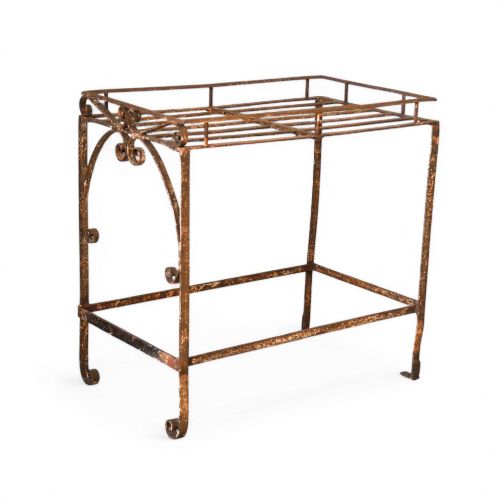


A 2026 Guide by Sellingantiques
Victorians moved leisure activities into the fresh air during the nineteenth century. This shift prompted a huge demand for durable antique garden tables across Britain.
Look for earlier Georgian examples. They're often made with simple wrought iron frames rather than the heavy cast metal associated with later eras.
Public parks drove mass production. Foundries adapted their domestic catalogues to supply municipal spaces with robust seating and matching tables.
Many country houses kept marble-topped variants on their terraces. The cold stone provided an ideal surface for serving drinks on warm afternoons.
Coalbrookdale produced some of the most recognisable patterns. They operated in Shropshire and cast their name directly into the iron frameworks of their garden furniture.
The Falkirk Iron Company supplied vast quantities of outdoor pieces. Their Scottish foundry exported cast iron tables across the Empire throughout the Victorian period.
Watch out for French makers like Arras. They built distinct antique garden tables from extruded half-round wrought iron tubing rather than standard cast metal.
The 2026 retail price guide for Antique Garden Tables is drawn from a proprietary archive of over 1.1 million retail prices indexed by Sellingantiques since 2003. This guide relies exclusively on their own internal data; no external sources or auction records are used.
Analysing nearly 25 years of UK antique market history alongside current retail values, the data indicates that typical UK retail prices for Antique Garden Tables range between £500 and £1,600. Entry-level prices generally fall under £500 and premium examples upwards of £1,600.
Pierced tops allow rainwater to drain away quickly. You'll see this open tracery on tables made entirely of cast iron.
A central hole often pierces the middle of the tabletop. This gap secured a parasol over the antique garden table during summer months.
Tripod bases provide essential stability. Three legs sit firmly on uneven paving or gravel without the rocking motion common to four-legged frames.
Early wrought iron frames rely on blacksmithing techniques. Smiths heated and hammered the metal by hand, joining sections with heavy iron rivets.
Industrial sand casting changed the trade. Pattern makers carved wooden master models, pressing them into sand to form negative shapes for the molten iron.
Riveted slatted wooden tops eventually gave way to bolted boards. This shift allowed owners to replace rotten timber much faster without requiring a metalworker.
"Many antique garden tables originally featured vibrant colours. Foundries painted them bright green, bronze, or chocolate brown rather than the modern preference for stark white."
"The heavy weight acted as an early security measure. Thieves struggled to move substantial cast iron pieces from open municipal parks and private lawns."
"Small wheels sit hidden under some large Victorian bases. These tiny casters let servants roll the heavy tables across smooth terrace paving."
Based on almost 25 years of Sellingantiques UK antique market data, Antique Garden Tables appeared 639 times (out of 1,100,000 antiques) which gives it a rarity score of 88/100.
This score measures scarcity within the Sellingantiques archive only and is not a survey of the entire antiques market, so these statistics may not be indicative of the general availability of Antique Garden Tables elsewhere.
Start with a stiff wire brush to remove loose flakes. Work around the joints where moisture gathers, scrubbing away any bubbling paint until you reach sound metal.
Once clear of debris, apply a rust converter to neutralise the corrosion. Finish with a zinc-rich metal primer before brushing on a tough exterior topcoat to seal the surface against the weather.
Marble handles outdoor conditions well, though winter weather brings risks. Frost causes moisture trapped in small surface fissures to expand and crack the stone.
Covering the top during freezing months prevents this damage. Regular washing stops algae from staining the porous surface.
Teak remains the most sensible choice for replacement slats. It holds natural oils that repel water, allowing it to survive outdoors without constant painting.
If teak proves difficult to source, seasoned oak serves as a traditional alternative. Oak weathers down to a similar silver-grey tone over a few seasons, blending well with any surviving original boards.
Always use brass or stainless steel bolts when fitting the new timber. Standard steel screws rust quickly in damp conditions and will eventually bleed dark stains down the fresh wood.
Old garden furniture almost always carries lead paint. Stripping it yourself creates a significant health hazard if the dry dust gets into the air or the surrounding soil. Don't try dry sanding.
Instead, you can scrape away the loose flakes using a wet-sanding technique to suppress the dust. Wear heavy gloves and an appropriate mask, then collect all the debris on a drop cloth for safe disposal.
Alternatively, send the base to a professional blast cleaner. They handle hazardous coatings safely and return the metal bare and ready for a fresh, lead-free primer.
Please note: This Antique Garden Tables guide and its associated pricing data are provided for general informational purposes only. It does not constitute formal financial, investment, or appraisal advice and should not be relied upon as the sole basis for any commercial activity, purchasing, or sales decisions. Sellingantiques.co.uk accepts no liability for any actions taken in reliance on this information. Always consult with a qualified professional or independent appraiser.
