


A 2026 Guide by Sellingantiques
Hallways became dedicated entry spaces in the nineteenth century. Homeowners needed somewhere to put wet outdoor clothing before entering reception rooms.
Early antique coat stands were bulky cabinet pieces. Lighter freestanding poles emerged as production techniques changed.
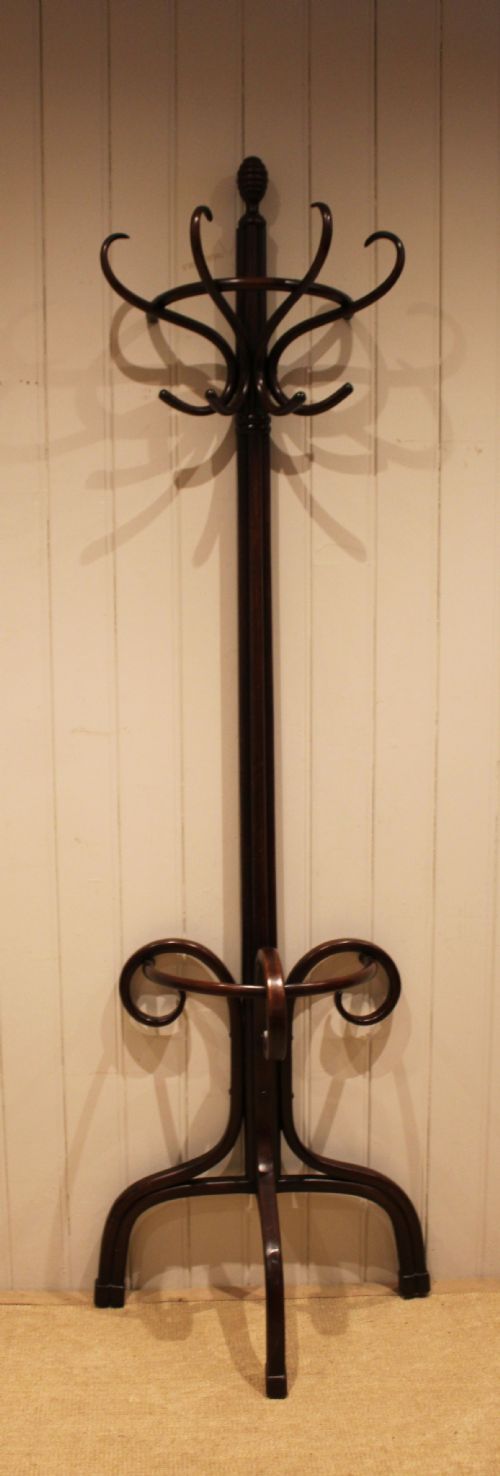
Commercial spaces drove the market later on. Cafes and offices bought thousands of bentwood examples.
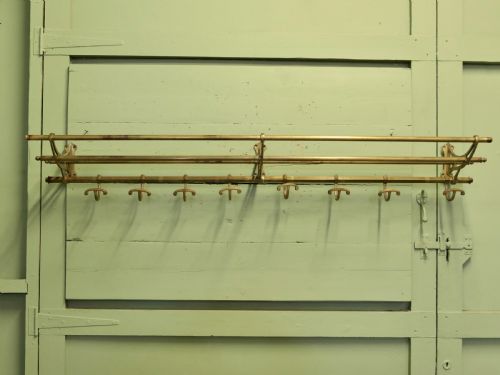
Look at the base footprint. Wider domestic ones took up too much room in narrow urban terraced houses, prompting a shift to wall-mounted racks.
Cast iron models dominated public buildings during the Victorian period.
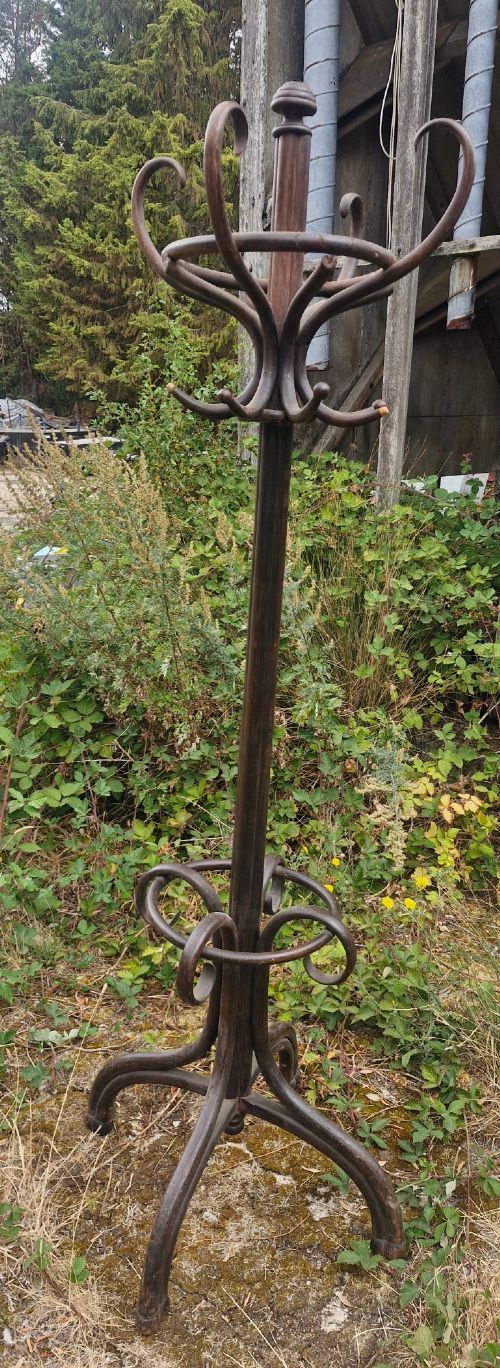
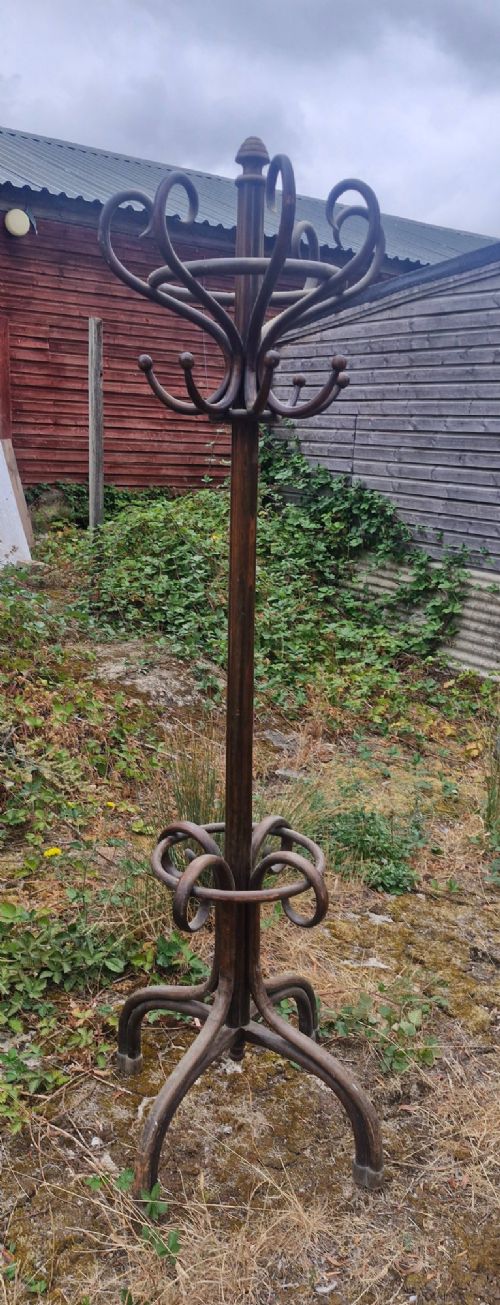
Gebrüder Thonet dominated the bentwood market. They exported millions of beech stands from their Austro-Hungarian factories from the 1850s onwards.
Coalbrookdale cast heavy iron hall furniture in Shropshire. Their registered designs appear in mid-nineteenth-century catalogues.
Jacob and Josef Kohn competed directly with Thonet. They applied similar industrial processes to steam-bent beechwood forms.
The 2026 retail price guide for Antique Coat Stands is drawn from a proprietary archive of over 1.1 million retail prices indexed by Sellingantiques since 2003. This guide relies exclusively on their own internal data; no external sources or auction records are used.
Analysing nearly 25 years of UK antique market history alongside current retail values, the data indicates that typical UK retail prices for Antique Coat Stands range between £400 and £1,700. Entry-level prices generally fall under £400 and premium examples upwards of £1,700.
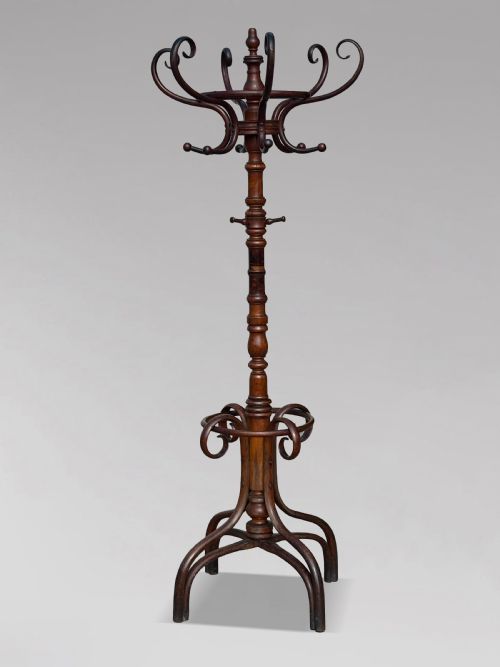
The central column is the main load-bearing element. Thick turnings at the bottom taper towards the crown.
Projecting pegs alternate in height. This arrangement stops bulky winter coats from bunching together.
Look for a tin or zinc drip tray slotted into the base ring. These catch rainwater from umbrellas.
Steam bending revolutionised production. Workers softened solid beech rods in pressure vessels before forcing them around iron moulds.
Traditional wooden stands rely on heavy mortise and tenon joints at the base. Pegs often attach via threaded dowels.
Foundry workers cast iron examples in multiple sand moulds. The individual parts bolt together around a hidden central steel rod.
"Bentwood construction creates a surprisingly light piece of furniture. You can easily lift one with a single hand."
"The rotating crown on some models allows you to reach a jacket without walking around the base."
"Original zinc drip pans often survive under layers of modern paint. Stripping them reveals a dull grey metal finish."
Based on almost 25 years of Sellingantiques UK antique market data, Antique Coat Stands appeared 1214 times (out of 1,100,000 antiques) which gives it a rarity score of 78/100.
This score measures scarcity within the Sellingantiques archive only and is not a survey of the entire antiques market, so these statistics may not be indicative of the general availability of Antique Coat Stands elsewhere.
Tightening the central bolt usually solves a loose base on metal stands. You can access the nut from underneath the cast iron foot.
Wooden stands present a different challenge. Shrinkage in the mortise joints over a century causes play in the legs. A restorer will need to knock the joints apart and glue them back together with fresh hide glue.
A distinct lean often points to a warped central shaft. Timber moves as moisture levels fluctuate in unheated spaces like attics over decades.
Correcting a severe warp in a solid turned column is difficult. Steam bending might straighten it slightly, but the wood usually remembers its curved shape. Most restorers suggest placing a small shim under one leg to visually correct the stance.
Original bentwood usually has a shellac polish or varnish. Painting over this hides the beech grain.
Stripping the layers back is an option if someone has already painted it. The underlying wood takes a traditional stain very well.
Finding an exact original match is highly unlikely. Drip trays were sized specifically for the hoop they sit in, and production sizes varied between foundries and cabinet makers.
Having a metalworker fabricate a replacement is the best option. They can spin a new tray from zinc or copper to fit the exact dimensions of your base ring. Painting the new metal protects it from further water damage.
Please note: This Antique Coat Stands guide and its associated pricing data are provided for general informational purposes only. It does not constitute formal financial, investment, or appraisal advice and should not be relied upon as the sole basis for any commercial activity, purchasing, or sales decisions. Sellingantiques.co.uk accepts no liability for any actions taken in reliance on this information. Always consult with a qualified professional or independent appraiser.
