

A 2026 Guide by Sellingantiques
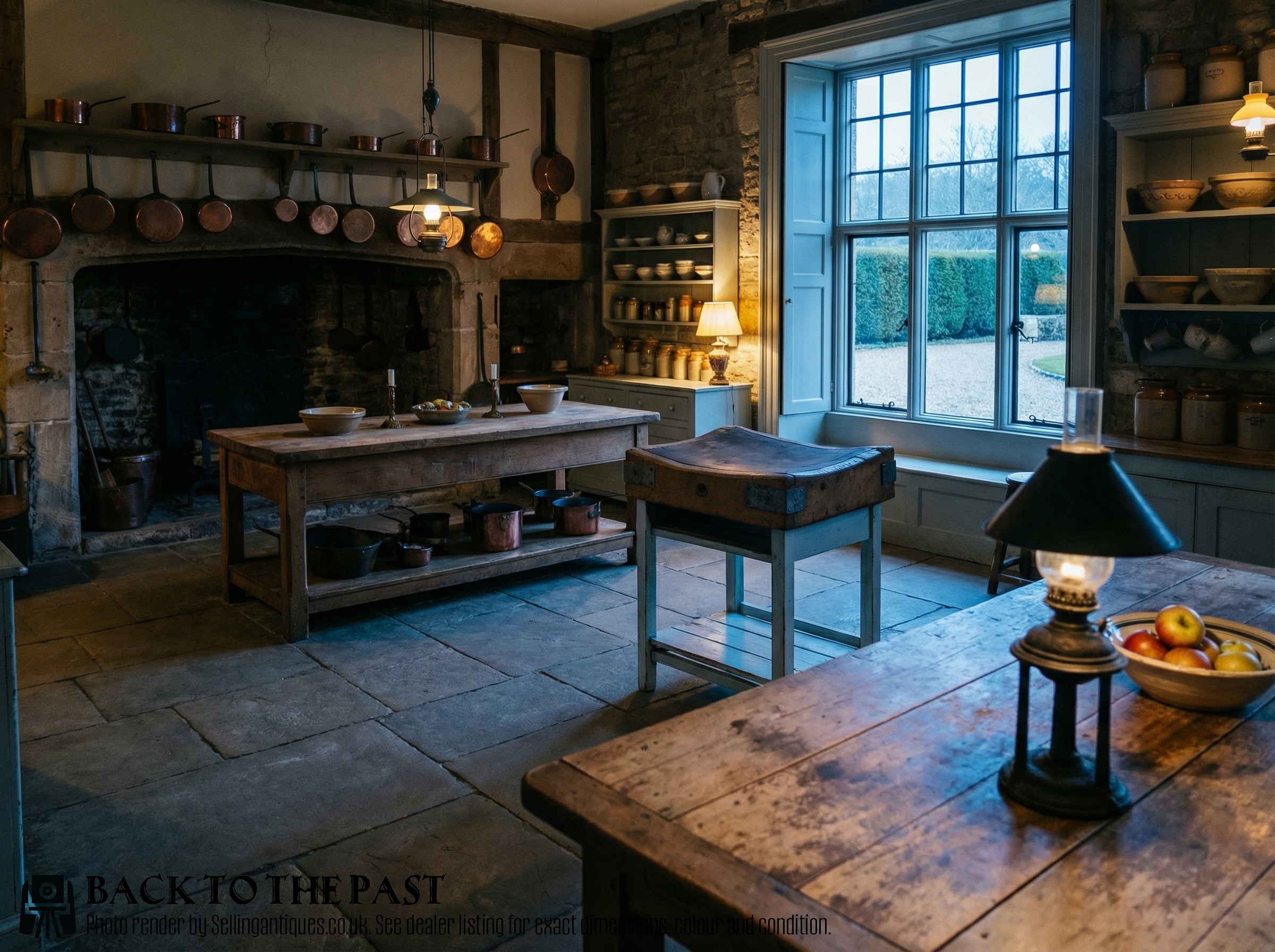
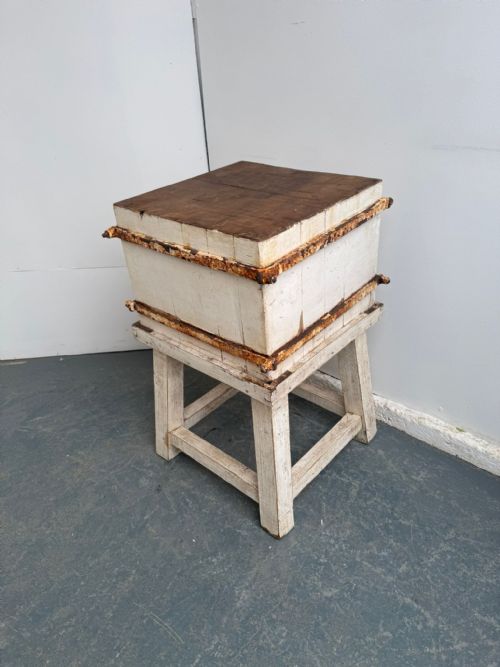
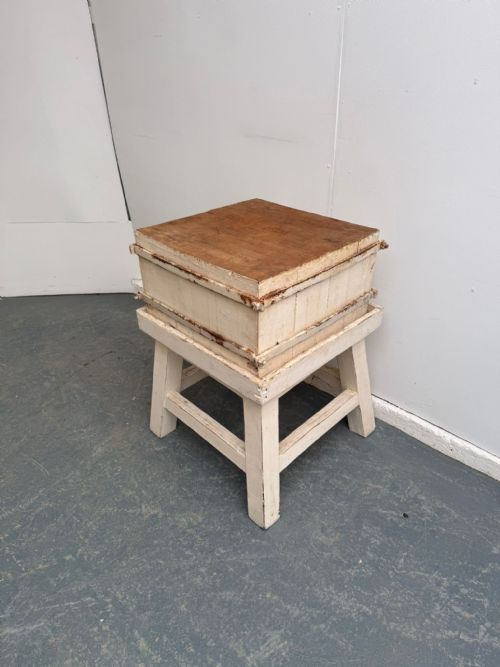
Vintage C.1950 Butcher’s Block on Stand, 1950
Priced at £1,396 from Prior and Willis
Commercial butchers needed surfaces that would not split under a heavy cleaver. End-grain construction solved this problem during the nineteenth century.
Look at early Victorian examples to see rough sections of sycamore or elm bound with forged iron rings.
The shift to glued and bolted square staves allowed for much larger continuous working areas in busy high street shops.
Antique butchers blocks became standard working fixtures in markets across Europe and America by the late nineteenth century.
Bally Block Company made thousands of these in Pennsylvania from the late nineteenth century onwards. You often find their metal plates pinned to the side.
French regional blocks from the provinces tend to feature heavy cast-iron stands adorned with local foundry marks rather than wooden bases.
Most British examples emerged from anonymous regional workshops supplying local high streets. A few bear brass nameplates from shopfitters rather than the actual makers.
The 2026 retail price guide for Antique Butchers Blocks is drawn from a proprietary archive of over 1.1 million retail prices indexed by Sellingantiques since 2003. This guide relies exclusively on their own internal data; no external sources or auction records are used.
Analysing nearly 25 years of UK antique market history alongside current retail values, the data indicates that typical UK retail prices for Antique Butchers Blocks range between £500 and £1,900. Entry-level prices generally fall under £500 and premium examples upwards of £1,900.
Check the corners for thick metal brackets. These plates protect the end-grain joints from blowing out under heavy daily pressure.
Deep dips form in the centre of the block. Decades of scraping down the surface with steel wire brushes created distinct hollows.
Slotted knife racks frequently hang off the back or side edges.
Early makers bolted large uneven logs together with rough forged iron hoops.
Staggered brickwork patterns. Turn-of-the-century workshops refined the process by cutting precise square staves and gluing them in overlapping layers.
Machine-cut dovetail joints appeared on the wooden bases by the early twentieth century to give the lower frame added rigidity.
"The staggered end-grain layout actively protects expensive knives. The wood fibres separate slightly under the blade and then close back up."
"Salt was the standard overnight cleaning agent. Butchers threw handfuls of dry salt across the scraped top to absorb moisture."
"Reversing the top was a common practice. Many blocks were eventually flipped upside down to start fresh on a flat surface."
Based on almost 25 years of Sellingantiques UK antique market data, Antique Butchers Blocks appeared 310 times (out of 1,100,000 antiques) which gives it a rarity score of 94/100.
This score measures scarcity within the Sellingantiques archive only and is not a survey of the entire antiques market, so these statistics may not be indicative of the general availability of Antique Butchers Blocks elsewhere.
Yes, provided the surface gets a proper cleaning and sealing. Most dealers suggest stripping the top layer back to clean wood if you intend to prepare food directly on it.
Applying multiple coats of food-grade mineral oil will seal the end-grain. This prevents moisture from getting into the carcase and stops the timber from splitting in a modern heated kitchen.
A professional woodworker can router the top flat. They set up a jig across the highest points and mill the entire surface down until the hollow disappears.
Keep in mind that you lose a thick layer of original timber doing this. The tension bolts might need tightening afterwards if removing that top layer alters the structural pressure.
Mineral oil is the safest choice for any chopping surface. It stays liquid inside the wood and never turns rancid.
Beeswax mixed with mineral oil provides a harder finish. You buff this into the surface to create a barrier against water spills.
Loose bases usually stem from dried-out glue joints. The original animal hide glue becomes brittle and flakes away after a century of seasonal temperature changes.
You should have a furniture restorer dismantle the wobbly sections. They will clean out the old residue from the mortise and tenon joints before gluing and clamping the base back together.
Please note: This Antique Butchers Blocks guide and its associated pricing data are provided for general informational purposes only. It does not constitute formal financial, investment, or appraisal advice and should not be relied upon as the sole basis for any commercial activity, purchasing, or sales decisions. Sellingantiques.co.uk accepts no liability for any actions taken in reliance on this information. Always consult with a qualified professional or independent appraiser.
