
A 2026 Guide by Sellingantiques

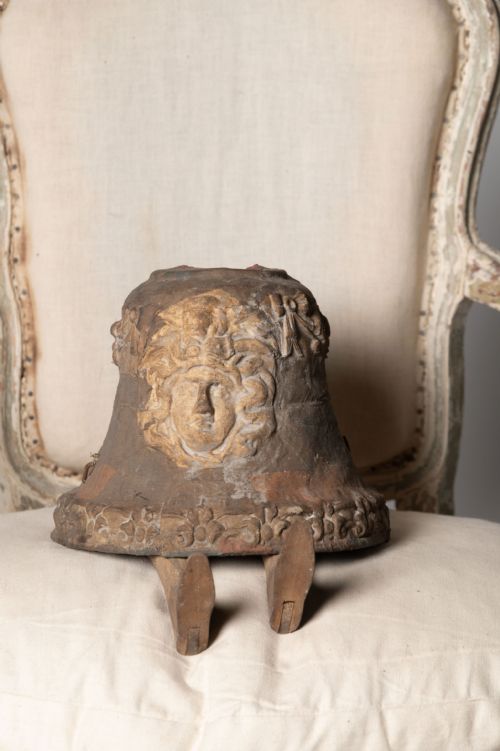
Old Brass Hand Bell, Town Cryer’s or School Bell, 19th Century
Priced at £775 from Elmgarden
Monasteries relied heavily on hand bells to manage the daily schedule.
Look for variations in use across different centuries, from town criers demanding attention in busy streets to quiet domestic signals within wealthy households.
Most antique bells found today date from the Victorian era. Mass production methods allowed middle-class homes to install elaborate mechanical servant call systems.
Ships required large bronze examples for keeping watch and marking time.
Whitechapel Bell Foundry operated in London for centuries, marking some smaller hand and table bells alongside their monumental church commissions.
John Taylor & Co of Loughborough produced numerous domestic and institutional examples throughout the nineteenth century.
Unmarked regional castings remain very common. Local foundries supplied the vast majority of agricultural and domestic bells without ever stamping a maker mark.

Antique Schoolmaster's Hand Bell, English, Bronze, Dinner Chime, Edwardian, 1910, Edwardian
Priced at £695 from London Fine Antiques
The 2026 retail price guide for Antique Bells is drawn from a proprietary archive of over 1.1 million retail prices indexed by Sellingantiques since 2003. This guide relies exclusively on their own internal data; no external sources or auction records are used.
Analysing nearly 25 years of UK antique market history alongside current retail values, the data indicates that typical UK retail prices for Antique Bells range between £200 and £3,000. Entry-level prices generally fall under £200 and premium examples upwards of £3,000.
A flared sound bow forms the thickest part of the rim, designed to take the impact of the internal clapper.
Examine the shoulder of the bell where the handle attaches. You will often see decorative turning lines or raised bands cast directly into the metal.
Some wall-mounted servant varieties include flat iron springs to keep the ring sounding long after the pull cord is released.
Sand casting was the standard method for most antique bells. Workers packed damp sand around a master pattern to create a hollow mould for the molten metal.
Turn the piece over to look at the inner surface. You can often spot rougher casting marks inside, while the exterior received careful polishing on a lathe.
Iron springs on domestic call systems required precise hand forging to ensure the metal retained enough tension to bounce repeatedly.
"Heavy lead counterweights often balanced the pull-cords of grand houses, allowing a gentle tug to ring a bell fifty feet away."
"Table bells sometimes feature intricate clockwork mechanisms hidden inside the dome, ringing continuously with a single tap of the top button."
"A well-cast bell metal dome continues to vibrate long after the initial sound fades, holding a low hum you can feel through the handle."
Based on almost 25 years of Sellingantiques UK antique market data, Antique Bells appeared 2133 times (out of 1,100,000 antiques) which gives it a rarity score of 65/100.
This score measures scarcity within the Sellingantiques archive only and is not a survey of the entire antiques market, so these statistics may not be indicative of the general availability of Antique Bells elsewhere.
Most collectors prefer to leave the dark surface patina intact. Aggressive chemical cleaners strip away the historical finish and leave the metal looking harsh and newly made.
If you must remove surface dirt, a dry soft cloth is usually enough. For heavy grime, a gentle wipe with a damp cloth and mild soap works, provided you dry the metal immediately afterwards.
The handle usually connects to the metal dome via a central iron rod that threads into a small finial or nut at the top. Over the decades, wood shrinks and these threads work loose.
You can often secure it by carefully turning the top finial clockwise. If the internal rod is pinned rather than threaded, a restorer might need to insert a small wooden shim to bridge the gap caused by timber shrinkage.
These systems rely on a network of copper wires and pulleys routed through wall cavities.
Tugging a room handle pulls the wire, which releases a tensioned iron spring downstairs, causing the bell to bounce and ring on the wall.
You need to match the weight and size of the replacements to the existing iron springs. If a bell is too heavy, the spring will sag and fail to bounce. If it is too light, the tension will be wrong and the ring will sound erratic.
Wall bells also sound different notes so servants could identify rooms by ear. It pays to source a graduated set rather than identical sizes.
Please note: This Antique Bells guide and its associated pricing data are provided for general informational purposes only. It does not constitute formal financial, investment, or appraisal advice and should not be relied upon as the sole basis for any commercial activity, purchasing, or sales decisions. Sellingantiques.co.uk accepts no liability for any actions taken in reliance on this information. Always consult with a qualified professional or independent appraiser.
