

A 2026 Guide by Sellingantiques
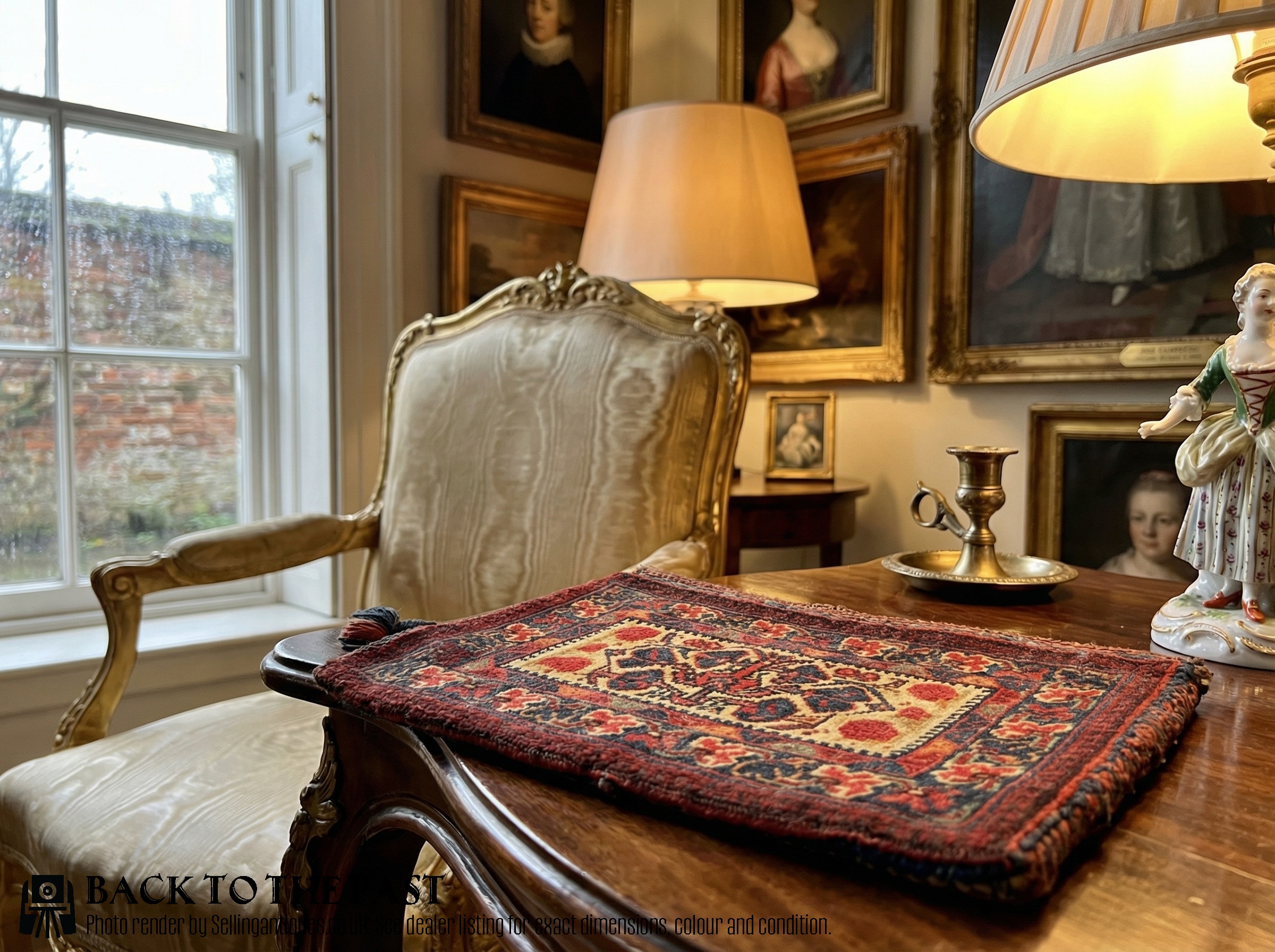
22 X 30cm Very Fine Antique Afshar 'Chanteh' or Personal Bag, 1900
Priced at £2,000 from James Cohen Antique Carpets
Look closely at the shift from pockets to carried pouches around the turn of the nineteenth century.
As women's dresses narrowed during the Regency period, bulky tied pockets became impractical and antique bags emerged as a daily necessity.
Travelling bags expanded dramatically in size once the railways arrived, replacing the smaller coach-fitted trunks.
Evening examples grew smaller and more structured by the early twentieth century.
Louis Vuitton started creating flat-topped trunks in the mid-nineteenth century before expanding into softer travel bags.
Whiting & Davis began producing woven metal mesh bags in the late 1890s, dominating the category for decades.
Look for stamped marks from Asprey, who retailed high-end leather goods and evening pieces in London during the Victorian and Edwardian periods.
The 2026 retail price guide for Antique Bags is drawn from a proprietary archive of over 1.1 million retail prices indexed by Sellingantiques since 2003. This guide relies exclusively on their own internal data; no external sources or auction records are used.
Analysing nearly 25 years of UK antique market history alongside current retail values, the data indicates that typical UK retail prices for Antique Bags range between £400 and £1,800. Entry-level prices generally fall under £400 and premium examples upwards of £1,800.
Kiss-lock clasps define many metal-framed pieces from the late nineteenth century onwards.
Examine the straps and handles, which might feature chain links, woven silk cord or stitched leather.
Gussets on the sides allow these antique bags to expand without tearing the main panels under pressure.
Hand-stitched beadwork on nineteenth-century examples involved counting microscopic glass beads onto single threads before weaving.
Saddle stitching with waxed linen thread gave early leather travel bags their structural strength.
Notice how later mesh production shifted from individual hand-linked rings to machine-woven sheets shaped onto frames.
"Hidden interior mirror pockets became a standard feature in evening pieces long before commercial cosmetics were widely accepted."
"Some woven bead patterns contain secret messages or dates worked directly into the floral motifs."
"Railway expansion indirectly led to the flat bottom design, allowing travel pieces to sit neatly under a train seat."
Based on almost 25 years of Sellingantiques UK antique market data, Antique Bags appeared 1775 times (out of 1,100,000 antiques) which gives it a rarity score of 70/100.
This score measures scarcity within the Sellingantiques archive only and is not a survey of the entire antiques market, so these statistics may not be indicative of the general availability of Antique Bags elsewhere.
Repairing woven metal mesh requires specialist tools to open and close the individual jump rings without scratching the surrounding surface.
Jewellers who work with chainmail are often best equipped to reconnect split links or source matching base metal replacements. It's a job that needs patience and good magnification.
The silk is shattering. Nineteenth-century silk makers often treated their fabrics with metallic salts to make them heavier and crisper. Over time, those salts act like microscopic blades, cutting the fibres from the inside out.
Once shattering starts, it isn't reversible. You can have a conservator overlay the interior with a fine netting, or simply leave the bag stuffed with acid-free tissue paper to support the remaining structure.
Wiping the surface with a dry, soft cloth is usually enough to remove loose dust. Applying modern chemical cleaners can strip old finishes or darken untreated hides permanently.
A light application of a microcrystalline wax might help protect dry surfaces, but you'll want to test it on a hidden corner first.
Smells get trapped in the porous linings of older luggage. Airing the bag out by leaving it open in a dry, well-ventilated room away from direct sunlight is the safest first step.
Some people place a small bowl of dry bicarbonate of soda inside the closed bag for a few days to absorb lingering odours. Never spray modern fabric fresheners inside, as the liquid will stain antique cottons and silks.
Please note: This Antique Bags guide and its associated pricing data are provided for general informational purposes only. It does not constitute formal financial, investment, or appraisal advice and should not be relied upon as the sole basis for any commercial activity, purchasing, or sales decisions. Sellingantiques.co.uk accepts no liability for any actions taken in reliance on this information. Always consult with a qualified professional or independent appraiser.
