


A 2026 Guide by Sellingantiques
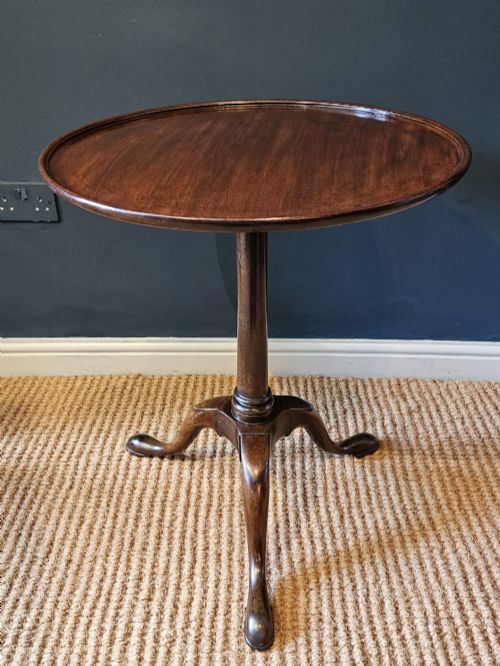
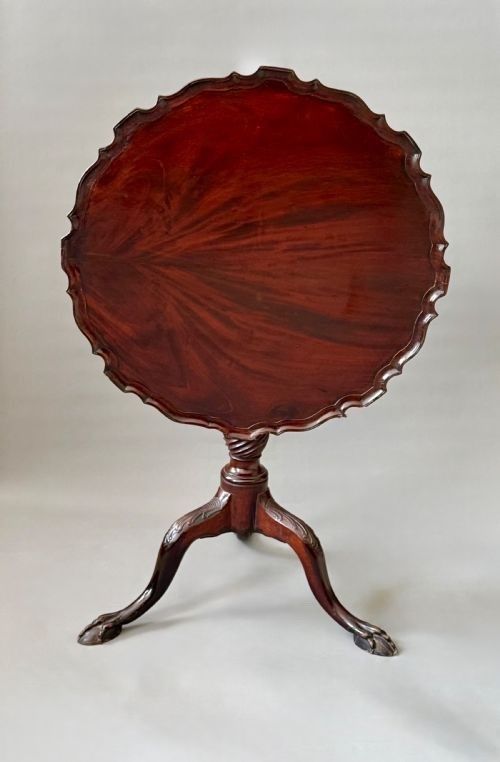
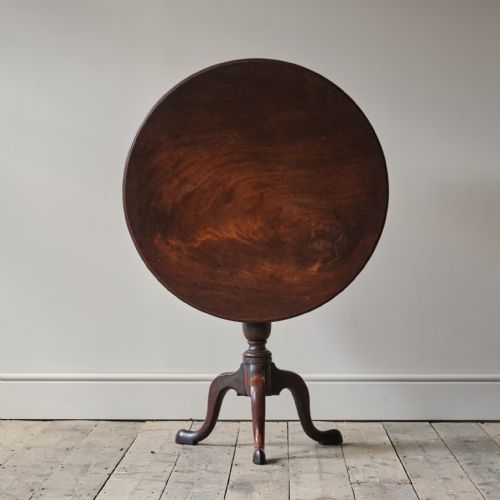
Georgian Mahogany Bird Cage Tip Table, Georgian
Priced at £725 from Andros Antiques
They'll show up in early eighteenth-century inventories as tea drinking became fashionable in wealthier households.
Track the shift from heavy cabriole legs to lighter swept supports. This change followed evolving fashions in domestic furniture.
A sudden influx of smaller tripod bases appeared during the George III period. Many served as candle stands or occasional wine tables in dim rooms.
Victorian versions of the antique tilt top table often grew heavier to match chunkier parlour tastes.
Keep in mind that regional workshops adapted these forms right into the Edwardian era with mixed success.
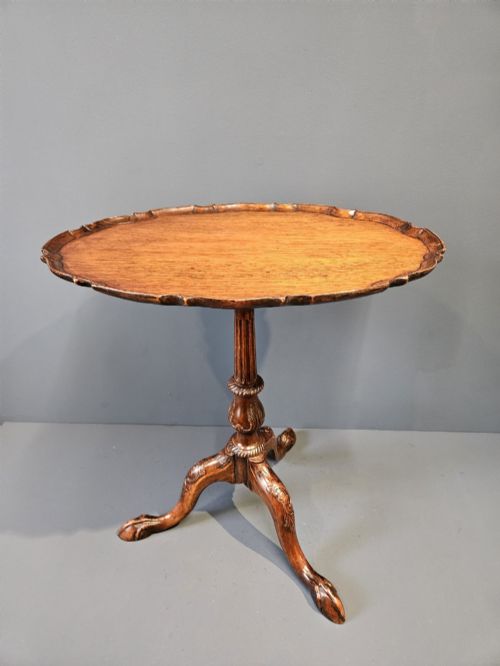
Thomas Chippendale supplied high-end tripod variants. His documented commissions include carved pie-crust models from the 1760s.
Gillows of Lancaster produced hundreds of mahogany versions during the late eighteenth and early nineteenth centuries. Their stamped bases survive in good numbers.
Countless provincial craftsmen remained anonymous. They copied London pattern books to build reliable stock for local clients.
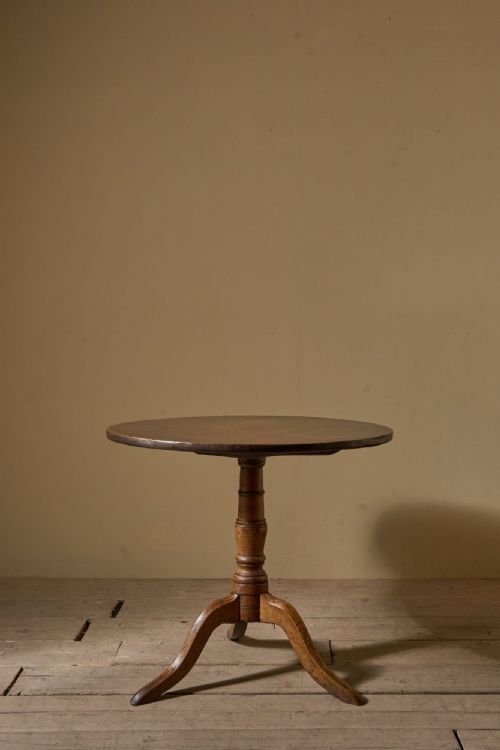
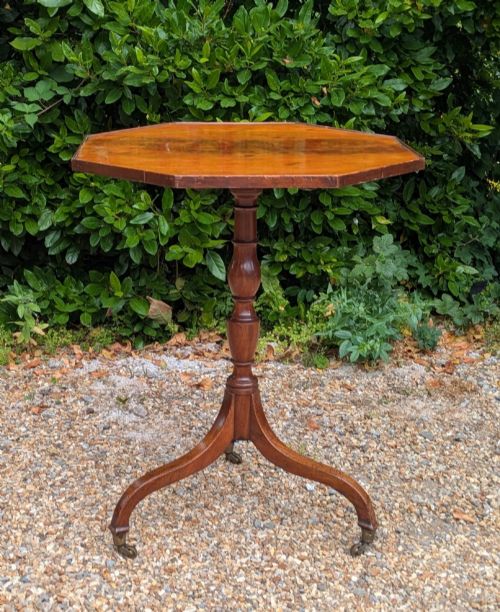
Victorian Mahogany Octagonal Lamp Table with Tilt Top, Victorian
Priced at £225 from Antique Furniture Direct
The 2026 retail price guide for Antique Tilt Top Tables is drawn from a proprietary archive of over 1.1 million retail prices indexed by Sellingantiques since 2003. This guide relies exclusively on their own internal data; no external sources or auction records are used.
Analysing nearly 25 years of UK antique market history alongside current retail values, the data indicates that typical UK retail prices for Antique Tilt Top Tables range between £500 and £2,500. Entry-level prices generally fall under £500 and premium examples upwards of £2,500.
A sturdy brass catch or wooden peg secures the top. This simple mechanism locks the board flat.
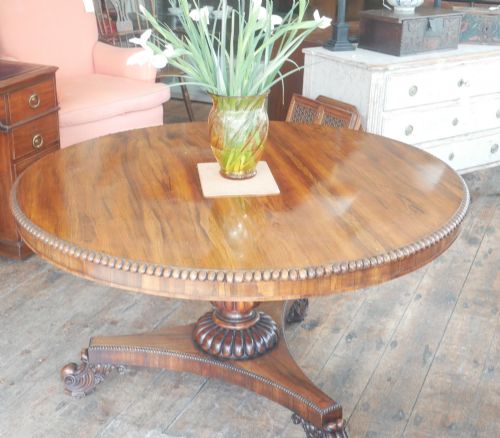
The central turned column provides the core balance for an antique tilt top table. Some feature spiral fluting or a classic gun-barrel shape.
Three splayed legs terminate in pad or brass castor feet. They distribute the weight evenly across uneven floorboards.
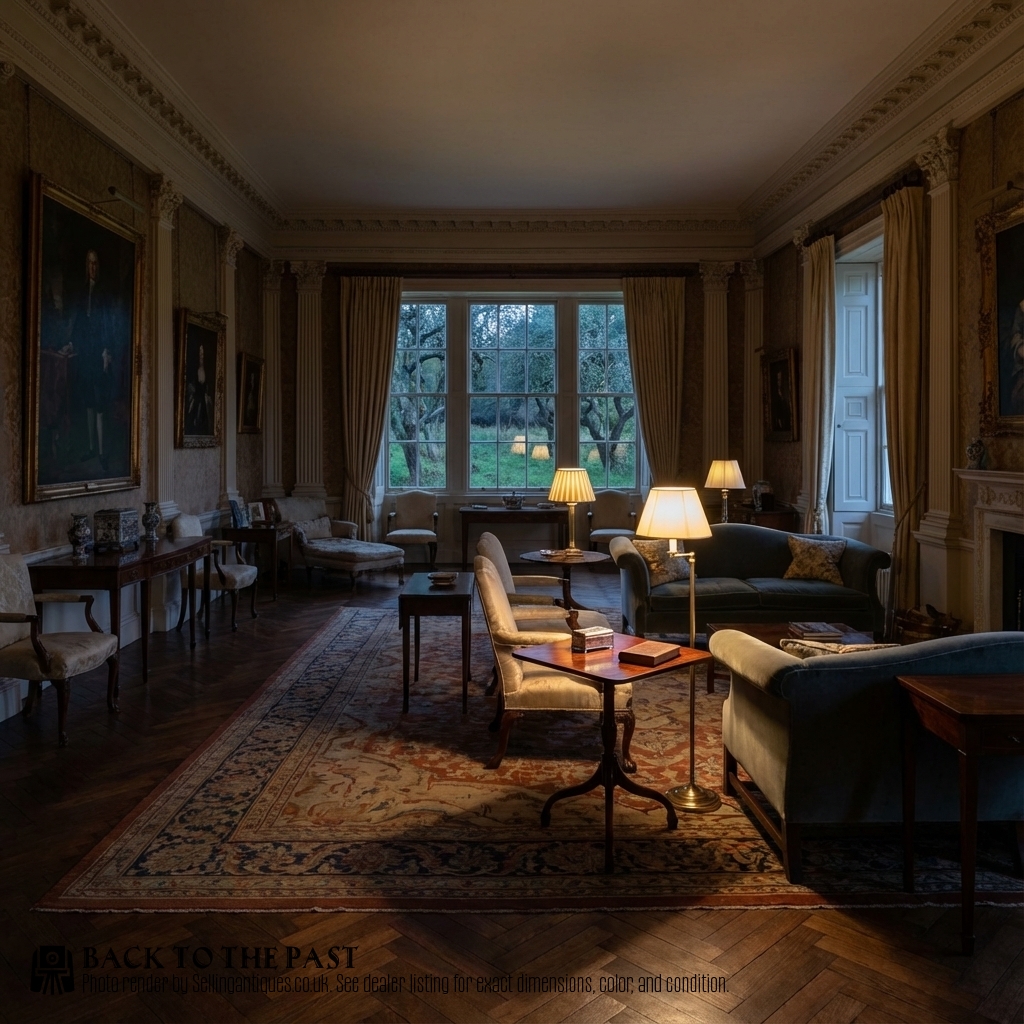
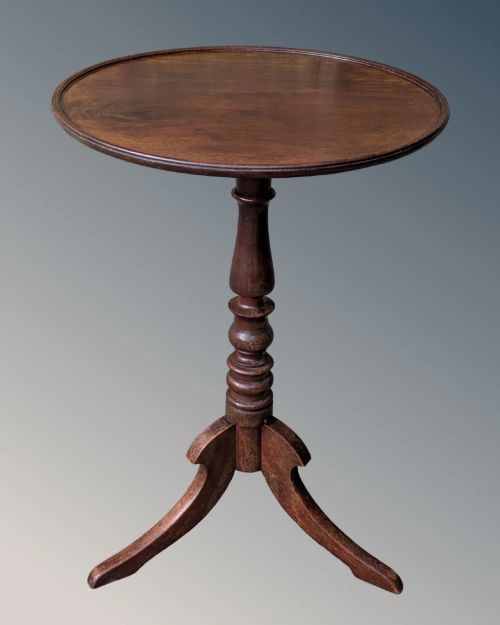
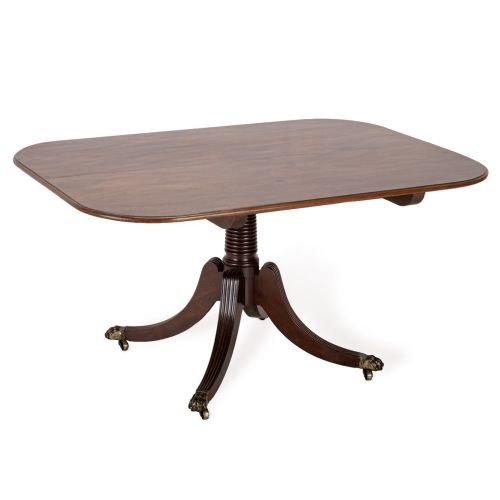
19thc Mahogany Occasional Tip Table, 19th Century
Priced at £480 from Andros Antiques
Tops were originally cut from a single wide plank. Later production often joined two or three boards as large diameter logs became scarce.
Turn the piece over to examine the leg joints. Early makers reinforced the column dovetails with an iron spider plate hidden underneath.
Hand-cut threads occasionally appear on wooden locking pins. It takes precise lathe work to make these function smoothly.
"They'll double as display pieces. The large flat surface acts like a blank canvas to show off the swirling grain of a prized timber veneer when tilted."
"Finding matching pairs is an exciting prospect. Wealthy families ordered them in sets to flank grand fireplaces when cleared away after evening entertaining."
"Some designs incorporate hidden compartments within the block. These small voids protected keys or game pieces."
Based on almost 25 years of Sellingantiques UK antique market data, Antique Tilt Top Tables appeared 3653 times (out of 1,100,000 antiques) which gives it a rarity score of 48/100.
This score measures scarcity within the Sellingantiques archive only and is not a survey of the entire antiques market, so these statistics may not be indicative of the general availability of Antique Tilt Top Tables elsewhere.
Most wobble stems from loose dovetails where the legs meet the base of the pedestal. The original animal glue dries out and turns to dust over the centuries.
A cabinetmaker can knock the legs out and clean the old joints. They'll re-glue the connections and sometimes add a discrete metal brace underneath to firm up the whole base.
A leaning top often means the bearer blocks have worn unevenly or the brass catch has shifted out of alignment. You'll need to check the pivot points on the hinge first.
Sometimes placing a thin leather or felt shim under one side of the block corrects the angle. If the pedestal itself leans, the leg joints usually require professional resetting to bring the column back to a true vertical position.
It's a secondary joint sitting between the pedestal and the tabletop. Two square blocks of wood are separated by four small turned pillars, resembling a small cage.
This addition allows the top to rotate in a full circle as well as fold up vertically.
Most tripod bases lack the stability for daily dining. Pressing down on the edge puts immense strain on the central peg and the hinge screws.
If you lean heavily on one side, a small tripod table might tip over. They were designed for light tea services rather than supporting elbows and heavy dinnerware.
For regular meals, look for a larger breakfast table with a tilt action. Those sit on a heavy platform base and four thick legs, offering a much firmer foundation.
Please note: This Antique Tilt Top Tables guide and its associated pricing data are provided for general informational purposes only. It does not constitute formal financial, investment, or appraisal advice and should not be relied upon as the sole basis for any commercial activity, purchasing, or sales decisions. Sellingantiques.co.uk accepts no liability for any actions taken in reliance on this information. Always consult with a qualified professional or independent appraiser.
