







Antique Silver Tables
A silver table is a small wooden occasional table with a raised, dished or fretted top edge, made to hold displayed plate without it sliding off.

Antique Silver Tables
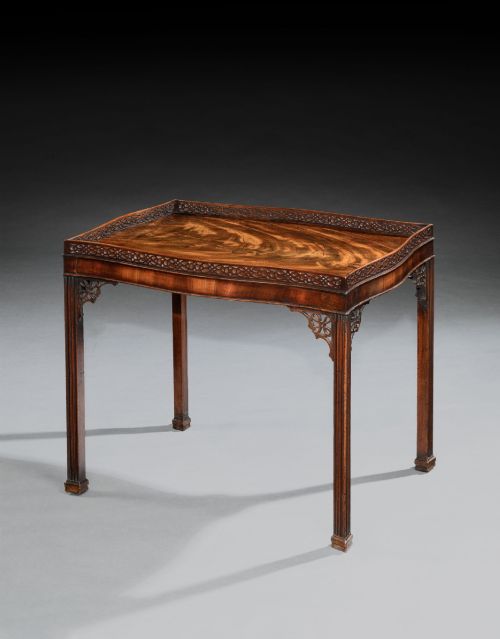
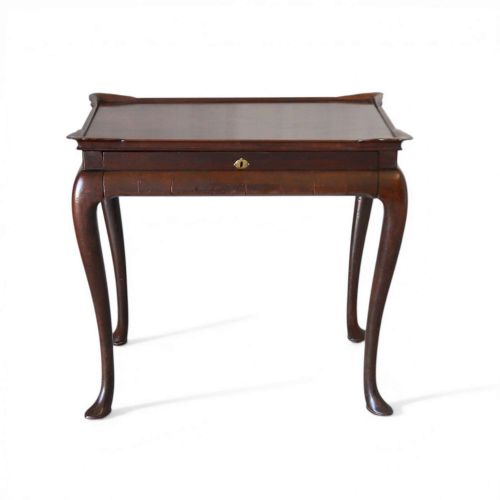
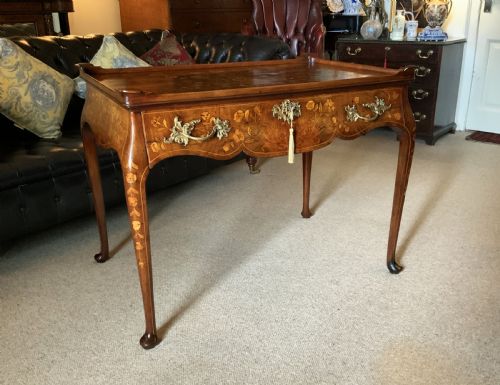
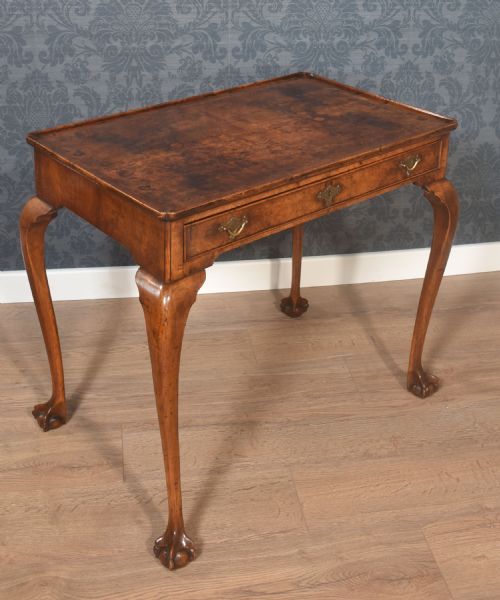
Despite the name, what turns up under this heading is furniture rather than plate. The form is a small four-legged table with a tray, dished or galleried top, the raised edge there to stop a kettle or a piece of display silver working its way off. Around fifteen come to market a year on Sellingantiques, listed by 75 different dealers, so most dealers who handle them have handled one.
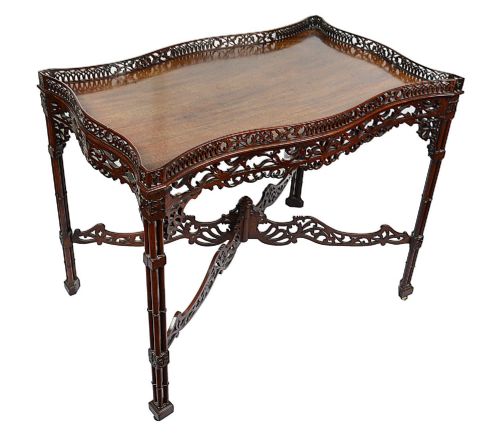
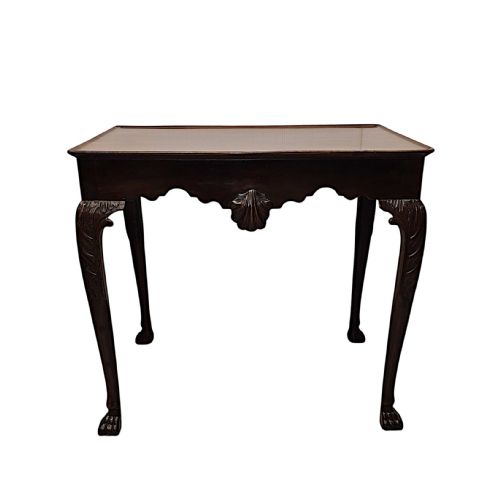
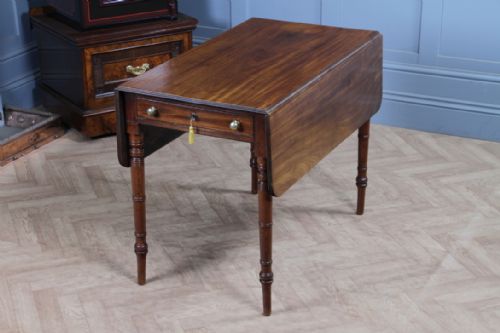
Mahogany dominates, named in nearly half of all titles, and the Georgian and 18th-century idiom carries the category: tray tops, fretwork galleries, cabriole legs, carved frieze and leg brackets. Walnut is the distant second timber, including burr walnut in Dutch taste, Irish red walnut and Queen Anne style pieces. Irish attribution appears in one title in ten.
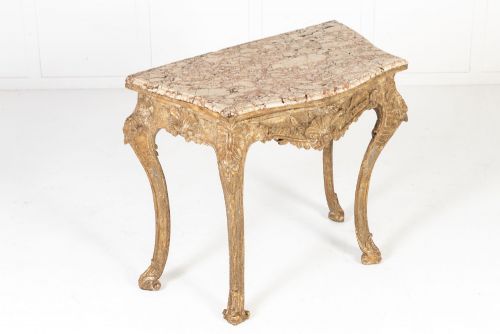
The name does double duty. A distinct minority of listings are tables that are themselves silvered or silver-gilt rather than made to carry silver, largely Italian and French consoles and centre tables, along with parcel-silvered and grotto-style pieces. A small handful are inlaid with silver wire or sheet, from Hoshiarpur work to an Ottoman coffee table and an Anglo-Indian campaign table.
Dating runs from 1750 to 1930, but only 40 of 126 listings carry a clean year. The big blocks are brackets rather than dates: 18th Century, Georgian, 19th Century. Titles inside those brackets often say style, revival, manner or influenced, since the type was copied repeatedly from the later 19th century onwards. One oak William and Mary example sits back in the 17th century.
Where The Range Splits
Timber and figure set the tone. Titles that name the wood and its grain, Cuban mahogany, figured mahogany, Irish red walnut, Dutch burr walnut, sit high in the range, while a plain mahogany silver table with nothing said about the timber sits at the bottom of it.
Period against revival is the other big divide. George II and George III titles with no style qualifier occupy the upper end; style, revival, manner and influenced run through the middle and lower part of the range. Irish attribution pulls a table upward on its own, and the Irish examples cluster conspicuously at the expensive end.
After that it comes down to how much work is in the piece. Serpentine tops, carved detail and pierced fretwork galleries recur among the dearer entries, and top-related terms are rising in live stock. Pairs sit well above single tables of similar description, with a pair of walnut, silvered and yew wood serving tables at the top of the whole archive.
Antique Silver Tables Retail Price Guide 2026
Typical UK retail prices for silver tables, calculated from the Sellingantiques database of over a million retail prices indexed since 2003. This retail price guide relies exclusively on Sellingantiques data; no external sources or auction records are used, so the figures do not describe the wider market.
18th Century is the period label used most on Sellingantiques for silver tables, with Georgian next and 19th Century third.
The Antique Silver Tables Glossary
- Tray top
- A top with a raised moulded rim running all the way round, like a tray. The phrase recurs throughout the titles here.
- Dished top
- A top hollowed slightly below the level of its edge, doing the same retaining job as a raised rim.
- Gallery
- A low rail around the top edge, often pierced or fretted rather than solid.
- Cabriole leg
- An S-curved leg, named in a good many of the mahogany Georgian examples.
- Parcel silvered
- Partly silvered, the remainder painted or left plain. On silvered pieces the finish is on wood, gesso or metal, not solid silver.
- Kettle stand
- A closely related small stand; one listing uses both names for the same piece.
Antique Silver Tables: Frequently Asked Questions
Are silver tables actually made of silver?
Almost never. The great majority listed under this heading are wooden furniture, mahogany or walnut, named for the plate they were made to display rather than what they are made of.
A minority are silvered or silver-gilt on the surface, over wood, gesso or metal. A small handful have silver wire or sheet inlaid into the wood.
What wood are they usually made from?
Mahogany is the defining timber, named in nearly half the titles across the archive. Walnut comes a distant second, including burr walnut, figured walnut and Irish red walnut.
One oak example, William and Mary in style, sits well outside the usual run.
Why do so many listings say Georgian rather than a year?
Only 40 of 126 listings carry a clean year. The largest dating blocks are brackets: 18th Century, Georgian, 19th Century.
Several titles sitting inside an 18th-century bucket openly say style, revival, manner or influenced. The form was copied from the later 19th century onwards, and both period pieces and copies share the heading.
What makes Irish examples stand out?
Irish attribution appears in one title in ten, and those listings cluster at the expensive end of the archive.
The sampled Irish tables are George II and George III mahogany and red walnut, described with carved detail rather than plain surfaces.
Do silver tables come in pairs?
Pairs and matched pairs turn up half a dozen times across the samples, including Dutch burr walnut and mahogany fretted examples.
They sit well above single tables of comparable description. A pair of walnut, silvered and yew wood serving tables stands at the top of the whole range.
Which listings only borrow the name?
A few use silver in another sense altogether: silver display and silver presentation tables, and a butler's silver valet stand.
One entry is not furniture at all, a small solid silver bon bon dish, and it sits at the very bottom of the range.