




A 2026 Guide by Sellingantiques
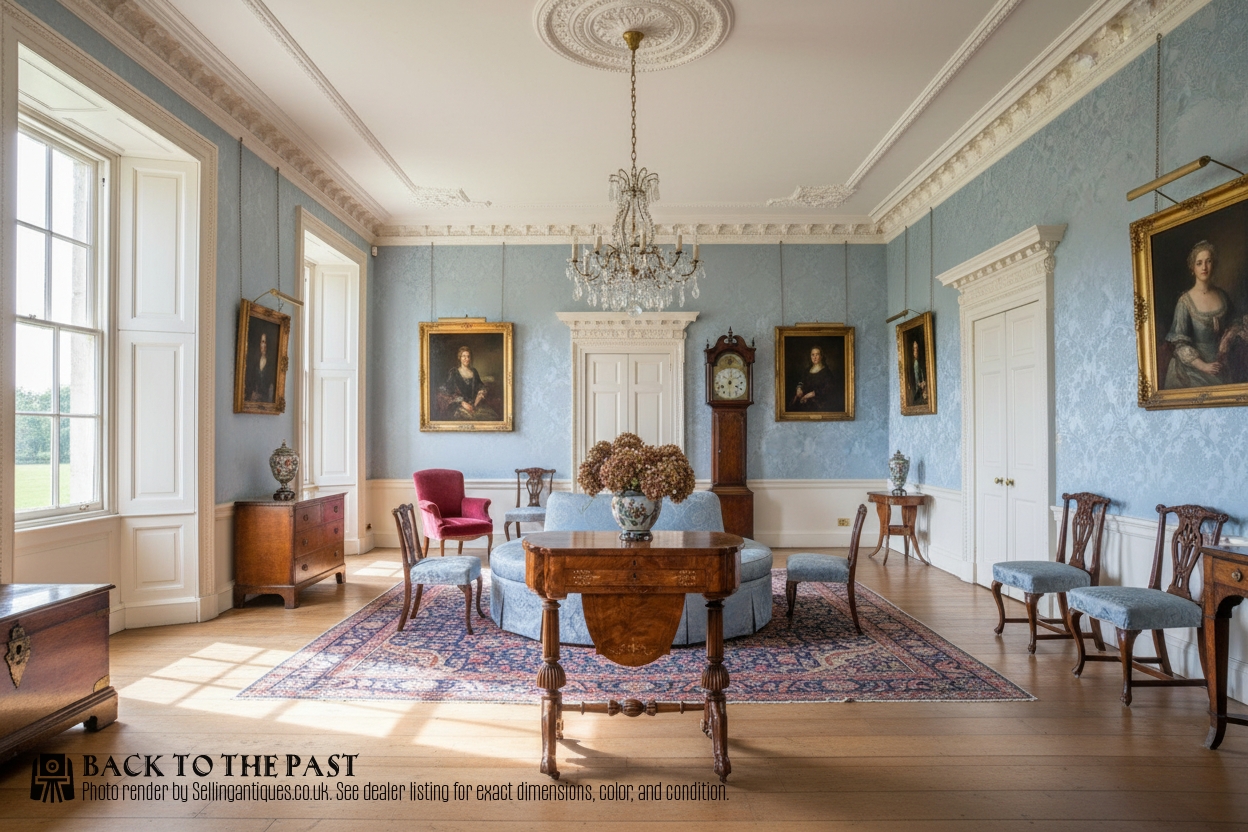
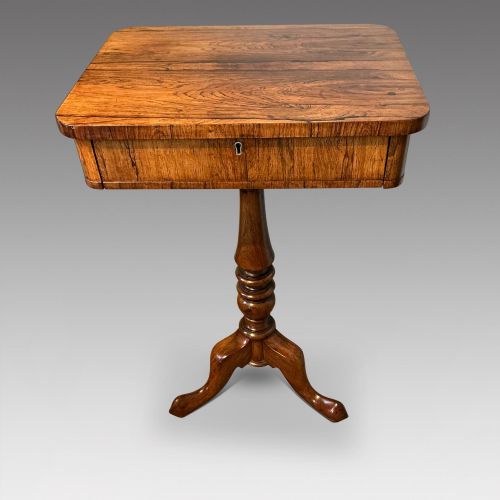
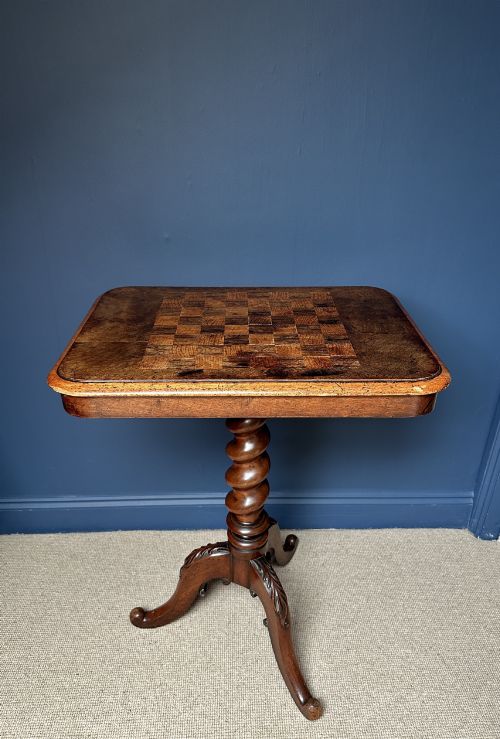
Outstanding Early Victorian 19th Century Inlaid Burr Walnut Writing or Sewing Table, 1950
Priced at £6,595 from London City Antiques
They first appeared in the late eighteenth century as dedicated furniture for needlework.
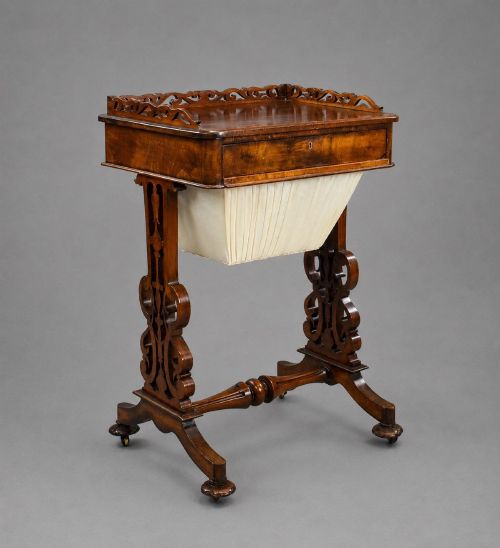
Look at Regency examples and you will see the classic form emerge. The suspended workbag design became standard across Europe, remaining popular for decades.
Georgian cabinetmakers treated them as major parlour pieces. The quality had to match the main drawing room furniture, demanding highly skilled veneering and polishing.
Mass production changed antique sewing tables by the late Victorian period. Factories rolled them out in large numbers for the expanding middle classes, simplifying the older designs.
Gillows of Lancaster produced hundreds of these. Their pattern books show variations spanning several decades of the nineteenth century.
Thomas Sheraton published influential designs for work tables. His 1793 drawing book established the pouch table format.
Duncan Phyfe made distinct versions in New York. The pedestal base and splayed legs feature heavily in his workshop output.

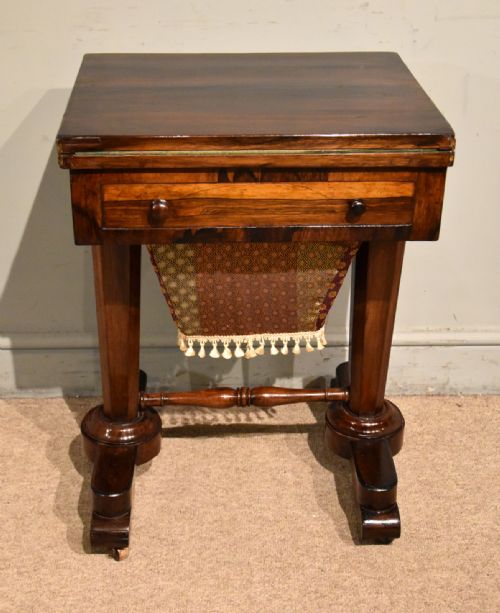
Antique Regency Quality Rosewood Free Standing Sewing/lamp Table
, Regency
Priced at £1,685 from London City Antiques
The 2026 retail price guide for Antique Sewing Tables is drawn from a proprietary archive of over 1.1 million retail prices indexed by Sellingantiques since 2003. This guide relies exclusively on their own internal data; no external sources or auction records are used.
Analysing nearly 25 years of UK antique market history alongside current retail values, the data indicates that typical UK retail prices for Antique Sewing Tables range between £500 and £2,300. Entry-level prices generally fall under £500 and premium examples upwards of £2,300.
The central silk pouch acts as a deep well for wools and bulky fabric.
Lift the top to find a fitted tray. Small lids and carved recesses separate the spools and thimbles, keeping the tools organised.
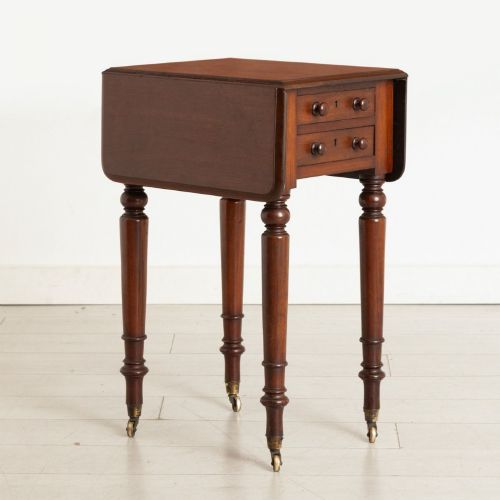
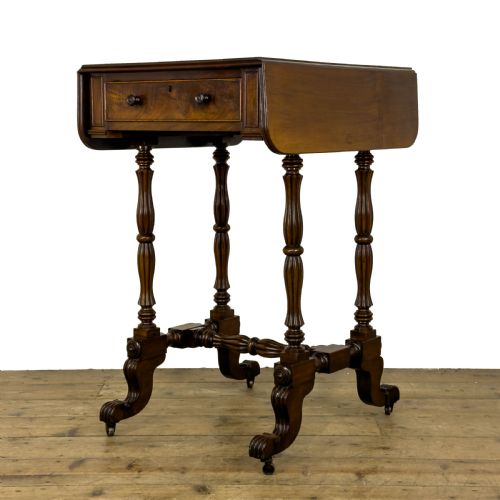
Some drop-leaf designs provide extra surface space. These hinged flaps fold down flat against the sides when the antique sewing table sits idle against a wall.
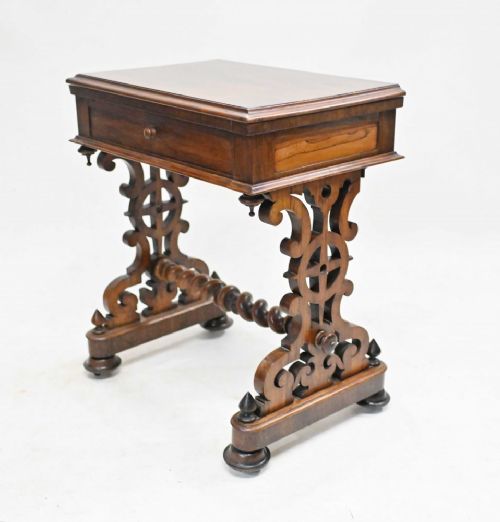
Victorian Burr Walnut Sewing Table, 1860
Priced at £995 from Philip Hunt Antiques
Early examples rely on fine dovetails in the drawer sides. Cabinetmakers cut these joints tightly by hand.
Veneer application changed over time. Regency makers laid thin saw-cut sheets over the carcase for better grain matching.
Victorian factories introduced thicker machine-cut joints. The internal partitions often slide together with less precision than earlier pieces.
"Chess boards sometimes appear on the reverse of the lid. A maker could combine gaming and needlework storage into a single item."
"Secret side compartments exist in several designs. Pressing a hidden spring releases a shallow drawer for private letters."
"They served as writing desks too. Many incorporate a leather-lined slope that folds out above the wool bag."
Based on almost 25 years of Sellingantiques UK antique market data, Antique Sewing Tables appeared 1538 times (out of 1,100,000 antiques) which gives it a rarity score of 74/100.
This score measures scarcity within the Sellingantiques archive only and is not a survey of the entire antiques market, so these statistics may not be indicative of the general availability of Antique Sewing Tables elsewhere.
It kept unfinished embroidery and loose fabric out of sight. The deep space stops bulky items from jamming the drawers above.
Early makers called this a pouch. The frame usually slides out on wooden runners so you can access the contents easily.
Cabinetmakers designed the internal trays with particular tools in mind. You will find specific recesses shaped for thread spools and ivory needle cases. Some even have narrow slots for scissors.
The makers rarely supplied the tools. Customers bought the table and transferred their own silver or bone sewing equipment into the vacant spaces.
Yes. Upholsterers replace workbags regularly. You simply tack the new pleated fabric to the wooden sliding frame.
Choose a heavy silk or cotton blend. The stiffer material holds the folded pleats better over time.
That sounds like a slide rather than a drop-leaf. These thin pull-out panels provide a temporary flat surface for a candle or a pattern book.
They rely on the tight friction of the drawer slot to stay level. If the panel sags badly, the wooden runners inside the carcase might be worn down from decades of use.
Please note: This Antique Sewing Tables guide and its associated pricing data are provided for general informational purposes only. It does not constitute formal financial, investment, or appraisal advice and should not be relied upon as the sole basis for any commercial activity, purchasing, or sales decisions. Sellingantiques.co.uk accepts no liability for any actions taken in reliance on this information. Always consult with a qualified professional or independent appraiser.
